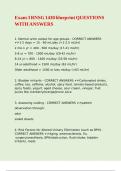
Exam 3 RNSG 1430 blueprint QUESTIONS |\ |\ |\ |\ |\ |\
WITH ANSWERS |\
1. Normal urine output for age groups - CORRECT ANSWERS
|\ |\ |\ |\ |\ |\ |\ |\ |\ |\
✔✔1-2 days = 15 - 60 mL/day (<1-2.5 mL/hr)
|\ |\ |\ |\ |\ |\ |\ |\ |\
2 mo-1 yr = 400 - 500 mL/day (17-21 mL/hr)
|\ |\ |\ |\ |\ |\ |\ |\ |\ |\
5-8 yr = 700 - 1000 mL/day (29-42 mL/hr)
|\ |\ |\ |\ |\ |\ |\ |\ |\
8-14 yr = 800 - 1400 mL/day (33-58 mL/hr)
|\ |\ |\ |\ |\ |\ |\ |\ |\
14 yr-adulthood = 1500 mL/day (63 mL/hr)
|\ |\ |\ |\ |\ |\ |\
Older adulthood = 1500 or less ml/day (<63 mL/hr)
|\ |\ |\ |\ |\ |\ |\ |\
2. Bladder irritants - CORRECT ANSWERS ✔✔Carbonated drinks,
|\ |\ |\ |\ |\ |\ |\ |\
coffee, tea, caffeine, alcohol, spicy food, tomato-based products,
|\ |\ |\ |\ |\ |\ |\ |\
spicy foods, yogurt, aged cheese, sour cream, vinegar, fruit
|\ |\ |\ |\ |\ |\ |\ |\ |\
juices like cranberry/orange/prune juice
|\ |\ |\
3. Assessing voiding - CORRECT ANSWERS ✔✔pattern
|\ |\ |\ |\ |\ |\
observation through: |\
odor |\
soiled sheets |\
4. Risk Factors for Altered Urinary Elimination (such as BPH) -
|\ |\ |\ |\ |\ |\ |\ |\ |\ |\ |\
CORRECT ANSWERS ✔✔Aging, arteriosclerosis, flu, |\ |\ |\ |\
surgery/anesthesia, BPH/obstruction, fluid intake, bladder
|\ |\ |\ |\ |\ |\
irritants, meds |\
, 5. Physiologic changes that may cause nocturia - CORRECT
|\ |\ |\ |\ |\ |\ |\ |\ |\
ANSWERS ✔✔Age, benign prostatic hyperplasia, overactive
|\ |\ |\ |\ |\ |\
bladder, menopause, bladder cancer, multiple sclerosis, diabetes
|\ |\ |\ |\ |\ |\
6. Altered urinary elimination: Causes of & types of alterations in
|\ |\ |\ |\ |\ |\ |\ |\ |\ |\ |\
pregnancy & postpartum - CORRECT ANSWERS ✔✔Enlarging
|\ |\ |\ |\ |\ |\ |\
uterus presses against bladder increasing urinary frequency, GFR
|\ |\ |\ |\ |\ |\ |\
rises by as much as 50% beginning in 2nd trimester; to
|\ |\ |\ |\ |\ |\ |\ |\ |\ |\ |\ |\
compensate renal tubular reabsorption increases, Glycosuria |\ |\ |\ |\ |\ |\
caused by kidneys inability to reabsorb all glucose filtered by
|\ |\ |\ |\ |\ |\ |\ |\ |\ |\
glomeruli.
Postpartum risk for over distention, incomplete bladder emptying,
|\ |\ |\ |\ |\ |\ |\
residual urine, UTI risk, urinary output increases in early
|\ |\ |\ |\ |\ |\ |\ |\ |\ |\
postpartum period |\
7. Risk factors for BPH - CORRECT ANSWERS ✔✔Western men
|\ |\ |\ |\ |\ |\ |\ |\ |\ |\
more likely to develop due to diet, obesity increases risk,
|\ |\ |\ |\ |\ |\ |\ |\ |\ |\
increased saturated fat in diet, family history, environment
|\ |\ |\ |\ |\ |\ |\
8. BPH: Expected outcomes after minimally invasive procedures -
|\ |\ |\ |\ |\ |\ |\ |\
CORRECT ANSWERS ✔✔Transurethral microwave thermotherapy
|\ |\ |\ |\ |\
- microwaves to heat and destroy excess prostate tissue
|\ |\ |\ |\ |\ |\ |\ |\ |\ |\
Transurethral needle ablation (TUNA) - Low level radio frequency |\ |\ |\ |\ |\ |\ |\ |\ |\
through twin needles to burn away a region of the enlarged
|\ |\ |\ |\ |\ |\ |\ |\ |\ |\ |\
prostate
9. BPH: Priority nursing assessment when administering alpha-
|\ |\ |\ |\ |\ |\ |\
adrenergic blockers - CORRECT ANSWERS ✔✔These drugs block
|\ |\ |\ |\ |\ |\ |\ |\
WITH ANSWERS |\
1. Normal urine output for age groups - CORRECT ANSWERS
|\ |\ |\ |\ |\ |\ |\ |\ |\ |\
✔✔1-2 days = 15 - 60 mL/day (<1-2.5 mL/hr)
|\ |\ |\ |\ |\ |\ |\ |\ |\
2 mo-1 yr = 400 - 500 mL/day (17-21 mL/hr)
|\ |\ |\ |\ |\ |\ |\ |\ |\ |\
5-8 yr = 700 - 1000 mL/day (29-42 mL/hr)
|\ |\ |\ |\ |\ |\ |\ |\ |\
8-14 yr = 800 - 1400 mL/day (33-58 mL/hr)
|\ |\ |\ |\ |\ |\ |\ |\ |\
14 yr-adulthood = 1500 mL/day (63 mL/hr)
|\ |\ |\ |\ |\ |\ |\
Older adulthood = 1500 or less ml/day (<63 mL/hr)
|\ |\ |\ |\ |\ |\ |\ |\
2. Bladder irritants - CORRECT ANSWERS ✔✔Carbonated drinks,
|\ |\ |\ |\ |\ |\ |\ |\
coffee, tea, caffeine, alcohol, spicy food, tomato-based products,
|\ |\ |\ |\ |\ |\ |\ |\
spicy foods, yogurt, aged cheese, sour cream, vinegar, fruit
|\ |\ |\ |\ |\ |\ |\ |\ |\
juices like cranberry/orange/prune juice
|\ |\ |\
3. Assessing voiding - CORRECT ANSWERS ✔✔pattern
|\ |\ |\ |\ |\ |\
observation through: |\
odor |\
soiled sheets |\
4. Risk Factors for Altered Urinary Elimination (such as BPH) -
|\ |\ |\ |\ |\ |\ |\ |\ |\ |\ |\
CORRECT ANSWERS ✔✔Aging, arteriosclerosis, flu, |\ |\ |\ |\
surgery/anesthesia, BPH/obstruction, fluid intake, bladder
|\ |\ |\ |\ |\ |\
irritants, meds |\
, 5. Physiologic changes that may cause nocturia - CORRECT
|\ |\ |\ |\ |\ |\ |\ |\ |\
ANSWERS ✔✔Age, benign prostatic hyperplasia, overactive
|\ |\ |\ |\ |\ |\
bladder, menopause, bladder cancer, multiple sclerosis, diabetes
|\ |\ |\ |\ |\ |\
6. Altered urinary elimination: Causes of & types of alterations in
|\ |\ |\ |\ |\ |\ |\ |\ |\ |\ |\
pregnancy & postpartum - CORRECT ANSWERS ✔✔Enlarging
|\ |\ |\ |\ |\ |\ |\
uterus presses against bladder increasing urinary frequency, GFR
|\ |\ |\ |\ |\ |\ |\
rises by as much as 50% beginning in 2nd trimester; to
|\ |\ |\ |\ |\ |\ |\ |\ |\ |\ |\ |\
compensate renal tubular reabsorption increases, Glycosuria |\ |\ |\ |\ |\ |\
caused by kidneys inability to reabsorb all glucose filtered by
|\ |\ |\ |\ |\ |\ |\ |\ |\ |\
glomeruli.
Postpartum risk for over distention, incomplete bladder emptying,
|\ |\ |\ |\ |\ |\ |\
residual urine, UTI risk, urinary output increases in early
|\ |\ |\ |\ |\ |\ |\ |\ |\ |\
postpartum period |\
7. Risk factors for BPH - CORRECT ANSWERS ✔✔Western men
|\ |\ |\ |\ |\ |\ |\ |\ |\ |\
more likely to develop due to diet, obesity increases risk,
|\ |\ |\ |\ |\ |\ |\ |\ |\ |\
increased saturated fat in diet, family history, environment
|\ |\ |\ |\ |\ |\ |\
8. BPH: Expected outcomes after minimally invasive procedures -
|\ |\ |\ |\ |\ |\ |\ |\
CORRECT ANSWERS ✔✔Transurethral microwave thermotherapy
|\ |\ |\ |\ |\
- microwaves to heat and destroy excess prostate tissue
|\ |\ |\ |\ |\ |\ |\ |\ |\ |\
Transurethral needle ablation (TUNA) - Low level radio frequency |\ |\ |\ |\ |\ |\ |\ |\ |\
through twin needles to burn away a region of the enlarged
|\ |\ |\ |\ |\ |\ |\ |\ |\ |\ |\
prostate
9. BPH: Priority nursing assessment when administering alpha-
|\ |\ |\ |\ |\ |\ |\
adrenergic blockers - CORRECT ANSWERS ✔✔These drugs block
|\ |\ |\ |\ |\ |\ |\ |\