
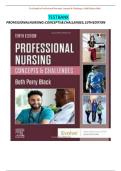
Test Bank for Professional Nursing Concepts & Challenges, 10th Edition, Beth
z z z z z z z z z z
TEST BANK
z
PROFESSIONAL NURSING: CONCEPTS & CHALLENGES, 10TH EDITION
z z z z z z
, Test Bank for Professional Nursing Concepts & Challenges, 10th Edition, Beth
z z z z z z z z z z
Table of Contents z z
Chapter 1. Nursing in Today’s Evolving Health Care Environment
z z z z z z z z
Chapter 2. The History and Social Context of Nursing
z z z z z z z z
Chapter 3. Nursing’s Pathway to Professionalism
z z z z z
Chapter 4. Nursing Education in an Evolving Health Care Environment
z z z z z z z z z
Chapter 5. Becoming a Professional Nurse: Defining Nursing and Socialization into Practice
z z z z z z z z z z z
Chapter 6. Nursing as a Regulated Practice: Legal Issues
z z z z z z z z
Chapter 7. Ethics: Basic Concepts for Professional Nursing Practice
z z z z z z z z
Chapter 8. Conceptual and Philosophical Foundations of Professional Nursing Practice
z z z z z z z z z
Chapter 9. Nursing Theory: The Basis for Professional Nursing
z z z z z z z z
Chapter 10. The Science of Nursing and Evidence-Based Practice
z z z z z z z z
Chapter 11. Developing Nursing Judgment Through Critical Thinking
z z z z z z z
Chapter 12. Communication and Collaboration in Professional Nursing
z z z z z z z
Chapter 13. Nurses, Patients, and Families: Caring at the Intersection of Health,Illness, and Culture
z z z z z z z z z z z z z
Chapter 14. Health Care in the United States
z z z z z z z
Chapter 15. Political Activism in Nursing: Communities, Organizations, Government
z z z z z z z z
Chapter 16. Nursing Challenge: To Continue to Evolve
z z z z z z z
, Test Bank for Professional Nursing Concepts & Challenges, 10th Edition, Beth
z z z z z z z z z z
Professional Nursing: Concepts&Challenges, 10th Edi z z z z z z
tion Test Bank z z
Chapter 1.Nursing in Today’s Evolving Health Care Environment
z z z z z z z
MULTIPLE CHOICE z
1. Which of the following could eventually change the historical status of nursing as a female-
z z z z z z z z z z z z z z
dominated profession?
z z
a. More men graduating from baccalaureate and higher degree programs
z z z z z z z z
b. The proportion of men in nursing beginning to increase
z z z z z z z z
c. More male graduates of basic nursing programs entering the workplace
z z z z z z z z z
d. Salary compensation increasing to attract more men
z z z z z z
ANSWER: C z
Feedback
A More men graduating from baccalaureate and higher degree programs is not the best an
z z z z z z z z z z z z z
swer because associate degree programs produce the most new graduates.
z z z z z z z z z
B The percentage of men in nursing has increased 50% since 2000.
z z z z z z z z z z
C The more men who enter the workplace as nurses, the less nursing will be seen as a fem
z z z z z z z z z z z z z z z z z
ale-dominated profession. z
D Salary rates do not appear to relate to the recruitment of men into nursing.
z z z z z z z z z z z z z
DIFFERENCE: COGNITIVE LEVEL: Comprehension REFERENCE: MCS: 2
z z z z z z
2. The racial and ethnic composition of the nursing profession will change to more accurately ref
z z z z z z z z z z z z z z
lect the population as a whole when
z z z z z z
a. The increased numbers of racial and ethnic minorities enrolled in educational programs gr
z z z z z z z z z z z z
aduate and begin to practice.
z z z z
b. The number of Asians or Native Hawaiian-Pacific Islanders begins to increase.
z z z z z z z z z z
c. The percentage of African-
z z z
American and Hispanic nurses decreases more than the percentage of white nurses.
z z z z z z z z z z z
, Test Bank for Professional Nursing Concepts & Challenges, 10th Edition, Beth
z z z z z z z z z z
d. The nonwhite portion of the general population decreases.
z z z z z z z
ANSWER: A z
Feedback
A A larger percentage of minorities are enrolled in nursing educational programs than pr
z z z z z z z z z z z z
eviously.
B Asians and Native Hawaiian- z z z
Pacific Islanders are over represented in nursing compared to their percentage o
z z z z z z z z z z z
f the general population.
z z z
C Not only would the percentage of African-
z z z z z z z
American and Hispanic nurses need to increase, the percentage of white nurses woul
z z z z z z z z z z z z
d have to decrease in order to more accurately reflect the population as a whole.
z z z z z z z z z z z z z z
D The nonwhite portion of the general population is not likely to decrease.
z z z z z z z z z z z z
DIFFERENCE: COGNITIVE LEVEL: Comprehension REFERENCE: MCS: 3 z z z z z z
3. Which of the following is a correct statement about the registered nurse (RN) population?
z z z z z z z z z z z z z
a. The racial/ethnic composition of RNs closely resembles that of the general population.
z z z z z z z z z z z
b. The number of men entering nursing has decreased steadily over the last decade.
z z z z z z z z z z z z
c. The rate of aging of RNs has slowed for the first time in the past 30 years.
z z z z z z z z z z z z z z z z
d. The majority of employed RNs working full time must work a second position.
z z z z z z z z z z z z
ANSWER: C z
Feedback
A The racial/ethnic composition of RNs is increasing, but does not approximate their pe
z z z z z z z z z z z z
rcentage of the overall population. z z z z
B The number of men entering nursing is increasing.
z z z z z z z
C The average age of RNs in both 2004 and 2008 was 46. This is a result of the num
z z z z z z z z z z z z z z z z z z
bers of RNs under 30 in the workforce.
z z z z z z z
D According to 2008 data, only 12% of nurses working full time hold second po
z z z z z z z z z z z z z
sitions.
DIF: COGNITIVE LEVEL: Knowledge REFERENCE: MCS: 3
z z z z z z
4. Which of the following best describes trends in nursing education?
z z z z z z z z z
a. Numbers of RNs with bachelors and higher degrees are increasing.
z z z z z z z z z
b. Numbers of RNs with associate degrees are decreasing.
z z z z z z z
z z z z z z z z z z
TEST BANK
z
PROFESSIONAL NURSING: CONCEPTS & CHALLENGES, 10TH EDITION
z z z z z z
, Test Bank for Professional Nursing Concepts & Challenges, 10th Edition, Beth
z z z z z z z z z z
Table of Contents z z
Chapter 1. Nursing in Today’s Evolving Health Care Environment
z z z z z z z z
Chapter 2. The History and Social Context of Nursing
z z z z z z z z
Chapter 3. Nursing’s Pathway to Professionalism
z z z z z
Chapter 4. Nursing Education in an Evolving Health Care Environment
z z z z z z z z z
Chapter 5. Becoming a Professional Nurse: Defining Nursing and Socialization into Practice
z z z z z z z z z z z
Chapter 6. Nursing as a Regulated Practice: Legal Issues
z z z z z z z z
Chapter 7. Ethics: Basic Concepts for Professional Nursing Practice
z z z z z z z z
Chapter 8. Conceptual and Philosophical Foundations of Professional Nursing Practice
z z z z z z z z z
Chapter 9. Nursing Theory: The Basis for Professional Nursing
z z z z z z z z
Chapter 10. The Science of Nursing and Evidence-Based Practice
z z z z z z z z
Chapter 11. Developing Nursing Judgment Through Critical Thinking
z z z z z z z
Chapter 12. Communication and Collaboration in Professional Nursing
z z z z z z z
Chapter 13. Nurses, Patients, and Families: Caring at the Intersection of Health,Illness, and Culture
z z z z z z z z z z z z z
Chapter 14. Health Care in the United States
z z z z z z z
Chapter 15. Political Activism in Nursing: Communities, Organizations, Government
z z z z z z z z
Chapter 16. Nursing Challenge: To Continue to Evolve
z z z z z z z
, Test Bank for Professional Nursing Concepts & Challenges, 10th Edition, Beth
z z z z z z z z z z
Professional Nursing: Concepts&Challenges, 10th Edi z z z z z z
tion Test Bank z z
Chapter 1.Nursing in Today’s Evolving Health Care Environment
z z z z z z z
MULTIPLE CHOICE z
1. Which of the following could eventually change the historical status of nursing as a female-
z z z z z z z z z z z z z z
dominated profession?
z z
a. More men graduating from baccalaureate and higher degree programs
z z z z z z z z
b. The proportion of men in nursing beginning to increase
z z z z z z z z
c. More male graduates of basic nursing programs entering the workplace
z z z z z z z z z
d. Salary compensation increasing to attract more men
z z z z z z
ANSWER: C z
Feedback
A More men graduating from baccalaureate and higher degree programs is not the best an
z z z z z z z z z z z z z
swer because associate degree programs produce the most new graduates.
z z z z z z z z z
B The percentage of men in nursing has increased 50% since 2000.
z z z z z z z z z z
C The more men who enter the workplace as nurses, the less nursing will be seen as a fem
z z z z z z z z z z z z z z z z z
ale-dominated profession. z
D Salary rates do not appear to relate to the recruitment of men into nursing.
z z z z z z z z z z z z z
DIFFERENCE: COGNITIVE LEVEL: Comprehension REFERENCE: MCS: 2
z z z z z z
2. The racial and ethnic composition of the nursing profession will change to more accurately ref
z z z z z z z z z z z z z z
lect the population as a whole when
z z z z z z
a. The increased numbers of racial and ethnic minorities enrolled in educational programs gr
z z z z z z z z z z z z
aduate and begin to practice.
z z z z
b. The number of Asians or Native Hawaiian-Pacific Islanders begins to increase.
z z z z z z z z z z
c. The percentage of African-
z z z
American and Hispanic nurses decreases more than the percentage of white nurses.
z z z z z z z z z z z
, Test Bank for Professional Nursing Concepts & Challenges, 10th Edition, Beth
z z z z z z z z z z
d. The nonwhite portion of the general population decreases.
z z z z z z z
ANSWER: A z
Feedback
A A larger percentage of minorities are enrolled in nursing educational programs than pr
z z z z z z z z z z z z
eviously.
B Asians and Native Hawaiian- z z z
Pacific Islanders are over represented in nursing compared to their percentage o
z z z z z z z z z z z
f the general population.
z z z
C Not only would the percentage of African-
z z z z z z z
American and Hispanic nurses need to increase, the percentage of white nurses woul
z z z z z z z z z z z z
d have to decrease in order to more accurately reflect the population as a whole.
z z z z z z z z z z z z z z
D The nonwhite portion of the general population is not likely to decrease.
z z z z z z z z z z z z
DIFFERENCE: COGNITIVE LEVEL: Comprehension REFERENCE: MCS: 3 z z z z z z
3. Which of the following is a correct statement about the registered nurse (RN) population?
z z z z z z z z z z z z z
a. The racial/ethnic composition of RNs closely resembles that of the general population.
z z z z z z z z z z z
b. The number of men entering nursing has decreased steadily over the last decade.
z z z z z z z z z z z z
c. The rate of aging of RNs has slowed for the first time in the past 30 years.
z z z z z z z z z z z z z z z z
d. The majority of employed RNs working full time must work a second position.
z z z z z z z z z z z z
ANSWER: C z
Feedback
A The racial/ethnic composition of RNs is increasing, but does not approximate their pe
z z z z z z z z z z z z
rcentage of the overall population. z z z z
B The number of men entering nursing is increasing.
z z z z z z z
C The average age of RNs in both 2004 and 2008 was 46. This is a result of the num
z z z z z z z z z z z z z z z z z z
bers of RNs under 30 in the workforce.
z z z z z z z
D According to 2008 data, only 12% of nurses working full time hold second po
z z z z z z z z z z z z z
sitions.
DIF: COGNITIVE LEVEL: Knowledge REFERENCE: MCS: 3
z z z z z z
4. Which of the following best describes trends in nursing education?
z z z z z z z z z
a. Numbers of RNs with bachelors and higher degrees are increasing.
z z z z z z z z z
b. Numbers of RNs with associate degrees are decreasing.
z z z z z z z


