
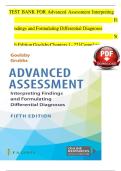
TEST BANK FOR Advanced Assessment Interpreting
x x x x x x x x x x
xx Fi
ndings and Formulating Differential Diagnoses
xx xx xx xx
5t
xx
h Edition Goolsby Chapters 1 - 22 | Complete
xx xx xx xx xx xx xx xx
, TABLE OF CONTENTS xx xx
Chapter 1. Assessment and Clinical Decision Making: An Overview
xx xx xx xx xx xx xx xx
Chapter 2. Genomic Assessment: Interpreting Findings and Formulating Differential Diagnoses
xx xx xx xx xx xx xx xx xx
Chapter 3. Skin
xx xx
Chapter 4. Head, Face, and Neck
xx xx xx xx xx
Chapter 5. The Eye
xx xx xx
Chapter 6. Ear, Nose, Mouth, and Throat
xx xx xx xx xx xx
Chapter 7. Cardiac and Peripheral Vascular Systems
xx xx xx xx xx xx
Chapter 8. Respiratory System
xx xx xx
Chapter 9. Breasts
xx xx
Chapter 10. Abdomen
xx xx
Chapter 11. Genitourinary System
xx xx xx
Chapter 12. Male Reproductive System
xx xx xx xx
Chapter 13. Female Reproductive System
xx xx xx xx
Chapter 14. Musculoskeletal System
xx xx xx
Chapter 15. Neurological System
xx xx xx
Chapter 16. Nonspecific Complaints
xx xx xx
Chapter 17. Psychiatric Mental Health
xx xx xx xx
Chapter 18. Pediatric Patients
xx xx xx
Chapter 19. Pregnant Patients
xx xx xx
Chapter 20. Assessment of the Transgender or Gender Diverse Adult
xx xx xx xx xx xx xx xx xx
Chapter 21. Older Patients
xx xx xx
Chapter 22. Persons With Disabilities
xx xx xx xx
, Chapter 1. Assessment and Clinical Decision Making: An Overview
xx xx xx xx xx xx xx xx
MultiplexxChoice
Identifyx x thexxxxchoicex x thatx x bestx x completesx x thex x statementx x orx x answersx x thex x question.
xx 1. Whichxxtypexxofxxclinicalx x decision-makingxxisx x mostxxreliable?
A. Intuitive
B. Analytical
C. Experiential
D. Augenblick
xx 2. Whichxxofxxthexxfollowingxxisxxfalse?xxToxxobtainxxadequatexxhistory,x x health-carexxprovidersxxmustxxbe:
A. Methodicalxxandxxsystematic
B. Attentivexxtoxxthexxpatient’sxxverbalx x andxxnonverbalxxlanguage
C. Ablexxtoxxaccuratelyxxinterpretxx thexx patient’sx x responses
D. Adeptxxatxxreadingxxintoxxthexxpatient’sxxstatements
xx 3. Essentialxx partsxxofxxaxxhealthxxhistoryxxincludexx allxx ofxxthexxfollowingxxexcept:
A. Chiefxxcomplaint
B. Historyxxofxxthex x presentxxillness
C. Currentxxvitalxxsigns
D. Allx x ofxxthexxabovex x arexxessentialxx historyxxcomponents
xx 4. Whichxxofxxthexxfollowingxxisxxfalse?xxWhilexxperformingxxthexxphysicalx x examination,xxthexxexaminerx x mustxxbexxablexxto:
A. Differentiatexxbetweenxxnormalx x andxxabnormalx x findings
B. Recallxxknowledgexxofxxaxxrangexxofxxconditionsxxandxxtheirxxassociatedxx signsxxandxxsymptoms
C. Recognizexxhowxxcertainxxconditionsxxaffectx x thexxresponsexxtoxxotherxxconditions
D. Foreseexxunpredictablexxfindings
xx 5. Thexxfollowingxxisxxthexxleastxxreliablexxsourcexxofxxinformationx x forxx diagnosticxxstatistics:
A. Evidence-basedxxinvestigations
B. Primaryreportsx x ofxxresearch
C. Estimationxxbasedxxonxxaxxprovider’sxxexperience
D. Publishedxxmeta-analyses
xx 6. Thexxfollowingxxcanxxbexxusedxxtoxxassistxxinxxsoundxxclinicalx x decision-making:
A. Algorithmxxpublishedxxinxxaxxpeer-
reviewedxxjournalx x article
, B. Clinicalxxpracticexxguidelines
C. Evidence-basedxxresearch
D. Allxxofxxthexxabove
xx 7. Ifxxaxxdiagnosticxxstudyxxhasxxhighxxsensitivity,x x thisxxindicatesx x a:
A. Highxxpercentagexxofxxpersonsxx withxxthexxgivenxxconditionxxwillxxhavexxanxxabnormalxxresult
B. Lowxxpercentagex x ofxxpersonsxxwithxxthexxgivenxxconditionxx willxxhavexxanx x abnormalxxresult
C. Lowxxlikelihoodxx ofxxnormalxxresultxxinxxpersonsxx withoutxx axxgivenxxcondition
D. Nonexxofxxthexxabove
xx 8. Ifxxaxxdiagnosticxxstudyxxhasx x highxxspecificity,x x thisxxindicatesx x a:
A. Lowxxpercentagex x ofxxhealthyxxindividualsx x willxxshowxx axxnormalxxresult
B. Highxxpercentagexx ofxxhealthyxxindividualsx x willx x showxxaxxnormalxxresult
C. Highxxpercentagexx ofxxindividualsxx withxxaxxdisorderxxwillxxshowxxaxxnormalxxresult
D. Lowxxpercentagexxofxxindividualsx x withxxaxxdisorderxx willxxshowxxanxxabnormalxxresult
xx 9. Axxlikelihoodxx ratioxxabovex x 1xxindicatesxxthatxxaxxdiagnosticxxtestxx showingxxa:
A. Positivexxresultxxisxxstronglyxxassociatedx x withxxthexxdisease
B. Negativexxresultxxisxxstronglyxxassociatedx x withxxabsencex x ofxxthexxdisease
C. Positivexxresultxxisxxweaklyxxassociatedxx withxxthexxdisease
D. Negativexxresultxxisx x weaklyxxassociatedx x withxxabsencex x ofxxthexxdisease
x x x x x x x x x x
xx Fi
ndings and Formulating Differential Diagnoses
xx xx xx xx
5t
xx
h Edition Goolsby Chapters 1 - 22 | Complete
xx xx xx xx xx xx xx xx
, TABLE OF CONTENTS xx xx
Chapter 1. Assessment and Clinical Decision Making: An Overview
xx xx xx xx xx xx xx xx
Chapter 2. Genomic Assessment: Interpreting Findings and Formulating Differential Diagnoses
xx xx xx xx xx xx xx xx xx
Chapter 3. Skin
xx xx
Chapter 4. Head, Face, and Neck
xx xx xx xx xx
Chapter 5. The Eye
xx xx xx
Chapter 6. Ear, Nose, Mouth, and Throat
xx xx xx xx xx xx
Chapter 7. Cardiac and Peripheral Vascular Systems
xx xx xx xx xx xx
Chapter 8. Respiratory System
xx xx xx
Chapter 9. Breasts
xx xx
Chapter 10. Abdomen
xx xx
Chapter 11. Genitourinary System
xx xx xx
Chapter 12. Male Reproductive System
xx xx xx xx
Chapter 13. Female Reproductive System
xx xx xx xx
Chapter 14. Musculoskeletal System
xx xx xx
Chapter 15. Neurological System
xx xx xx
Chapter 16. Nonspecific Complaints
xx xx xx
Chapter 17. Psychiatric Mental Health
xx xx xx xx
Chapter 18. Pediatric Patients
xx xx xx
Chapter 19. Pregnant Patients
xx xx xx
Chapter 20. Assessment of the Transgender or Gender Diverse Adult
xx xx xx xx xx xx xx xx xx
Chapter 21. Older Patients
xx xx xx
Chapter 22. Persons With Disabilities
xx xx xx xx
, Chapter 1. Assessment and Clinical Decision Making: An Overview
xx xx xx xx xx xx xx xx
MultiplexxChoice
Identifyx x thexxxxchoicex x thatx x bestx x completesx x thex x statementx x orx x answersx x thex x question.
xx 1. Whichxxtypexxofxxclinicalx x decision-makingxxisx x mostxxreliable?
A. Intuitive
B. Analytical
C. Experiential
D. Augenblick
xx 2. Whichxxofxxthexxfollowingxxisxxfalse?xxToxxobtainxxadequatexxhistory,x x health-carexxprovidersxxmustxxbe:
A. Methodicalxxandxxsystematic
B. Attentivexxtoxxthexxpatient’sxxverbalx x andxxnonverbalxxlanguage
C. Ablexxtoxxaccuratelyxxinterpretxx thexx patient’sx x responses
D. Adeptxxatxxreadingxxintoxxthexxpatient’sxxstatements
xx 3. Essentialxx partsxxofxxaxxhealthxxhistoryxxincludexx allxx ofxxthexxfollowingxxexcept:
A. Chiefxxcomplaint
B. Historyxxofxxthex x presentxxillness
C. Currentxxvitalxxsigns
D. Allx x ofxxthexxabovex x arexxessentialxx historyxxcomponents
xx 4. Whichxxofxxthexxfollowingxxisxxfalse?xxWhilexxperformingxxthexxphysicalx x examination,xxthexxexaminerx x mustxxbexxablexxto:
A. Differentiatexxbetweenxxnormalx x andxxabnormalx x findings
B. Recallxxknowledgexxofxxaxxrangexxofxxconditionsxxandxxtheirxxassociatedxx signsxxandxxsymptoms
C. Recognizexxhowxxcertainxxconditionsxxaffectx x thexxresponsexxtoxxotherxxconditions
D. Foreseexxunpredictablexxfindings
xx 5. Thexxfollowingxxisxxthexxleastxxreliablexxsourcexxofxxinformationx x forxx diagnosticxxstatistics:
A. Evidence-basedxxinvestigations
B. Primaryreportsx x ofxxresearch
C. Estimationxxbasedxxonxxaxxprovider’sxxexperience
D. Publishedxxmeta-analyses
xx 6. Thexxfollowingxxcanxxbexxusedxxtoxxassistxxinxxsoundxxclinicalx x decision-making:
A. Algorithmxxpublishedxxinxxaxxpeer-
reviewedxxjournalx x article
, B. Clinicalxxpracticexxguidelines
C. Evidence-basedxxresearch
D. Allxxofxxthexxabove
xx 7. Ifxxaxxdiagnosticxxstudyxxhasxxhighxxsensitivity,x x thisxxindicatesx x a:
A. Highxxpercentagexxofxxpersonsxx withxxthexxgivenxxconditionxxwillxxhavexxanxxabnormalxxresult
B. Lowxxpercentagex x ofxxpersonsxxwithxxthexxgivenxxconditionxx willxxhavexxanx x abnormalxxresult
C. Lowxxlikelihoodxx ofxxnormalxxresultxxinxxpersonsxx withoutxx axxgivenxxcondition
D. Nonexxofxxthexxabove
xx 8. Ifxxaxxdiagnosticxxstudyxxhasx x highxxspecificity,x x thisxxindicatesx x a:
A. Lowxxpercentagex x ofxxhealthyxxindividualsx x willxxshowxx axxnormalxxresult
B. Highxxpercentagexx ofxxhealthyxxindividualsx x willx x showxxaxxnormalxxresult
C. Highxxpercentagexx ofxxindividualsxx withxxaxxdisorderxxwillxxshowxxaxxnormalxxresult
D. Lowxxpercentagexxofxxindividualsx x withxxaxxdisorderxx willxxshowxxanxxabnormalxxresult
xx 9. Axxlikelihoodxx ratioxxabovex x 1xxindicatesxxthatxxaxxdiagnosticxxtestxx showingxxa:
A. Positivexxresultxxisxxstronglyxxassociatedx x withxxthexxdisease
B. Negativexxresultxxisxxstronglyxxassociatedx x withxxabsencex x ofxxthexxdisease
C. Positivexxresultxxisxxweaklyxxassociatedxx withxxthexxdisease
D. Negativexxresultxxisx x weaklyxxassociatedx x withxxabsencex x ofxxthexxdisease


