
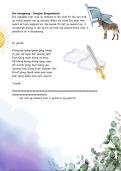
Die tweegeveg – Breyten Breytenbach
Die vaandels roer soos ou donkies in die wind En die son trek
sy wolke stywer om sy skouers Want dis koud Die man met
swart oë̈ kom sugtend oor die kweek En hef sy swaard op, 'n
versteende paling in die lig En ek trek my swaard blink soos 'n
proefbuis of 'n draaktong
En garde!
Kleng jaa tjeng tjang tjeng kleng
Ai joei tsji tsjan bik sjoeing tjô̂ rr
Fuut tjeng wam kieng oo sssip
Hû̂ klang klang klang tjing sssip
Hû̂ merde tjong fuut kleng jaa
Sjoeing klub kieng konk hoender dirr
Rrruf tjang tijenk wam aaa sssip
Kak tjeng kleks zem zem ung ha
Touché́
Aaaaaaaaaaaaaaaaaaaaaaaaaaaaaaaaaaaaaaaaaaaaaaaaaaaaaaaa
aaaaaaaaaaaaaaaaaaaaaaa
(ek voel sy swaard soos 'n graat in my gorrel)
, Die tweegeveg - The title “Die Tweegeveg” signals a duel or fight, hinting at both
a literal and metaphorical struggle, preparing the reader for
conflict, tension, and the poem’s mix of danger and theatricality.
The Duel
Die vaandels roer soos ou -
The line uses a simile to create a vivid, tactile image.
donkies in die wind -
The “vaandels” are compared to old donkeys struggling in the
wind, suggesting both heaviness and awkward, jerky movement.
-
This evokes a sense of resistance and weariness, implying that
the scene is tense and burdened, rather than triumphant or
celebratory.
-
The choice of “ou donkies” adds a touch of humor or irony,
contrasting the traditional grandeur of flags with the mundane,
stubborn labor of animals.
-
Overall, the line conveys a visual and emotional texture that is
The banners stir like old
both weighty and slightly absurd, reflecting the poem’s blend of
donkeys in the wind
seriousness and playfulness.
En die son trek sy wolke - The line personifies the sun, giving it human-like qualities as if it
stywer om sy skouers can feel cold and needs to wrap itself in clouds like a protective
garment.
- This metaphor creates a vivid image of a harsh, possibly
oppressive atmosphere, reflecting the tension or unease in the
poem’s setting.
- The clouds acting as a “skouers” emphasize weight and burden,
suggesting heaviness in the environment that mirrors the
impending confrontation.
- The line combines visual and tactile imagery, blending natural
And the sun pulls its clouds elements with human emotion, which heightens the poem’s
tighter around its shoulders surreal, almost theatrical mood.
Want dis koud - The line is deceptively simple but carries multiple layers of
meaning.
- Literally, it situates the scene in a physical environment,
emphasizing the chill that affects both the speaker and the duel,
creating a sense of discomfort or tension.
- Symbolically, the cold can reflect emotional or existential
harshness, hinting at the isolation, danger, or seriousness of the
confrontation.
- Its brevity and placement after the imagery of the sun pulling
clouds around its shoulders heighten the starkness, slowing the
poem’s rhythm and making the reader pause to feel the chill.
The line also contrasts with the later chaotic, playful sounds of
-
the duel, grounding the poem momentarily in a tangible, sensory
Because it is cold
reality amid the surreal action.
Die vaandels roer soos ou donkies in die wind En die son trek
sy wolke stywer om sy skouers Want dis koud Die man met
swart oë̈ kom sugtend oor die kweek En hef sy swaard op, 'n
versteende paling in die lig En ek trek my swaard blink soos 'n
proefbuis of 'n draaktong
En garde!
Kleng jaa tjeng tjang tjeng kleng
Ai joei tsji tsjan bik sjoeing tjô̂ rr
Fuut tjeng wam kieng oo sssip
Hû̂ klang klang klang tjing sssip
Hû̂ merde tjong fuut kleng jaa
Sjoeing klub kieng konk hoender dirr
Rrruf tjang tijenk wam aaa sssip
Kak tjeng kleks zem zem ung ha
Touché́
Aaaaaaaaaaaaaaaaaaaaaaaaaaaaaaaaaaaaaaaaaaaaaaaaaaaaaaaa
aaaaaaaaaaaaaaaaaaaaaaa
(ek voel sy swaard soos 'n graat in my gorrel)
, Die tweegeveg - The title “Die Tweegeveg” signals a duel or fight, hinting at both
a literal and metaphorical struggle, preparing the reader for
conflict, tension, and the poem’s mix of danger and theatricality.
The Duel
Die vaandels roer soos ou -
The line uses a simile to create a vivid, tactile image.
donkies in die wind -
The “vaandels” are compared to old donkeys struggling in the
wind, suggesting both heaviness and awkward, jerky movement.
-
This evokes a sense of resistance and weariness, implying that
the scene is tense and burdened, rather than triumphant or
celebratory.
-
The choice of “ou donkies” adds a touch of humor or irony,
contrasting the traditional grandeur of flags with the mundane,
stubborn labor of animals.
-
Overall, the line conveys a visual and emotional texture that is
The banners stir like old
both weighty and slightly absurd, reflecting the poem’s blend of
donkeys in the wind
seriousness and playfulness.
En die son trek sy wolke - The line personifies the sun, giving it human-like qualities as if it
stywer om sy skouers can feel cold and needs to wrap itself in clouds like a protective
garment.
- This metaphor creates a vivid image of a harsh, possibly
oppressive atmosphere, reflecting the tension or unease in the
poem’s setting.
- The clouds acting as a “skouers” emphasize weight and burden,
suggesting heaviness in the environment that mirrors the
impending confrontation.
- The line combines visual and tactile imagery, blending natural
And the sun pulls its clouds elements with human emotion, which heightens the poem’s
tighter around its shoulders surreal, almost theatrical mood.
Want dis koud - The line is deceptively simple but carries multiple layers of
meaning.
- Literally, it situates the scene in a physical environment,
emphasizing the chill that affects both the speaker and the duel,
creating a sense of discomfort or tension.
- Symbolically, the cold can reflect emotional or existential
harshness, hinting at the isolation, danger, or seriousness of the
confrontation.
- Its brevity and placement after the imagery of the sun pulling
clouds around its shoulders heighten the starkness, slowing the
poem’s rhythm and making the reader pause to feel the chill.
The line also contrasts with the later chaotic, playful sounds of
-
the duel, grounding the poem momentarily in a tangible, sensory
Because it is cold
reality amid the surreal action.



