

Written by students who passed Immediately available after payment Read online or as PDF Wrong document? Swap it for free 4.6 TrustPilot
logo-home
Document preview thumbnail
Preview 2 out of 11 pages
Exam (elaborations)

PSU BBH 101 Exam 2

Document preview thumbnail
Preview 2 out of 11 pages

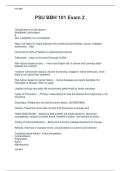
PSU BBH 101 Exam 2 Classifications of risk factors - - Modifiable/ controllable & Non-modifiable/ non-controllable Major risk factor for major diseases like cardiovascular disease, cancer, diabetes, alzheimers - -Age (Accounts for 90% of deaths in industrialized nations) Telomeres - -caps on the end of strands of DNA Risk factors based on sex: - --men have higher risk of cancer and coronary heart disease than women -reasons: behavioral reasons, alcohol & smoking, engage in riskier behaviors, more likely to not report their problems Risk factors based on family history: - -Some diseases are clearly heritable. Ex: Huntington's Disease, 90% of cases Lifestyle choices and early life environment determined by family members Types of Prevention: - -Primary: make efforts to stop the disease from beginning in the first place Secondary: People who are sick but aren't aware. (SCREENING) Tertiary: Prevention done after the fact that the person is already sick Health Belief Model - -decisions about health are made based on: perceived susceptibility, severity of health threat, benefits of action, and barriers to action Theory of Planned Behavior - -Behavioral intention indicates likelihood of change. Attitude, influence of societal norms, and perception of control over behavior Transtheoretical Model - -Precontemplation Contemplation Preparation Action Maintenance PSU BBH PSU BBH Relapse (sometimes) Health Promotion - -Efforts to help people change lifestyle to achieve optimal health Give people control over health Modify public policy "behavioral social science" What is stress? - -a negative emotional experience accompanied by predictable biochemical, physiological, cognitive, and behavioral changes that are directed either toward altering the stressful event or accommodating to its effects Claude Bernard - -Advocate for looking at things through reductionism Argued we need balance Walter Cannon - -Coined the terms homeostasis & Fight-or-flight Talked about both physical and emotional health (psychological) Hans Selye - -Endocrinologist- studied rats by injecting them with hormones Developed the concept of General Adaptation Syndrome (GAS)- first experience stress they are susceptible to harm Stages of Stress: - -1) Alarm 2) Resistance 3) Exhaustion Allostasis - --Replaced homeostasis Main Idea: There is adaptive flexibility of ranges in our body, your body will be able to get back to these rages after experiencing a stressor 3 Major systems of stress physiology: - -Sympathetic Nervous System- response in seconds HPA Axis- response in minutes Immune System- response in days Sympathetic Nervous System - -First Activated in stress response Increases heart rate, BP, respiration, pupil dilation PSU BBH PSU BBH Sends more blood to your muscles Digestion and sexual arousal are inhibited Adrenal Glands - -Located just above kidneys Two parts: adrenal cortex & adrenal medulla Adrenal Cortex - -Produces cortisol (important to fight or flight response) Adrenal Medulla - -Produces epinephrine and norepinephrine Cascade of HPA Axis: - -CRH--ACTH--Cortisol Hypothalamus - -Releases CRH Helps control appetite with hormones like leptin and ghrelin Anterior Pituitary - -Releases ACTH HPA Axis and Cortisol - -Cortisol binds to receptors in hypothalamus & hippocampus Leads to decreased CRH & ACTH production Cortisol effect on cells - -Breakdown fats & Glycogen Initiate gluconeogenesis Decrease effects of insulin Overall: Increase availability of glucose and other nutrients the body can use for energy Helps to make sure the energy is there for fight or flight Increases risk of other things like diabetes if you have chronic stress because of high levels of cortisol Immune Organs - -Spleen and thymus (SNS projects to immune organs) Immune System & Stress - -Stress causes a heightened immune response Healthy Stress Responses: - -1) Fight or flight 2) HPA Response: provides energy for prolonged action 3) Immune-- heightened PSU BBH PSU BBH PSU BBH 4) If acute stress continues and becomes chronic, may change from healthy and adaptive to unhealthy & maladaptive Norepinephrine & epinephrine - -Increase heart rate & Blood pressure Stress that triggers cardiovascular problems can be: - -Chronic or acute (most common days for heart attacks are Monday) Hypertension - -Makes damage to blood vessels more likely Increases risk of atherosclerosis Atherosclerosis - -Hardened growth in the arteries that blocks blood flow Plaque can rupture which will cause a clot Corstiol (continued) - -- Makes cells less sensitive to insulin -Elevated cortisol levels are associated with weight gain (increases risk of type 2 diabetes) Ulcers and stress - -Ulcers may be associated with stress and a combination of H. pylori & other factors Other effects - -CRH and glucocorticoids inhibit sleep Stress can contribute to depression and anxiety Chronic stress can negatively affect memory Acutely stressful situations we tend to have heightened memory What are some things people find stressful - -Death of someone close to you, poverty, divorce, marriage, job (losing jobs), serious illness, things mostly out of your control Learned Helplessness: - -when a subject is in a situation where they learn there is nothing they can do after time they just give Stress & Control: - -People prefer to know if they're going to get a shock rather than 50/50 chance Stress is increased when people feel like they are not in control of an event Lange and Roding (1976) - -Nursing Home study: Personal responsibility emphasized in group 1; they were happier and 15% died PSU BBH Nothing emphasized in group 2, 30% died Harry Harlow& maternal deprivation studies - -Experiments with monkeys: effects of stress seem to be exacerbated for those with low levels of social support Whitehall Study - -People who got less pay would experience greater stress and get sick more often Low socioeconomic status and or inadequate resources can: - -increase negative effects of stress Why do we sleep? - -We don't know Hypothesis of why we sleep: - -- Adaptive Inactivity: may have promoted survival -Energy Conservation: overlaps with adaptive inactivity -Restoration -Memory consolidation: transfer short term memories into long term memory storage -Toxin Removal Sleep Stages: - -1) Stage 1: very light, easily roused, theta waves 2) Stage 2: still woken up easily, doesn't last long, sleep spindles and k complexes 3) Stage 3: "slow wave sleep", large looping brain waves, delta waves, difficult to wake up 4) REM "rapid eye movement", body is paralyzed, very difficult to wake, most likely to be dreaming here, paradoxical sleep: brain activity is almost exactly the same as id you were awake. Acute Sleep Deprivation: - -Short-term... Impaired cognition Increased risk of accidents Chronic Sleep deprivation: - -Long term Weight gain Isulin Resistance Diabetes Impaired immune function PSU BBH PSU BBH Cancer risk Alzheimer's risk Sleep hygiene tips include: - -Go to bed and wake up at the same time Avoid prolonged naps Avoid caffeinated drinks later in the day Avoid substances that interfere with sleep (Adderal) Hide your clock at night Exercise regularly (not too close to bed) Have a quiet bedroom and comfortable bed Caffeine can prolong sleep latency, impair quality, and reduce *slow wave sleep* - -Half life of caffeine is about 5hours Bright lights in electronics before bed suppress secretion of: - -melatonin Most recent approach to diet for government: - -MyPlate Proteins: - -Made up of amino acids, about 15% of the body is protein Most people receive adequate amount of protein in their diets already Good fats: - -Unsaturated fats Liquid at room temperature Olive oil, avocado, nuts Bad trans fats - -Used to preserve products and give them a longer shelf life Cookies, crackers, snacks Saturated Fats - -Solid at room temperature Found in red meats Problem with low fat foods: - -Encourage eating processed foods Lower HDL (good cholesterol) Carbohydrates - -Provides glucose (energy source) PSU BBH PSU BBH Includes: sugars, starches, & dietary fibers Best source: whole grain, fruits & veggies Worst source: processed or refined foods Problem with refined grains: - -Easily broken down: -makes you hungry again sooner -more energy is stored as fat Glycemic Index: - -Ranks carbohydrates, scale of 0-100 Higher is worse. Examples: white bread, corn flakes, white rice, potatoes, pretzels Vitamins - -organic, made by plants or animals Minerals - -inorganic, come from soil or water Vitamin D deficiency can lead to: - -RickettsC Most data about multivitamin supplementation comes from what kind of study? - -Cohort study HDL - -High density lipoproteins, good cholesterol LDL - -Low-density lipoproteins (bad cholesterol) More likely to get caught in the body and create a build up Reason for inconsistent fruit/veggie cancer links: - -Most were case-control studies Bias and confounding likely played large roles Smoking & Alcohol also confounding factors Antioxidants - -Defend against free radicals Little evidence they protect against disease Studies are mixed and inconclusive Free radicals - -Damages cells & can speed up aging& cause disease PSU BBH PSU BBH Myth of Silver bullet/superfood: - -There is no magic food or product that will suffice for everything You need a balanced and healthy diet along with things like exercise Basal Metabolic rate - -- Minimal amount of caloric energy that is taken in that must be devoted to those essential processes while the body is at rest - 1/3 of calories are digested away, another 50% go to processes essential for life - If you reduce caloric intake your BMR will change too, which is why you can't just keep losing weight Destruction of ventromedial hypothalamus produces: - -Chronic hunger & obesity Destruction of lateral hypothalamus produces: - -loss of appetite & several weight loss BMI Measurement - -Mass in pounds ------------------ x 703 Height in inches^2 Doesnt give the full picture Hazards of obesity: - -65% of population are overweight 1 in 6 children are obese Causes for obesity epidemic: - -50% heredity Evolutionary explanations Psychosocial factors -having a close friend whos obese -Stress -SES Anorexia nervosa - -BMI Below 18 risk of mortality is 2-15% Not getting enough nutrients Bulimia - -Body image disto

Content preview

PSU BBH


PSU BBH 101 Exam 2

Classifications of risk factors - -
Modifiable/ controllable
&
Non-modifiable/ non-controllable

Major risk factor for major diseases like cardiovascular disease, cancer, diabetes,
alzheimers - -Age

(Accounts for 90% of deaths in industrialized nations)

Telomeres - -caps on the end of strands of DNA

Risk factors based on sex: - --men have higher risk of cancer and coronary heart
disease than women

-reasons: behavioral reasons, alcohol & smoking, engage in riskier behaviors, more
likely to not report their problems

Risk factors based on family history: - -Some diseases are clearly heritable. Ex:
Huntington's Disease, 90% of cases

Lifestyle choices and early life environment determined by family members

Types of Prevention: - -Primary: make efforts to stop the disease from beginning in the
first place

Secondary: People who are sick but aren't aware. (SCREENING)

Tertiary: Prevention done after the fact that the person is already sick

Health Belief Model - -decisions about health are made based on: perceived
susceptibility, severity of health threat, benefits of action, and barriers to action

Theory of Planned Behavior - -Behavioral intention indicates likelihood of change.

Attitude, influence of societal norms, and perception of control over behavior

Transtheoretical Model - -Precontemplation
Contemplation
Preparation
Action
Maintenance
PSU BBH

, PSU BBH


Relapse (sometimes)

Health Promotion - -Efforts to help people change lifestyle to achieve optimal health

Give people control over health

Modify public policy

"behavioral social science"

What is stress? - -a negative emotional experience accompanied by predictable
biochemical, physiological, cognitive, and behavioral changes that are directed either
toward altering the stressful event or accommodating to its effects

Claude Bernard - -Advocate for looking at things through reductionism

Argued we need balance

Walter Cannon - -Coined the terms homeostasis & Fight-or-flight

Talked about both physical and emotional health (psychological)

Hans Selye - -Endocrinologist- studied rats by injecting them with hormones

Developed the concept of General Adaptation Syndrome (GAS)- first experience stress
they are susceptible to harm

Stages of Stress: - -1) Alarm
2) Resistance
3) Exhaustion

Allostasis - --Replaced homeostasis

Main Idea: There is adaptive flexibility of ranges in our body, your body will be able to
get back to these rages after experiencing a stressor

3 Major systems of stress physiology: - -Sympathetic Nervous System- response in
seconds

HPA Axis- response in minutes

Immune System- response in days

Sympathetic Nervous System - -First Activated in stress response

Increases heart rate, BP, respiration, pupil dilation

PSU BBH

Document information

Uploaded on
September 9, 2025
Number of pages
11
Written in
2025/2026
Type
Exam (elaborations)
Contains
Questions & answers
$14.99

Wrong document? Swap it for free Within 14 days of purchase and before downloading, you can choose a different document. You can simply spend the amount again.
Written by students who passed
Immediately available after payment
Read online or as PDF

Seller avatar
Reputation scores are based on the amount of documents a seller has sold for a fee and the reviews they have received for those documents. There are three levels: Bronze, Silver and Gold. The better the reputation, the more your can rely on the quality of the sellers work.
AlexScorer
2.5
(2)
Sold
11
Followers
0
Items
1800
Last sold
2 weeks ago


Why students choose Stuvia

Created by fellow students, verified by reviews

Quality you can trust: written by students who passed their tests and reviewed by others who've used these notes.

Didn't get what you expected? Choose another document

No worries! You can instantly pick a different document that better fits what you're looking for.

Pay as you like, start learning right away

No subscription, no commitments. Pay the way you're used to via credit card and download your PDF document instantly.

Student with book image

“Bought, downloaded, and aced it. It really can be that simple.”

Alisha Student

Working on your references?

Create accurate citations in APA, MLA and Harvard with our free citation generator.

Working on your references?

Frequently asked questions
