RE13/14
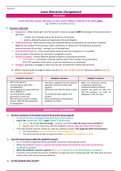
Lease Alienation (Assignment)
Alienation
A lease will often contain restrictions on the Tenant’s ability to DISPOSE of his LEASE EARLY
e.g. ASSIGN it to another person.
Alienation INCLUDES:
Assignment = When tenant gets rid of his interest in lease or property EARLY and assigns it to someone else to
take over.
o Transfer of an existing lease by the tenant to a third party
o Must be effected by deed and registered at the Land Registry
Under/Sub-letting = when tenant creates new leasehold interest and becomes the sub-tenant’s landlord.
Might be over all/part of the premises under a head lease or all/part term of head lease (except for
nominal reversion of one day) – carving it out of existing lease
Parting with possession = when tenant allows someone else into occupation or is excluded
from occupation themselves (no sub-lease or assignment occurs)
Shared occupation = several different people/companies occupying the premises
o s.42 LTA 1954 = “two bodies corporate shall be taken to be members of a group where
one is the subsidiary of the other or both are subsidiaries of a third body”
Charging = granting a mortgage or other security over the leasehold interest held by tenant
Where a tenant seeks to assign his lease, he will enter into an SCPC contract because it will be a sale of a
commercial property.
Landlord’s concerns Assignee’s concerns Assignor’s concerns
- Who is the tenant? - Not able to negotiate the lease beyond - Make sure landlord’s consent
- Are they able to meet their agreeing a deed of variation with is obtained in good time
rent obligation? landlord - Landlord will want an AGA so
- Are they going to comply with their - Otherwise must take the lease or leave assignor also wants to make sure
other obligations? it that the assignee can meet his
- Can they provide suitable - It is taking the lease subject to its obligations under the lease
guarantors as back-up? burdens
- Who will pay its costs for having - What incumbrances and potential
lawyers check the documentation problems are there?
for assignment?
Checklist for ASSIGNMENT
1. Are there restrictions on the whole or part of the premises being assigned?
o Commonly the lease will restrict assignment of part of the property
o CHECK THE ALIENATION CLAUSE under TENANT’S OBLIGATIONS
4.14.1: “The Tenant must not assign… except as authorised under this clause 4.14 or Schedule 5”
Clause 4.14.2: “The Tenant may, with the Landlord’s consent, assign the whole of the Premises”.
o If the lease provides that the Tenant may, with the Landlord’s consent, only assign the whole of the premises:
The Tenant will be unable to assign part of the premises only.
The Tenant will only be able to assign the whole by obtaining the landlord’s consent.
2. Does the Tenant have to obtain the Landlord’s consent?
o CL 2.1: Ordinarily assignment will be permissible only by the Landlord giving consent.
o Where the landlord’s consent is required, this usually requires the parties to enter into a formal licence
(A LICENSE TO ASSIGN).
o Where the landlord’s consent is required, SCPC 11.3.5 requires this to be obtained before Completion.
o If consent is not provided, the time for completion is postponed until 5 working days after the seller gives the buyer
written notice that consent has been obtained.
3. Can the Landlord refuse consent?
Lease Alienation (Assignment)
Alienation
A lease will often contain restrictions on the Tenant’s ability to DISPOSE of his LEASE EARLY
e.g. ASSIGN it to another person.
Alienation INCLUDES:
Assignment = When tenant gets rid of his interest in lease or property EARLY and assigns it to someone else to
take over.
o Transfer of an existing lease by the tenant to a third party
o Must be effected by deed and registered at the Land Registry
Under/Sub-letting = when tenant creates new leasehold interest and becomes the sub-tenant’s landlord.
Might be over all/part of the premises under a head lease or all/part term of head lease (except for
nominal reversion of one day) – carving it out of existing lease
Parting with possession = when tenant allows someone else into occupation or is excluded
from occupation themselves (no sub-lease or assignment occurs)
Shared occupation = several different people/companies occupying the premises
o s.42 LTA 1954 = “two bodies corporate shall be taken to be members of a group where
one is the subsidiary of the other or both are subsidiaries of a third body”
Charging = granting a mortgage or other security over the leasehold interest held by tenant
Where a tenant seeks to assign his lease, he will enter into an SCPC contract because it will be a sale of a
commercial property.
Landlord’s concerns Assignee’s concerns Assignor’s concerns
- Who is the tenant? - Not able to negotiate the lease beyond - Make sure landlord’s consent
- Are they able to meet their agreeing a deed of variation with is obtained in good time
rent obligation? landlord - Landlord will want an AGA so
- Are they going to comply with their - Otherwise must take the lease or leave assignor also wants to make sure
other obligations? it that the assignee can meet his
- Can they provide suitable - It is taking the lease subject to its obligations under the lease
guarantors as back-up? burdens
- Who will pay its costs for having - What incumbrances and potential
lawyers check the documentation problems are there?
for assignment?
Checklist for ASSIGNMENT
1. Are there restrictions on the whole or part of the premises being assigned?
o Commonly the lease will restrict assignment of part of the property
o CHECK THE ALIENATION CLAUSE under TENANT’S OBLIGATIONS
4.14.1: “The Tenant must not assign… except as authorised under this clause 4.14 or Schedule 5”
Clause 4.14.2: “The Tenant may, with the Landlord’s consent, assign the whole of the Premises”.
o If the lease provides that the Tenant may, with the Landlord’s consent, only assign the whole of the premises:
The Tenant will be unable to assign part of the premises only.
The Tenant will only be able to assign the whole by obtaining the landlord’s consent.
2. Does the Tenant have to obtain the Landlord’s consent?
o CL 2.1: Ordinarily assignment will be permissible only by the Landlord giving consent.
o Where the landlord’s consent is required, this usually requires the parties to enter into a formal licence
(A LICENSE TO ASSIGN).
o Where the landlord’s consent is required, SCPC 11.3.5 requires this to be obtained before Completion.
o If consent is not provided, the time for completion is postponed until 5 working days after the seller gives the buyer
written notice that consent has been obtained.
3. Can the Landlord refuse consent?