

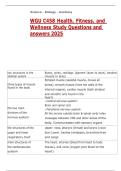
Science Biology Anatomy
WGU C458 Health, Fitness, and
Wellness Study Questions and
answers 2025
key structures in the Bones, joints, cartilage, ligament (bone to bone), tendons
skeletal system (muscle to bone)
Striated muscle (skeletal muscle, moves all
three types of muscle bones), smooth muscle (lines the walls of the
found in the body
internal organs), cardiac muscle (both striated
and smooth/ only found in the
heart)
a. Central nervous system:
Brain and spinal cord
the two main b. Peripheral nervous system:
divisions of the All the nerves outside brain & spinal cord/ relay
nervous system messages between CNS and other areas of the
body. Communicates with sensory organs
the structures of the Upper: nose, pharynx (throat) and larynx (voice
upper and lower box) Lower: trachea (windpipe), bronchial tree
respiratory tract and lungs
main structures of The heart, arteries (blood from heart to body
the cardiovascular tissues), and veins (oxygen-poor blood to the
system heart)
, Oxygenated blood enters into the left side of the heart,
which pumps it out of the
the pathway of blood heart through the aorta. Arteries and capillaries
through the heart
deliver the oxygenated blood to the cells in the
organs. Veins carry oxygen-poor blood and
wastes (carbon dioxide and water) from cells
back toward the lungs, where it receives
oxygen.
main organs of the Mouth, esophagus, stomach, small intestine, large
digestive system intestine, anus
major organs of the Kidneys, ureter, bladder, urethra
urinary system
Also known as the lymphatic system. It defends
and protects the body from foreign invaders
immune system function
that can cause sickness and disease. Produces,
stores, and carries white
blood cells (leukocytes) around the body. It's
made up of lymph, lymph nodes, bone marrow,
tonsils, adenoids, spleen, and thymus gland.
integumentary system Protects from the environment, encloses,
lubricates, and regulates body temp. It's made
up of skin, hair, and nails.
WGU C458 Health, Fitness, and
Wellness Study Questions and
answers 2025
key structures in the Bones, joints, cartilage, ligament (bone to bone), tendons
skeletal system (muscle to bone)
Striated muscle (skeletal muscle, moves all
three types of muscle bones), smooth muscle (lines the walls of the
found in the body
internal organs), cardiac muscle (both striated
and smooth/ only found in the
heart)
a. Central nervous system:
Brain and spinal cord
the two main b. Peripheral nervous system:
divisions of the All the nerves outside brain & spinal cord/ relay
nervous system messages between CNS and other areas of the
body. Communicates with sensory organs
the structures of the Upper: nose, pharynx (throat) and larynx (voice
upper and lower box) Lower: trachea (windpipe), bronchial tree
respiratory tract and lungs
main structures of The heart, arteries (blood from heart to body
the cardiovascular tissues), and veins (oxygen-poor blood to the
system heart)
, Oxygenated blood enters into the left side of the heart,
which pumps it out of the
the pathway of blood heart through the aorta. Arteries and capillaries
through the heart
deliver the oxygenated blood to the cells in the
organs. Veins carry oxygen-poor blood and
wastes (carbon dioxide and water) from cells
back toward the lungs, where it receives
oxygen.
main organs of the Mouth, esophagus, stomach, small intestine, large
digestive system intestine, anus
major organs of the Kidneys, ureter, bladder, urethra
urinary system
Also known as the lymphatic system. It defends
and protects the body from foreign invaders
immune system function
that can cause sickness and disease. Produces,
stores, and carries white
blood cells (leukocytes) around the body. It's
made up of lymph, lymph nodes, bone marrow,
tonsils, adenoids, spleen, and thymus gland.
integumentary system Protects from the environment, encloses,
lubricates, and regulates body temp. It's made
up of skin, hair, and nails.


