

The multistore model of memory
15 May 2024 11:37
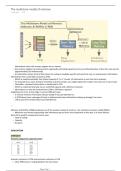
Information enters the sensory register via our senses.
- Our sensory register has unknown (but supposedly unlimited) capacity and a very limited duration of less than one second
(approximately 250 milliseconds).
- As information enters from all five senses the coding is modality specific and said to be raw, or unprocessed, information.
Information that is attended is passed to STM.
- Which is coded acoustically, has limited capacity of 7+/-2 'chunks' of information in out short term memory.
- For example if you were trying to remember a phone number, you might repeat the number over and over in your head.
- Thereafter, rehearsed information is transferred to LTM
- Which is coded semantically, has an unlimited capacity and a lifetime's duration.
- Information can also be retrieved from LTM to STM when required
Forgetting can occur at any stage in various different ways
- In sensory memory information decays rapidly if not paid attention to.
- In STM decay (over a passage of time) or displacement (new information 'taking up storage') can occur.
- LTM is prone to retrieval failure and interference.
….
Atkinson and Shiffrin (1968) proposed one of the earliest models of memory - the multistore memory model (MSM)
- Memories are formed sequentially and information passes from one component to the next, in a linear fashion.
Each of the specific components has its own:
- Type of coding
- Capacity
- Duration
EVALUATION
STRENGTH
Research support for separate stores
Acoustic confusion in STM and semantic confusion in LTM
→ Clear differences in coding between the two stores
Memory Page 1
,Idea of LTM and STM being different and separate stores provided by Baddeley.
Found that acoustically similar words were harder to recall instantly and semantically similar words were harder to recall after
20 mins.
- Concluded that acoustic confusion occurred in STM and semantic in LTM, to STM codes acoustically and LTM codes
semantically.
- Shows that the two types of memory are different entities.
Counterpoint:
Artificial stimuli
In everyday life we form memories related to all sorts of useful things - people's faces, their names, facts, places, et cetera
- But many of the studies that support the multi store model use none of these materials. Instead they use digits, letters and
sometimes words. They even use what's known as consonant syllables that have no meaning.
- This means that the multi store model may not be an accurate or valid model of how memory works in our everyday lives,
where we have to remember much more meaningful information than is often in research studies.
Different types of STM
The MSM states that STM is a unitary store (one type). However, evidence from patients suffering from amnesia suggest that's
not true.
- Shallice and Warrington (1970) studies a patient known as KF.
- KF STM for digits was very poor when they read them aloud to him, but his recall was much better when he was able to
read digits to himself. Suggesting there's more than one store - sound and images.
- Such research challenges the MSM as it shows that there must be at least 2 types of short -term store, rather than just 1
unitary store as the model suggests.
Outdated model
- Atkinson and Shiffin based the MSM on evidence available at the time that showed STM and LTM to be single memory
stores, separate and independent from each other.
- However there's a lot of research evidence that long-term memory, like STM is not a single memory store, e.g. one LTM for
memories of facts about world, and one for memories of how to ride and bike.
- Combined with research showing that there is more than one type rehearsal, this suggests that MSM is oversimplified and
outdated model of memory.
Memory Page 2
, Types of long term memory
16 May 2024 20:24
Different types of LTM
Elden Tulving was one of the first cognitive psychologists to point out that the MSM is too simple and inflexible.
He proposed 3 models of LTM
- Semantic memory
- Episodic memory
- Procedural memory
Semantic memory
Semantic memory contains our knowledge of the world.
This includes facts but in the broadest of senses.
▫ General knowledge: capital cities, applying to university, the taste of an orange, the meaning of words.
▫ Also contains information on concepts, such as animals, love etc.
▫ These memories are not time-stamped - they are less personal and are more about facts that we all share.
Procedural memory
Procedural memory is our memory for actions, skills i.e. How we do things.
▫ We can recall these memories without conscious awareness - we just do them.
▫ These are also the sort of skills that we would find hard to explain to others or would become more difficult if we
tried to explain them whilst doing them.
Episodic memory
Episodic memory is our memory for events from our lives.
▫ Like a diary e.g. your most recent visit to the dentist, birthday parties, a gig etc.
▫ They are time-stamped and each memory will include several elements e.g. people, places, objects, behaviours.
▫ They require conscious effort to recall i.e. you are aware that you are searching for the memory.
EVALUATION
STRENGTH
Real life applications
- Belleville et al (2006) found that memory training techniques can be used to improve the episodic memory of older
people suffering with mild cognitive impairment.
- The experimental group showed greater improvement than the control group who received no training.
Research support from clinical evidence
Supporting from clinical studies of patients with amnesia.
HM and Clive Wearing both suffers from amnesia. HM displayed normal functioning in his sematic memory
(understood the concept of a dog) but impaired functioning in their episodic memory (but could not remember ever
having owned a dog.)
Clive Wearing was a professional musician and could play the piano without difficulty, however, could not remember
having learnt to play, suggesting an impaired episodic memory but functioning procedural memory.
Both of these cases support the idea of a clear separation of different types of LTM.
Support from Neuroimaging research
There is also evidence from brain scan studies that different types of memory are stored in different parts of the brain.
Tulving et al (1994) asked their participants to perform various tasks whilst scanning their brain with a PET scanner.
They found that semantic memories involved the left prefrontal cortex whilst episodic memories involved the right
prefrontal cortex.
Supports Tulving's theory as it shows there is a physical reality to the different LTM stores. These findings have been
confirmed many times in later research, further supporting the validity of the finding.
Counterpoint
Clinical evidence
Memory Page 3
15 May 2024 11:37
Information enters the sensory register via our senses.
- Our sensory register has unknown (but supposedly unlimited) capacity and a very limited duration of less than one second
(approximately 250 milliseconds).
- As information enters from all five senses the coding is modality specific and said to be raw, or unprocessed, information.
Information that is attended is passed to STM.
- Which is coded acoustically, has limited capacity of 7+/-2 'chunks' of information in out short term memory.
- For example if you were trying to remember a phone number, you might repeat the number over and over in your head.
- Thereafter, rehearsed information is transferred to LTM
- Which is coded semantically, has an unlimited capacity and a lifetime's duration.
- Information can also be retrieved from LTM to STM when required
Forgetting can occur at any stage in various different ways
- In sensory memory information decays rapidly if not paid attention to.
- In STM decay (over a passage of time) or displacement (new information 'taking up storage') can occur.
- LTM is prone to retrieval failure and interference.
….
Atkinson and Shiffrin (1968) proposed one of the earliest models of memory - the multistore memory model (MSM)
- Memories are formed sequentially and information passes from one component to the next, in a linear fashion.
Each of the specific components has its own:
- Type of coding
- Capacity
- Duration
EVALUATION
STRENGTH
Research support for separate stores
Acoustic confusion in STM and semantic confusion in LTM
→ Clear differences in coding between the two stores
Memory Page 1
,Idea of LTM and STM being different and separate stores provided by Baddeley.
Found that acoustically similar words were harder to recall instantly and semantically similar words were harder to recall after
20 mins.
- Concluded that acoustic confusion occurred in STM and semantic in LTM, to STM codes acoustically and LTM codes
semantically.
- Shows that the two types of memory are different entities.
Counterpoint:
Artificial stimuli
In everyday life we form memories related to all sorts of useful things - people's faces, their names, facts, places, et cetera
- But many of the studies that support the multi store model use none of these materials. Instead they use digits, letters and
sometimes words. They even use what's known as consonant syllables that have no meaning.
- This means that the multi store model may not be an accurate or valid model of how memory works in our everyday lives,
where we have to remember much more meaningful information than is often in research studies.
Different types of STM
The MSM states that STM is a unitary store (one type). However, evidence from patients suffering from amnesia suggest that's
not true.
- Shallice and Warrington (1970) studies a patient known as KF.
- KF STM for digits was very poor when they read them aloud to him, but his recall was much better when he was able to
read digits to himself. Suggesting there's more than one store - sound and images.
- Such research challenges the MSM as it shows that there must be at least 2 types of short -term store, rather than just 1
unitary store as the model suggests.
Outdated model
- Atkinson and Shiffin based the MSM on evidence available at the time that showed STM and LTM to be single memory
stores, separate and independent from each other.
- However there's a lot of research evidence that long-term memory, like STM is not a single memory store, e.g. one LTM for
memories of facts about world, and one for memories of how to ride and bike.
- Combined with research showing that there is more than one type rehearsal, this suggests that MSM is oversimplified and
outdated model of memory.
Memory Page 2
, Types of long term memory
16 May 2024 20:24
Different types of LTM
Elden Tulving was one of the first cognitive psychologists to point out that the MSM is too simple and inflexible.
He proposed 3 models of LTM
- Semantic memory
- Episodic memory
- Procedural memory
Semantic memory
Semantic memory contains our knowledge of the world.
This includes facts but in the broadest of senses.
▫ General knowledge: capital cities, applying to university, the taste of an orange, the meaning of words.
▫ Also contains information on concepts, such as animals, love etc.
▫ These memories are not time-stamped - they are less personal and are more about facts that we all share.
Procedural memory
Procedural memory is our memory for actions, skills i.e. How we do things.
▫ We can recall these memories without conscious awareness - we just do them.
▫ These are also the sort of skills that we would find hard to explain to others or would become more difficult if we
tried to explain them whilst doing them.
Episodic memory
Episodic memory is our memory for events from our lives.
▫ Like a diary e.g. your most recent visit to the dentist, birthday parties, a gig etc.
▫ They are time-stamped and each memory will include several elements e.g. people, places, objects, behaviours.
▫ They require conscious effort to recall i.e. you are aware that you are searching for the memory.
EVALUATION
STRENGTH
Real life applications
- Belleville et al (2006) found that memory training techniques can be used to improve the episodic memory of older
people suffering with mild cognitive impairment.
- The experimental group showed greater improvement than the control group who received no training.
Research support from clinical evidence
Supporting from clinical studies of patients with amnesia.
HM and Clive Wearing both suffers from amnesia. HM displayed normal functioning in his sematic memory
(understood the concept of a dog) but impaired functioning in their episodic memory (but could not remember ever
having owned a dog.)
Clive Wearing was a professional musician and could play the piano without difficulty, however, could not remember
having learnt to play, suggesting an impaired episodic memory but functioning procedural memory.
Both of these cases support the idea of a clear separation of different types of LTM.
Support from Neuroimaging research
There is also evidence from brain scan studies that different types of memory are stored in different parts of the brain.
Tulving et al (1994) asked their participants to perform various tasks whilst scanning their brain with a PET scanner.
They found that semantic memories involved the left prefrontal cortex whilst episodic memories involved the right
prefrontal cortex.
Supports Tulving's theory as it shows there is a physical reality to the different LTM stores. These findings have been
confirmed many times in later research, further supporting the validity of the finding.
Counterpoint
Clinical evidence
Memory Page 3


