
NR565 / NR 565 Final Exam Question Bank
(Latest ):
Advanced Pharmacology Fundamentals -
Chamberlain
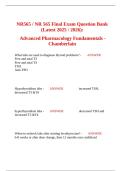
What labs are used to diagnose thyroid problems? - ANSWER
Free and total T3
Free and total T4
TSH
Anti-TPO
Hypothyroidism labs - ANSWER increased TSH,
decreased T3 &T4
hyperthyroidism labs - ANSWER decreased TSH and
increased T3 &T4
When to recheck labs after starting levothyroxine? - ANSWER
6-8 weeks or after dose change, then 12 months once stabilized
,S/S hypothyroidism - ANSWER pale, puffy, and
expressionless face, cold and dry skin, brittle hair/hair loss, low heart
rate and body temperature, lethargy, fatigue, cold intolerance, mental
status changes, thyroid enlargement
Think "hypo low and slow"
S/S hyperthyroidism - ANSWER strong and rapid heart
rate, dysrhythmias, angina, nervousness, insomnia, rapid thought flow
and speech, muscle weakness/atrophy, increased metabolic rate
(increased heat production, increased body temperature, heat
intolerance), warm/moist skin, increased appetite, weight loss despite
increased caloric intake
think "hyper as in fast"
result of not treating hypothyroidism during pregnancy - ANSWER
permanent neuropsychological deficits in the child. First trimester: fetus
unable to produce their own thyroid hormones. Fetal thyroid gland is
fully functional in the second trimester.
Medication to treat SYMPTOMS of hyperthyroidism - ANSWER
beta blocker (decrease HR)
, non-radioactive iodine
How to take levothyroxine with food? - ANSWER take
on an empty stomach in the morning, 30-60 minutes before breakfast
Supplement/drug interactions with levothyroxine - ANSWER
antacids, iron, calcium
Confirm diabetes diagnosis prior to treatment - ANSWER
fasting plasma glucose greater than or equal to 126, A random plasma
glucose of greater than or equal to 200 plus symptoms of diabetes, an
oral glucose tolerance test of two hours, plasma glucose of greater than
or equal to 200, or a hemoglobin A1c, a 6.5 or higher (on two occasions)
A1c general goal - ANSWER <7%
Older adult A1c goal - ANSWER <8%


