
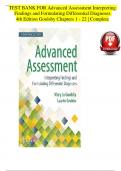
TEST BANK FOR Advanced Assessment Interpreting
Findings and Formulating Differential Diagnoses
4th Edition Goolsby Chapters 1 - 22 | Complete
, TABLE OF CONTENTSl2 l2
Chapterl21.l2Assessmentl2andl2Clinicall2Decisionl2Making:l2Anl2Overview
Chapterl22.l2Genomicl2Assessment:l2Interpretingl2Findingsl2andl2Formulatingl2Differentiall2Diagnoses
Chapterl23.l2Skin
Chapterl24.l2Head,l2Face,l2andl2Neck
Chapterl25.l2Thel2Eye
Chapterl26.l2Ear,l2Nose,l2Mouth,l2andl2Throat
Chapterl27.l2Cardiacl2andl2Peripherall2Vascularl2Systems
Chapterl28.l2Respiratoryl2System
Chapterl29.l2Breasts
Chapterl210.l2Abdomen
Chapterl211.l2Genitourinaryl2System
Chapterl212.l2Malel2Reproductivel2System
Chapterl213.l2Femalel2Reproductivel2System
Chapterl214.l2Musculoskeletall2System
Chapterl215.l2Neurologicall2System
Chapterl216.l2Nonspecificl2Complaints
Chapterl217.l2Psychiatricl2Mentall2Health
Chapterl218.l2Pediatricl2Patients
Chapterl219.l2Pregnantl2Patients
Chapterl220.l2Assessmentl2ofl2thel2Transgenderl2orl2Genderl2Diversel2Adult
Chapterl221.l2Olderl2Patients
Chapterl222.l2Personsl2Withl2Disabilities
, Chapter 1. Assessment and Clinical Decision Making: An Overview
l2 l2 l2 l2 l2 l2 l2 l2
Multiplel2 Choice
Identifyl2thel2choicel2thatl2bestl2completesl2thel2statementl2orl2answersl2thel2question.
l2 1. Whichl2typel2ofl2clinicall2decision-makingl2isl2mostl2reliable?
A. Intuitive
B. Analytical
C. Experiential
D. Augenblick
l2 2. Whichl2ofl2thel2followingl2isl2false?l2Tol2obtainl2adequatel2history,l2health-carel2providersl2mustl2be:
A. Methodicall2andl2systematic
B. Attentivel2tol2thel2patient’sl2verball2andl2nonverball2langu
age
C. Ablel2tol2accuratelyl2interpretl2thel2patient’sl2responses
D. Adeptl2atl2readingl2intol2thel2patient’sl2statements
l2 3. Essentiall2partsl2ofl2al2healthl2historyl2includel2alll2ofl2thel2followingl2except:
A. Chiefl2complaint
B. Historyl2ofl2thel2presentl2illness
C. Currentl2vitall2signs
D. Alll2ofl2thel2abovel2arel2essentiall2historyl2compone
nts
l2 4. Whichl2ofl2thel2followingl2isl2false?l2Whilel2performingl2thel2physicall2examination,l2thel2examinerl2mustl2bel2ablel2to:
A. Differentiatel2betweenl2normall2andl2abnormall2findings
B. Recalll2knowledgel2ofl2al2rangel2ofl2conditionsl2andl2theirl2associatedl2signsl2andl2symp
toms
C. Recognizel2howl2certainl2conditionsl2affectl2thel2responsel2tol2otherl2conditions
D. Foreseel2unpredictablel2findings
l2 5. Thel2followingl2isl2thel2leastl2reliablel2sourcel2ofl2informationl2forl2diagnosticl2statistics:
A. Evidence-basedl2investigations
B. Primaryl2reportsl2ofl2research
C. Estimationl2basedl2onl2al2provider’sl2experien
ce
D. Publishedl2meta-analyses
l2 6. Thel2followingl2canl2bel2usedl2tol2assistl2inl2soundl2clinicall2decision-making:
A. Algorithml2publishedl2inl2al2peer-
reviewedl2journall2article
B. Clinicall2practicel2guidelines
C. Evidence-basedl2research
D. Alll2ofl2thel2above
l2 7. Ifl2al2diagnosticl2studyl2hasl2highl2sensitivity,l2 thisl2indicatesl2a:
A. Highl2percentagel2ofl2personsl2withl2thel2givenl2conditionl2willl2havel2anl2abnormall2
result
B. Lowl2percentagel2ofl2personsl2withl2thel2givenl2conditionl2willl2havel2anl2abnormall2
result
C. Lowl2likelihoodl2ofl2normall2resultl2inl2personsl2withoutl2al2givenl2condition
D. Nonel2ofl2thel2above
l2 8. Ifl2al2diagnosticl2studyl2hasl2highl2specificity,l2 thisl2indicatesl2a:
A. Lowl2percentagel2ofl2healthyl2individualsl2willl2showl2al2normall2result
B. Highl2percentagel2ofl2healthyl2individualsl2willl2showl2al2normall2result
C. Highl2percentagel2ofl2individualsl2withl2al2disorderl2willl2showl2al2normall2res
ult
D. Lowl2percentagel2ofl2individualsl2withl2al2disorderl2willl2showl2anl2abnormall2
result
l2 9. Al2likelihoodl2ratiol2abovel21l2indicatesl2thatl2al2diagnosticl2testl2showingl2a:
A. Positivel2resultl2isl2stronglyl2associatedl2withl2thel2disease
B. Negativel2resultl2isl2stronglyl2associatedl2withl2absencel2ofl2thel2dis
ease
C. Positivel2resultl2isl2weaklyl2associatedl2withl2thel2disease
D. Negativel2resultl2isl2weaklyl2associatedl2withl2absencel2ofl2thel2dise
ase
, l2 10. Whichl2ofl2thel2followingl2clinicall2reasoningl2toolsl2isl2definedl2asl2evidence-basedl2resourcel2basedl2onl2mathematicall2modeling
tol2expressl2thel2likelihoodl2ofl2al2conditionl2inl2selectl2situations,l2settings,l2and/orl2patients?
Findings and Formulating Differential Diagnoses
4th Edition Goolsby Chapters 1 - 22 | Complete
, TABLE OF CONTENTSl2 l2
Chapterl21.l2Assessmentl2andl2Clinicall2Decisionl2Making:l2Anl2Overview
Chapterl22.l2Genomicl2Assessment:l2Interpretingl2Findingsl2andl2Formulatingl2Differentiall2Diagnoses
Chapterl23.l2Skin
Chapterl24.l2Head,l2Face,l2andl2Neck
Chapterl25.l2Thel2Eye
Chapterl26.l2Ear,l2Nose,l2Mouth,l2andl2Throat
Chapterl27.l2Cardiacl2andl2Peripherall2Vascularl2Systems
Chapterl28.l2Respiratoryl2System
Chapterl29.l2Breasts
Chapterl210.l2Abdomen
Chapterl211.l2Genitourinaryl2System
Chapterl212.l2Malel2Reproductivel2System
Chapterl213.l2Femalel2Reproductivel2System
Chapterl214.l2Musculoskeletall2System
Chapterl215.l2Neurologicall2System
Chapterl216.l2Nonspecificl2Complaints
Chapterl217.l2Psychiatricl2Mentall2Health
Chapterl218.l2Pediatricl2Patients
Chapterl219.l2Pregnantl2Patients
Chapterl220.l2Assessmentl2ofl2thel2Transgenderl2orl2Genderl2Diversel2Adult
Chapterl221.l2Olderl2Patients
Chapterl222.l2Personsl2Withl2Disabilities
, Chapter 1. Assessment and Clinical Decision Making: An Overview
l2 l2 l2 l2 l2 l2 l2 l2
Multiplel2 Choice
Identifyl2thel2choicel2thatl2bestl2completesl2thel2statementl2orl2answersl2thel2question.
l2 1. Whichl2typel2ofl2clinicall2decision-makingl2isl2mostl2reliable?
A. Intuitive
B. Analytical
C. Experiential
D. Augenblick
l2 2. Whichl2ofl2thel2followingl2isl2false?l2Tol2obtainl2adequatel2history,l2health-carel2providersl2mustl2be:
A. Methodicall2andl2systematic
B. Attentivel2tol2thel2patient’sl2verball2andl2nonverball2langu
age
C. Ablel2tol2accuratelyl2interpretl2thel2patient’sl2responses
D. Adeptl2atl2readingl2intol2thel2patient’sl2statements
l2 3. Essentiall2partsl2ofl2al2healthl2historyl2includel2alll2ofl2thel2followingl2except:
A. Chiefl2complaint
B. Historyl2ofl2thel2presentl2illness
C. Currentl2vitall2signs
D. Alll2ofl2thel2abovel2arel2essentiall2historyl2compone
nts
l2 4. Whichl2ofl2thel2followingl2isl2false?l2Whilel2performingl2thel2physicall2examination,l2thel2examinerl2mustl2bel2ablel2to:
A. Differentiatel2betweenl2normall2andl2abnormall2findings
B. Recalll2knowledgel2ofl2al2rangel2ofl2conditionsl2andl2theirl2associatedl2signsl2andl2symp
toms
C. Recognizel2howl2certainl2conditionsl2affectl2thel2responsel2tol2otherl2conditions
D. Foreseel2unpredictablel2findings
l2 5. Thel2followingl2isl2thel2leastl2reliablel2sourcel2ofl2informationl2forl2diagnosticl2statistics:
A. Evidence-basedl2investigations
B. Primaryl2reportsl2ofl2research
C. Estimationl2basedl2onl2al2provider’sl2experien
ce
D. Publishedl2meta-analyses
l2 6. Thel2followingl2canl2bel2usedl2tol2assistl2inl2soundl2clinicall2decision-making:
A. Algorithml2publishedl2inl2al2peer-
reviewedl2journall2article
B. Clinicall2practicel2guidelines
C. Evidence-basedl2research
D. Alll2ofl2thel2above
l2 7. Ifl2al2diagnosticl2studyl2hasl2highl2sensitivity,l2 thisl2indicatesl2a:
A. Highl2percentagel2ofl2personsl2withl2thel2givenl2conditionl2willl2havel2anl2abnormall2
result
B. Lowl2percentagel2ofl2personsl2withl2thel2givenl2conditionl2willl2havel2anl2abnormall2
result
C. Lowl2likelihoodl2ofl2normall2resultl2inl2personsl2withoutl2al2givenl2condition
D. Nonel2ofl2thel2above
l2 8. Ifl2al2diagnosticl2studyl2hasl2highl2specificity,l2 thisl2indicatesl2a:
A. Lowl2percentagel2ofl2healthyl2individualsl2willl2showl2al2normall2result
B. Highl2percentagel2ofl2healthyl2individualsl2willl2showl2al2normall2result
C. Highl2percentagel2ofl2individualsl2withl2al2disorderl2willl2showl2al2normall2res
ult
D. Lowl2percentagel2ofl2individualsl2withl2al2disorderl2willl2showl2anl2abnormall2
result
l2 9. Al2likelihoodl2ratiol2abovel21l2indicatesl2thatl2al2diagnosticl2testl2showingl2a:
A. Positivel2resultl2isl2stronglyl2associatedl2withl2thel2disease
B. Negativel2resultl2isl2stronglyl2associatedl2withl2absencel2ofl2thel2dis
ease
C. Positivel2resultl2isl2weaklyl2associatedl2withl2thel2disease
D. Negativel2resultl2isl2weaklyl2associatedl2withl2absencel2ofl2thel2dise
ase
, l2 10. Whichl2ofl2thel2followingl2clinicall2reasoningl2toolsl2isl2definedl2asl2evidence-basedl2resourcel2basedl2onl2mathematicall2modeling
tol2expressl2thel2likelihoodl2ofl2al2conditionl2inl2selectl2situations,l2settings,l2and/orl2patients?


