

06/08/2025, 10:06 Kettering Patient Assessment EXAM comprehensive questions and verified accurate solution (detailed & elaborated) 2025 TEST!! …
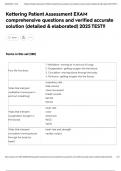
Kettering Patient Assessment EXAM
comprehensive questions and verified accurate
solution (detailed & elaborated) 2025 TEST!!
Save
Terms in this set (180)
1. Ventilation- moving air in and out of lungs
2. Oxygenation- getting oxygen into the blood
Four life functions:
3. Circulation- moving blood through the body
4. Perfusion- getting oxygen into the tissues
respiratory rate
tidal volume
Vitals that interpret
chest movement
ventilation (moving air in
breath sounds
and out...breathing)
PaCO2
EtCO2
heart rate
Vitals that interpret color
oxygenation (oxygen in sensorium
the blood) PaO2
SpO2
Vitals that interpret heart rate and strength
circulation (moving blood cardiac output
through the body by
heart)
https://quizlet.com/1064185260/kettering-patient-assessment-exam-comprehensive-questions-and-verified-accurate-solution-detailed-elaborated-202… 1/22
,06/08/2025, 10:06 Kettering Patient Assessment EXAM comprehensive questions and verified accurate solution (detailed & elaborated) 2025 TEST!! …
blood pressure
Vitals that interpret sensorium
perfusion (getting oxygen temperature
into tissues by pressure) urine output (kidneys not perfusing)
hemodynamics
What is the most ventilation
important life function
what is the most common oxygenation
life function
Marked means more severe.. it is an emergency
what you see (objective)
Signs
anything that can be seen or measured
what the patient tells you (subjective)
Symptoms
how you feel
recommended therapy for recommend nicotine therapy
nicotine users
40 ml/hr
Normal urine output
1 L/day
weight gain (due to gaining fluid too)
electrolyte imbalance
if intake exceeds urine
increased hemodynamic pressures
output, this could result in:
decreased lung compliance (decreased ventilation
and oxygenation)
Normal CVP 2-6 mmHg
hypovolemia (decreased fluid- recommend fluid
decrease in CVP indicates:
therapy)
increase in CVP indicates: hypervalemia (increased fluid- recommend diuretics)
Lethargic, somnolent, consider sleep apnea or excess O2 in pt with COPD
sleepy
Stuporous, confused responds inappropriately, drug overdose, intoxication
https://quizlet.com/1064185260/kettering-patient-assessment-exam-comprehensive-questions-and-verified-accurate-solution-detailed-elaborated-202… 2/22
, 06/08/2025, 10:06 Kettering Patient Assessment EXAM comprehensive questions and verified accurate solution (detailed & elaborated) 2025 TEST!! …
Semi comatose responds only to painful stimuli
drowsy state, may have decreased cough or gag
Obtunded
reflex
Coma does not respond to painful stimuli
Orthopnea - difficulty congestive heart failure
breathing lying down;
normally is associated
with what disease
General malaise - nausea, electrolyte imbalance
weakness, lightheaded,
fatigued; is normally
associated with what
a reaction of specific nervous tissue, may increase
blood pressure and heart rate
What is pain and what is
affected by pain
-- Lung tissue is NOT pain sensitive
-- ribs, muscle, and pleura are sensitive to pain
History of present illness current medical/physical problem(s)
includes
Peripheral edema; -presence of excess fluid in the tissue; pitting edema
What is it? - occurs in arms and ankles
Where does it occur? - caused by CHF and renal failure
What is it caused by? - rated by +1, +2, +3 etc
How is it rated? - recommend diuretic therapy
How do you fix it?
accumulation of fluid in the abdomen generally
What is ascites
caused by liver failure
Clubbing fingers are chronic hypoxemia
caused by what? occurs in COPD patients
https://quizlet.com/1064185260/kettering-patient-assessment-exam-comprehensive-questions-and-verified-accurate-solution-detailed-elaborated-202… 3/22
Kettering Patient Assessment EXAM
comprehensive questions and verified accurate
solution (detailed & elaborated) 2025 TEST!!
Save
Terms in this set (180)
1. Ventilation- moving air in and out of lungs
2. Oxygenation- getting oxygen into the blood
Four life functions:
3. Circulation- moving blood through the body
4. Perfusion- getting oxygen into the tissues
respiratory rate
tidal volume
Vitals that interpret
chest movement
ventilation (moving air in
breath sounds
and out...breathing)
PaCO2
EtCO2
heart rate
Vitals that interpret color
oxygenation (oxygen in sensorium
the blood) PaO2
SpO2
Vitals that interpret heart rate and strength
circulation (moving blood cardiac output
through the body by
heart)
https://quizlet.com/1064185260/kettering-patient-assessment-exam-comprehensive-questions-and-verified-accurate-solution-detailed-elaborated-202… 1/22
,06/08/2025, 10:06 Kettering Patient Assessment EXAM comprehensive questions and verified accurate solution (detailed & elaborated) 2025 TEST!! …
blood pressure
Vitals that interpret sensorium
perfusion (getting oxygen temperature
into tissues by pressure) urine output (kidneys not perfusing)
hemodynamics
What is the most ventilation
important life function
what is the most common oxygenation
life function
Marked means more severe.. it is an emergency
what you see (objective)
Signs
anything that can be seen or measured
what the patient tells you (subjective)
Symptoms
how you feel
recommended therapy for recommend nicotine therapy
nicotine users
40 ml/hr
Normal urine output
1 L/day
weight gain (due to gaining fluid too)
electrolyte imbalance
if intake exceeds urine
increased hemodynamic pressures
output, this could result in:
decreased lung compliance (decreased ventilation
and oxygenation)
Normal CVP 2-6 mmHg
hypovolemia (decreased fluid- recommend fluid
decrease in CVP indicates:
therapy)
increase in CVP indicates: hypervalemia (increased fluid- recommend diuretics)
Lethargic, somnolent, consider sleep apnea or excess O2 in pt with COPD
sleepy
Stuporous, confused responds inappropriately, drug overdose, intoxication
https://quizlet.com/1064185260/kettering-patient-assessment-exam-comprehensive-questions-and-verified-accurate-solution-detailed-elaborated-202… 2/22
, 06/08/2025, 10:06 Kettering Patient Assessment EXAM comprehensive questions and verified accurate solution (detailed & elaborated) 2025 TEST!! …
Semi comatose responds only to painful stimuli
drowsy state, may have decreased cough or gag
Obtunded
reflex
Coma does not respond to painful stimuli
Orthopnea - difficulty congestive heart failure
breathing lying down;
normally is associated
with what disease
General malaise - nausea, electrolyte imbalance
weakness, lightheaded,
fatigued; is normally
associated with what
a reaction of specific nervous tissue, may increase
blood pressure and heart rate
What is pain and what is
affected by pain
-- Lung tissue is NOT pain sensitive
-- ribs, muscle, and pleura are sensitive to pain
History of present illness current medical/physical problem(s)
includes
Peripheral edema; -presence of excess fluid in the tissue; pitting edema
What is it? - occurs in arms and ankles
Where does it occur? - caused by CHF and renal failure
What is it caused by? - rated by +1, +2, +3 etc
How is it rated? - recommend diuretic therapy
How do you fix it?
accumulation of fluid in the abdomen generally
What is ascites
caused by liver failure
Clubbing fingers are chronic hypoxemia
caused by what? occurs in COPD patients
https://quizlet.com/1064185260/kettering-patient-assessment-exam-comprehensive-questions-and-verified-accurate-solution-detailed-elaborated-202… 3/22


