Advanced Cardiovascular Life SupportExam
Version B (50 questions)
Please do not mark on this exam. Record
L L L L L L L
the best answer on the separate answer
L L L L L L L
L sheet.
1. What should be done to minimize interruptions in chest compressions during CPR?
L L L L L L L L L L L
A. Perform pulse checks only after defibrillation. L L L L L
B. Continue CPR while the defibrillator is charging. L L L L L L
C. Administer IV medications only when breaths are given. L L L L L L L
D. Continue to use AED even after the arrival of a manual defibrillator.
L L L L L L L L L L L
2. Which condition is an indication to stop or withhold resuscitative efforts?
L L L L L L L L L L
A. Unwitnessed arrest L
B. Safety threat to providers L L L
C. Patient age greater than 85 years L L L L L
D. No return of spontaneous circulation after 10 minutes of CPR
L L L L L L L L L
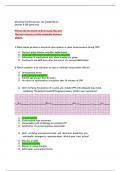
3. After verifying the absence of a pulse, you initiate CPR with adequate bag-mask
L L L L L L L L L L L L
ventilation. The patient’s lead II ECG appears below. What is your next action?
L L L L L L L L L L L L L
A. IV or IO access L L L
B. Endotracheal tube placement L L
C. Consultation with cardiology for possible PCI L L L L L
D. Application of a transcutaneous pacemaker L L L L
4. After verifying unresponsiveness and abnormal breathing, you
L L L L L L
activatethe emergency response team. What is your next action?
L L L L L L L L L
A. Retrieve an AED. L L
B. Check for a pulse. L L L
C. Deliver 2 rescue breaths. L L L
D. Administer a precordial thump. L L L
, 5. What is the recommendation on the use of cricoid pressure to prevent
L L L L L L L L L L L
aspiration during cardiac arrest?
L L L L
A. Not recommended for routine use
L L L L
B. Recommended during every resuscitation attempt L L L L
C. Recommended when the patient is vomiting L L L L L
D. Recommended only for supraglottic airway insertion L L L L L
6. What survival advantages does CPR provide to a patient in ventricular fibrillation?
L L L L L L L L L L L
A. Increases the defibrillation threshold L L L
B. Directly restores an organized rhythm L L L L
C. Opposes the harmful effects of epinephrine L L L L L
D. Produces a small amount of blood flow to the heart L L L L L L L L L
7. What is the recommended compression rate for performing CPR?
L L L L L L L L
A. 60 to 80 per minute
L L L L
B. 80 to 100 per minute
L L L L
C. About 100 per minute L L L
D. At least 100 per minute
L L L L
8. EMS personnel arrive to find a patient in cardiac arrest. Bystanders are performing
L L L L L L L L L L L L
CPR. After attaching a cardiac monitor, the responder observes the following rhythm
L L L L L L L L L L L L
strip. What is the most important early intervention?
L L L L L L L L
A. Defibrillation
B. Endotracheal intubation L
C. Epinephrine administration L
D. Antiarrhythmic administration L
9. A patient remains in ventricular fibrillation despite 1 shock and 2 minutes
L L L L L L L L L L L
of continuous CPR. The next intervention is to
L L L L L L L L
A. administer amiodarone. L
B. administer a second shock. L L L
C. administer epinephrine. L
D. insert an advanced airway. L L L
, 10. What is the recommended next step after a defibrillation attempt?
L L L L L L L L L
A. Open the patient’s airway.
L L L
B. Determine if a carotid pulse is present. L L L L L L
C. Check the ECG for evidence of a rhythm.
L L L L L L L
D. Begin CPR, starting with chest compressions.
L L L L L
11. Which of the following is the recommended first choice for establishing
L L L L L L L L L L
intravenous access during the attempted resuscitation of a patient in cardiac
L L L L L L L L L L L
arrest?
L
A. Subclavian vein L
B. Antecubital vein L
C. Intraosseous line L
D. Internal jugular vein L L
12. What is the recommended first intravenous dose of amiodarone for a patient
L L L L L L L L L L L
with refractory ventricular fibrillation?
L L L L
A. 1 mgL
B. 1 mg/kg
L
C. 1 mEq/kg
L
D. 300 mg L
13. IV/IO drug administration during CPR should be
L L L L L L
A. given rapidly during compressions.
L L L
B. administered slowly during the pause for a pulse check. L L L L L L L L
C. given by infusion. L L
D. given before any defibrillation attempts.
L L L L
14. How often should the team leader switch chest compressors during a
L L L L L L L L L L
Lresuscitation attempt? L
A. Every minute L
B. Every 2 minutes L L
C. Every 3 minutes L L
D. Every 4 minutes L L
15. Which finding is a sign of ineffective CPR?
L L L L L L L
A. PETCO2 <10 mm Hg L L L
B. Patient temperature >32°C (89.6°F) L L L
C. Diastolic intra-arterial pressure ≥20 mm Hg L L L L L
D. Measured patient urine output of 1 mL/kg per hour L L L L L L L L