
1
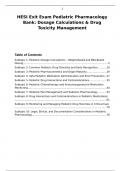
HESI Exit Exam Pediatric Pharmacology
Bank: Dosage Calculations & Drug
Toxicity Management
Table of Contents
Subtopic 1: Pediatric Dosage Calculations – Weight-Based and BSA-Based
Dosing..............................................................................................................2
Subtopic 2: Common Pediatric Drug Toxicities and Early Recognition...........10
Subtopic 3: Pediatric Pharmacokinetics and Organ Maturity.........................19
Subtopic 4: Safe Pediatric Medication Administration and Error Prevention. .27
Subtopic 5: Pediatric Drug Interactions and Contraindications......................35
Subtopic 6: Pediatric Chemotherapy and Immunosuppressive Medication
Monitoring......................................................................................................44
Subtopic 7: Pediatric Pain Management and Sedation Pharmacology...........53
Subtopic 8: Drug Interactions and Contraindications in Pediatric Medications
.......................................................................................................................61
Subtopic 9: Monitoring and Managing Pediatric Drug Toxicities in Critical Care
.......................................................................................................................70
Subtopic 10: Legal, Ethical, and Documentation Considerations in Pediatric
Pharmacology................................................................................................78
, 2
Subtopic 1: Pediatric Dosage Calculations –
Weight-Based and BSA-Based Dosing
Question 1
A pediatric patient weighs 18 kg. The prescribed dose of ceftriaxone is 50
mg/kg IV once daily. What is the correct daily dose for this child?
A. 600 mg
B. 900 mg
C. 750 mg
D. 1,000 mg
Correct Answer: B. 900 mg
Rationale: Weight-based dosing requires multiplying the child’s weight by the
dose per kg.
50 mg/kg × 18 kg = 900 mg.
Question 2
A nurse is preparing to administer a medication that is dosed at 20 mg/m².
The child's BSA is calculated as 0.8 m². How much medication should the
child receive?
A. 8 mg
B. 16 mg
C. 20 mg
D. 12 mg
Correct Answer: B. 16 mg
Rationale: Multiply the dose per square meter by the child’s BSA: 20 mg/m²
× 0.8 m² = 16 mg.
, 3
Question 3
Which factor most significantly affects drug distribution in neonates
compared to adults?
A. Hepatic enzyme induction
B. Higher total body water content
C. Increased protein binding
D. Slower renal clearance
Correct Answer: B. Higher total body water content
Rationale: Neonates have more total body water, which affects the volume of
distribution, especially for hydrophilic drugs.
Question 4
A 6-month-old infant is prescribed amoxicillin 30 mg/kg/day divided into two
doses. The infant weighs 10 kg. What is the correct amount per dose?
A. 150 mg
B. 200 mg
C. 300 mg
D. 100 mg
Correct Answer: A. 150 mg
Rationale: 30 mg/kg/day × 10 kg = 300 mg/day → divide by 2 = 150 mg per
dose.
Question 5
When using Clark’s rule to calculate pediatric medication doses, which factor
is essential?
, 4
A. Age in months
B. Height in cm
C. Weight in pounds
D. BSA
Correct Answer: C. Weight in pounds
Rationale: Clark’s rule is based on the child’s weight in pounds:
(Weight in lbs ÷ 150) × adult dose = pediatric dose.
Question 6
A child weighing 25 kg needs a loading dose of phenytoin at 15 mg/kg. What
is the appropriate loading dose?
A. 300 mg
B. 350 mg
C. 375 mg
D. 400 mg
Correct Answer: C. 375 mg
Rationale: 15 mg/kg × 25 kg = 375 mg.
Question 7
What is the primary reason for adjusting digoxin doses in infants?
A. Enzyme inhibition
B. Renal maturation
C. Narrow therapeutic range
D. Delayed gastric emptying
HESI Exit Exam Pediatric Pharmacology
Bank: Dosage Calculations & Drug
Toxicity Management
Table of Contents
Subtopic 1: Pediatric Dosage Calculations – Weight-Based and BSA-Based
Dosing..............................................................................................................2
Subtopic 2: Common Pediatric Drug Toxicities and Early Recognition...........10
Subtopic 3: Pediatric Pharmacokinetics and Organ Maturity.........................19
Subtopic 4: Safe Pediatric Medication Administration and Error Prevention. .27
Subtopic 5: Pediatric Drug Interactions and Contraindications......................35
Subtopic 6: Pediatric Chemotherapy and Immunosuppressive Medication
Monitoring......................................................................................................44
Subtopic 7: Pediatric Pain Management and Sedation Pharmacology...........53
Subtopic 8: Drug Interactions and Contraindications in Pediatric Medications
.......................................................................................................................61
Subtopic 9: Monitoring and Managing Pediatric Drug Toxicities in Critical Care
.......................................................................................................................70
Subtopic 10: Legal, Ethical, and Documentation Considerations in Pediatric
Pharmacology................................................................................................78
, 2
Subtopic 1: Pediatric Dosage Calculations –
Weight-Based and BSA-Based Dosing
Question 1
A pediatric patient weighs 18 kg. The prescribed dose of ceftriaxone is 50
mg/kg IV once daily. What is the correct daily dose for this child?
A. 600 mg
B. 900 mg
C. 750 mg
D. 1,000 mg
Correct Answer: B. 900 mg
Rationale: Weight-based dosing requires multiplying the child’s weight by the
dose per kg.
50 mg/kg × 18 kg = 900 mg.
Question 2
A nurse is preparing to administer a medication that is dosed at 20 mg/m².
The child's BSA is calculated as 0.8 m². How much medication should the
child receive?
A. 8 mg
B. 16 mg
C. 20 mg
D. 12 mg
Correct Answer: B. 16 mg
Rationale: Multiply the dose per square meter by the child’s BSA: 20 mg/m²
× 0.8 m² = 16 mg.
, 3
Question 3
Which factor most significantly affects drug distribution in neonates
compared to adults?
A. Hepatic enzyme induction
B. Higher total body water content
C. Increased protein binding
D. Slower renal clearance
Correct Answer: B. Higher total body water content
Rationale: Neonates have more total body water, which affects the volume of
distribution, especially for hydrophilic drugs.
Question 4
A 6-month-old infant is prescribed amoxicillin 30 mg/kg/day divided into two
doses. The infant weighs 10 kg. What is the correct amount per dose?
A. 150 mg
B. 200 mg
C. 300 mg
D. 100 mg
Correct Answer: A. 150 mg
Rationale: 30 mg/kg/day × 10 kg = 300 mg/day → divide by 2 = 150 mg per
dose.
Question 5
When using Clark’s rule to calculate pediatric medication doses, which factor
is essential?
, 4
A. Age in months
B. Height in cm
C. Weight in pounds
D. BSA
Correct Answer: C. Weight in pounds
Rationale: Clark’s rule is based on the child’s weight in pounds:
(Weight in lbs ÷ 150) × adult dose = pediatric dose.
Question 6
A child weighing 25 kg needs a loading dose of phenytoin at 15 mg/kg. What
is the appropriate loading dose?
A. 300 mg
B. 350 mg
C. 375 mg
D. 400 mg
Correct Answer: C. 375 mg
Rationale: 15 mg/kg × 25 kg = 375 mg.
Question 7
What is the primary reason for adjusting digoxin doses in infants?
A. Enzyme inhibition
B. Renal maturation
C. Narrow therapeutic range
D. Delayed gastric emptying


