
1
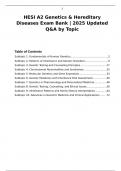
HESI A2 Genetics & Hereditary
Diseases Exam Bank | 2025 Updated
Q&A by Topic
Table of Contents
Subtopic 1: Fundamentals of Human Genetics................................................2
Subtopic 2: Patterns of Inheritance and Genetic Disorders..............................9
Subtopic 3: Genetic Testing and Counseling Principles..................................17
Subtopic 4: Chromosomal Abnormalities and Syndromes.............................25
Subtopic 5: Molecular Genetics and Gene Expression...................................33
Subtopic 6: Genetic Mutations and Inheritance Risk Assessment..................40
Subtopic 7: Genetics in Pharmacology and Personalized Medicine................48
Subtopic 8: Genetic Testing, Counseling, and Ethical Issues..........................56
Subtopic 9: Inheritance Patterns and Family History Interpretation...............64
Subtopic 10: Advances in Genomic Medicine and Clinical Applications.........72
, 2
Subtopic 1: Fundamentals of Human Genetics
Questions 1–20
1. What is the primary function of DNA in human cells?
A. Synthesis of lipids
B. Storage of genetic information
C. Transport of oxygen
D. Regulation of blood pH
Correct Answer: B. Storage of genetic information
Rationale: DNA (deoxyribonucleic acid) contains the instructions needed for
the development, functioning, and reproduction of living organisms. It stores
genetic information that determines traits.
2. What term describes different versions of a gene found at the same locus
on homologous chromosomes?
A. Alleles
B. Codons
C. Genotypes
D. Phenotypes
Correct Answer: A. Alleles
Rationale: Alleles are variants of the same gene that occur at the same locus
on homologous chromosomes. They can be dominant or recessive and
determine the expression of a trait.
3. A person inherits one dominant allele and one recessive allele for a gene.
What is the likely phenotype?
A. Recessive trait
, 3
B. Dominant trait
C. Co-dominant trait
D. Intermediate trait
Correct Answer: B. Dominant trait
Rationale: A dominant allele masks the effect of a recessive allele, so the
dominant trait is expressed in the phenotype.
4. Which phase of cell division ensures that gametes have half the number of
chromosomes?
A. Mitosis
B. Interphase
C. Meiosis
D. Cytokinesis
Correct Answer: C. Meiosis
Rationale: Meiosis reduces the chromosome number by half, producing four
genetically unique gametes (sperm or egg cells), which is essential for sexual
reproduction.
5. Which structure within the cell is directly responsible for protein synthesis?
A. Nucleus
B. Mitochondria
C. Ribosomes
D. Golgi apparatus
Correct Answer: C. Ribosomes
, 4
Rationale: Ribosomes are the cellular structures where mRNA is translated
into proteins, a crucial step in gene expression.
6. What is a genotype?
A. The genetic makeup of an organism
B. The physical appearance
C. The expressed trait only
D. The mutated gene
Correct Answer: A. The genetic makeup of an organism
Rationale: Genotype refers to the specific alleles an individual possesses,
which can determine traits even if not physically expressed.
7. A carrier of a genetic disease has the genotype Aa. What does this
indicate?
A. The individual is unaffected and not a carrier
B. The individual expresses the disease
C. The individual is a carrier but does not express the disease
D. The individual has two recessive alleles
Correct Answer: C. The individual is a carrier but does not express the
disease
Rationale: A carrier possesses one normal allele and one mutated allele. In
recessive conditions, the disease is only expressed if both alleles are
mutated.
8. Which of the following is an example of a sex-linked trait?
A. Hemophilia
B. Cystic fibrosis
HESI A2 Genetics & Hereditary
Diseases Exam Bank | 2025 Updated
Q&A by Topic
Table of Contents
Subtopic 1: Fundamentals of Human Genetics................................................2
Subtopic 2: Patterns of Inheritance and Genetic Disorders..............................9
Subtopic 3: Genetic Testing and Counseling Principles..................................17
Subtopic 4: Chromosomal Abnormalities and Syndromes.............................25
Subtopic 5: Molecular Genetics and Gene Expression...................................33
Subtopic 6: Genetic Mutations and Inheritance Risk Assessment..................40
Subtopic 7: Genetics in Pharmacology and Personalized Medicine................48
Subtopic 8: Genetic Testing, Counseling, and Ethical Issues..........................56
Subtopic 9: Inheritance Patterns and Family History Interpretation...............64
Subtopic 10: Advances in Genomic Medicine and Clinical Applications.........72
, 2
Subtopic 1: Fundamentals of Human Genetics
Questions 1–20
1. What is the primary function of DNA in human cells?
A. Synthesis of lipids
B. Storage of genetic information
C. Transport of oxygen
D. Regulation of blood pH
Correct Answer: B. Storage of genetic information
Rationale: DNA (deoxyribonucleic acid) contains the instructions needed for
the development, functioning, and reproduction of living organisms. It stores
genetic information that determines traits.
2. What term describes different versions of a gene found at the same locus
on homologous chromosomes?
A. Alleles
B. Codons
C. Genotypes
D. Phenotypes
Correct Answer: A. Alleles
Rationale: Alleles are variants of the same gene that occur at the same locus
on homologous chromosomes. They can be dominant or recessive and
determine the expression of a trait.
3. A person inherits one dominant allele and one recessive allele for a gene.
What is the likely phenotype?
A. Recessive trait
, 3
B. Dominant trait
C. Co-dominant trait
D. Intermediate trait
Correct Answer: B. Dominant trait
Rationale: A dominant allele masks the effect of a recessive allele, so the
dominant trait is expressed in the phenotype.
4. Which phase of cell division ensures that gametes have half the number of
chromosomes?
A. Mitosis
B. Interphase
C. Meiosis
D. Cytokinesis
Correct Answer: C. Meiosis
Rationale: Meiosis reduces the chromosome number by half, producing four
genetically unique gametes (sperm or egg cells), which is essential for sexual
reproduction.
5. Which structure within the cell is directly responsible for protein synthesis?
A. Nucleus
B. Mitochondria
C. Ribosomes
D. Golgi apparatus
Correct Answer: C. Ribosomes
, 4
Rationale: Ribosomes are the cellular structures where mRNA is translated
into proteins, a crucial step in gene expression.
6. What is a genotype?
A. The genetic makeup of an organism
B. The physical appearance
C. The expressed trait only
D. The mutated gene
Correct Answer: A. The genetic makeup of an organism
Rationale: Genotype refers to the specific alleles an individual possesses,
which can determine traits even if not physically expressed.
7. A carrier of a genetic disease has the genotype Aa. What does this
indicate?
A. The individual is unaffected and not a carrier
B. The individual expresses the disease
C. The individual is a carrier but does not express the disease
D. The individual has two recessive alleles
Correct Answer: C. The individual is a carrier but does not express the
disease
Rationale: A carrier possesses one normal allele and one mutated allele. In
recessive conditions, the disease is only expressed if both alleles are
mutated.
8. Which of the following is an example of a sex-linked trait?
A. Hemophilia
B. Cystic fibrosis


