
1
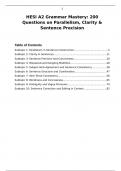
HESI A2 Grammar Mastery: 200
Questions on Parallelism, Clarity &
Sentence Precision
Table of Contents
Subtopic 1: Parallelism in Sentence Construction............................................2
Subtopic 2: Clarity in Sentences....................................................................11
Subtopic 3: Sentence Precision and Conciseness..........................................20
Subtopic 4: Misplaced and Dangling Modifiers...............................................29
Subtopic 5: Subject-Verb Agreement and Sentence Consistency..................38
Subtopic 6: Sentence Structure and Coordination.........................................47
Subtopic 7: Verb Tense Consistency...............................................................56
Subtopic 8: Wordiness and Conciseness........................................................65
Subtopic 9: Ambiguity and Vague Pronouns..................................................74
Subtopic 10: Sentence Correction and Editing in Context.............................82
, 2
Subtopic 1: Parallelism in Sentence
Construction
Question 1
Which of the following sentences demonstrates correct parallel structure?
A. She enjoys reading, to swim, and to jog.
B. He likes hiking, biking, and to run.
C. The coach told the players to stretch, to hydrate, and to rest.
D. I enjoy cooking, jogging, and to read.
Correct Answer: C
Rationale: Parallel structure requires items in a series to follow the same
grammatical format. “To stretch, to hydrate, and to rest” all follow the same
infinitive form, maintaining parallelism.
Question 2
Identify the sentence that lacks parallelism.
A. He is talented in singing, dancing, and acting.
B. She likes skiing, to snowboard, and swimming.
C. The committee values honesty, integrity, and responsibility.
D. The project involved researching, writing, and editing.
Correct Answer: B
Rationale: The sentence mixes gerund (skiing, swimming) and infinitive (to
snowboard), breaking parallel structure. Consistency is key.
, 3
Question 3
Choose the sentence that uses parallelism correctly.
A. The plan includes improving patient care, increasing staff, and better
communication.
B. She wanted to study hard, pass the exam, and a good nurse.
C. Our goals are to improve outcomes, to reduce errors, and to promote
safety.
D. He works as a nurse, teaches part-time, and to write articles.
Correct Answer: C
Rationale: The use of “to” in all elements (“to improve… to reduce… to
promote”) keeps the structure consistent and parallel.
Question 4
Which sentence below contains faulty parallelism?
A. He came to the clinic early, checked in, and sat in the waiting room.
B. The nurse monitored the patient's pulse, temperature, and she recorded
the blood pressure.
C. The patient was cooperative, responsive, and polite.
D. The technician measured and recorded the data accurately.
Correct Answer: B
Rationale: The structure is disrupted with “she recorded,” which doesn't align
with the previous items. To fix: “…temperature, and blood pressure.”
Question 5
, 4
Select the sentence with correct parallel structure:
A. The medical student prepared for her boards by studying, reviewing
flashcards, and she practiced questions.
B. The resident needs to complete rounds, dictate notes, and eating
breakfast.
C. The nurse was responsible for checking vitals, documenting care, and
administering medications.
D. The tasks were washing hands, putting on gloves, and to examine the
patient.
Correct Answer: C
Rationale: All elements are gerunds (checking, documenting, administering),
creating consistent structure.
Question 6
What revision is needed in the sentence for parallelism?
"To care for the patient, monitoring vitals, and administering medication are
essential."
A. No change needed.
B. Change "To care" to "Caring"
C. Change "monitoring" to "to monitor"
D. Change "administering" to "administers"
Correct Answer: B
Rationale: "Caring," "monitoring," and "administering" keep all parts as
gerunds, maintaining parallel structure.
HESI A2 Grammar Mastery: 200
Questions on Parallelism, Clarity &
Sentence Precision
Table of Contents
Subtopic 1: Parallelism in Sentence Construction............................................2
Subtopic 2: Clarity in Sentences....................................................................11
Subtopic 3: Sentence Precision and Conciseness..........................................20
Subtopic 4: Misplaced and Dangling Modifiers...............................................29
Subtopic 5: Subject-Verb Agreement and Sentence Consistency..................38
Subtopic 6: Sentence Structure and Coordination.........................................47
Subtopic 7: Verb Tense Consistency...............................................................56
Subtopic 8: Wordiness and Conciseness........................................................65
Subtopic 9: Ambiguity and Vague Pronouns..................................................74
Subtopic 10: Sentence Correction and Editing in Context.............................82
, 2
Subtopic 1: Parallelism in Sentence
Construction
Question 1
Which of the following sentences demonstrates correct parallel structure?
A. She enjoys reading, to swim, and to jog.
B. He likes hiking, biking, and to run.
C. The coach told the players to stretch, to hydrate, and to rest.
D. I enjoy cooking, jogging, and to read.
Correct Answer: C
Rationale: Parallel structure requires items in a series to follow the same
grammatical format. “To stretch, to hydrate, and to rest” all follow the same
infinitive form, maintaining parallelism.
Question 2
Identify the sentence that lacks parallelism.
A. He is talented in singing, dancing, and acting.
B. She likes skiing, to snowboard, and swimming.
C. The committee values honesty, integrity, and responsibility.
D. The project involved researching, writing, and editing.
Correct Answer: B
Rationale: The sentence mixes gerund (skiing, swimming) and infinitive (to
snowboard), breaking parallel structure. Consistency is key.
, 3
Question 3
Choose the sentence that uses parallelism correctly.
A. The plan includes improving patient care, increasing staff, and better
communication.
B. She wanted to study hard, pass the exam, and a good nurse.
C. Our goals are to improve outcomes, to reduce errors, and to promote
safety.
D. He works as a nurse, teaches part-time, and to write articles.
Correct Answer: C
Rationale: The use of “to” in all elements (“to improve… to reduce… to
promote”) keeps the structure consistent and parallel.
Question 4
Which sentence below contains faulty parallelism?
A. He came to the clinic early, checked in, and sat in the waiting room.
B. The nurse monitored the patient's pulse, temperature, and she recorded
the blood pressure.
C. The patient was cooperative, responsive, and polite.
D. The technician measured and recorded the data accurately.
Correct Answer: B
Rationale: The structure is disrupted with “she recorded,” which doesn't align
with the previous items. To fix: “…temperature, and blood pressure.”
Question 5
, 4
Select the sentence with correct parallel structure:
A. The medical student prepared for her boards by studying, reviewing
flashcards, and she practiced questions.
B. The resident needs to complete rounds, dictate notes, and eating
breakfast.
C. The nurse was responsible for checking vitals, documenting care, and
administering medications.
D. The tasks were washing hands, putting on gloves, and to examine the
patient.
Correct Answer: C
Rationale: All elements are gerunds (checking, documenting, administering),
creating consistent structure.
Question 6
What revision is needed in the sentence for parallelism?
"To care for the patient, monitoring vitals, and administering medication are
essential."
A. No change needed.
B. Change "To care" to "Caring"
C. Change "monitoring" to "to monitor"
D. Change "administering" to "administers"
Correct Answer: B
Rationale: "Caring," "monitoring," and "administering" keep all parts as
gerunds, maintaining parallel structure.


