Chapter 33: Postpartum Complications Lowdermilk: Maternity & Women
Health Care, 12th Edition Practice Test.
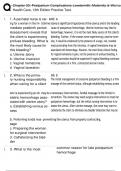
1. 1. A perinatal nurse is car- ANS: A
ing for a woman in the im- Uterine atony is significant hypotonia of the uterus and is the leading
mediate postbirth period. cause of postpartum hemorrhage. Uterine inversion may lead to
Assessment reveals that hemorrhage; however, it is not the most likely source of this client's
the client is experiencing bleeding. Further, if the woman were experiencing a uterine inver-
profuse bleeding. What is sion, it would be evidenced by the presence of a large, red, rounded
the most likely cause for mass protruding from the introitus. A vaginal hematoma may be
this bleeding? associated with hemorrhage. However, the most likely clinical finding
a. Uterine atony for vaginal hematoma is pain, not the presence of profuse bleeding. A
b. Uterine inversion vaginal laceration should be suspected if vaginal bleeding continues
c. Vaginal hematoma in the presence of a firm, contracted uterine fundus.
d. Vaginal laceration
2. 2. What is the prima- ANS: B
ry nursing responsibility The initial management of excessive postpartum bleeding is a firm
when caring for a client massage of the uterine fundus. Although establishing venous access
who is experiencing an ob- may be a necessary intervention, fundal massage is the initial in-
stetric hemorrhage asso- tervention. The woman may need surgical intervention to treat her
ciated with uterine atony? postpartum hemorrhage, but the initial nursing intervention is to
a. Establishing venous ac- assess the uterus. After uterine massage, the nurse may want to
cess catheterize the client to eliminate any bladder distention that may be
b. Performing fundal mas- preventing the uterus from properly contracting.
sage
c. Preparing the woman
for surgical intervention
d. Catheterizing the blad-
der
3. 3. What is the most common reason for late postpartum
hemorrhage
1/
10
, Chapter 33: Postpartum Complications Lowdermilk: Maternity & Women
Health Care, 12th Edition Practice Test.
ANS: A
Late PPH may be the result of subinvolution
of the uterus. Recognized causes of
subinvolution include retained placental
fragments and
2/
10
Health Care, 12th Edition Practice Test.
1. 1. A perinatal nurse is car- ANS: A
ing for a woman in the im- Uterine atony is significant hypotonia of the uterus and is the leading
mediate postbirth period. cause of postpartum hemorrhage. Uterine inversion may lead to
Assessment reveals that hemorrhage; however, it is not the most likely source of this client's
the client is experiencing bleeding. Further, if the woman were experiencing a uterine inver-
profuse bleeding. What is sion, it would be evidenced by the presence of a large, red, rounded
the most likely cause for mass protruding from the introitus. A vaginal hematoma may be
this bleeding? associated with hemorrhage. However, the most likely clinical finding
a. Uterine atony for vaginal hematoma is pain, not the presence of profuse bleeding. A
b. Uterine inversion vaginal laceration should be suspected if vaginal bleeding continues
c. Vaginal hematoma in the presence of a firm, contracted uterine fundus.
d. Vaginal laceration
2. 2. What is the prima- ANS: B
ry nursing responsibility The initial management of excessive postpartum bleeding is a firm
when caring for a client massage of the uterine fundus. Although establishing venous access
who is experiencing an ob- may be a necessary intervention, fundal massage is the initial in-
stetric hemorrhage asso- tervention. The woman may need surgical intervention to treat her
ciated with uterine atony? postpartum hemorrhage, but the initial nursing intervention is to
a. Establishing venous ac- assess the uterus. After uterine massage, the nurse may want to
cess catheterize the client to eliminate any bladder distention that may be
b. Performing fundal mas- preventing the uterus from properly contracting.
sage
c. Preparing the woman
for surgical intervention
d. Catheterizing the blad-
der
3. 3. What is the most common reason for late postpartum
hemorrhage
1/
10
, Chapter 33: Postpartum Complications Lowdermilk: Maternity & Women
Health Care, 12th Edition Practice Test.
ANS: A
Late PPH may be the result of subinvolution
of the uterus. Recognized causes of
subinvolution include retained placental
fragments and
2/
10