Sadia Hussain Unit 29
D1 - Evaluation of the distribution systems in delivering goods
and services
“Distribution systems can be defined as the sequential flow of procedures, systems, and activities which
are designed and linked to facilitate and monitor the movement of goods and services from the source to
the consumer. Essentially, distribution is about making products and services available to the end users
when and where they need them.”
Storing stock in the distribution centres
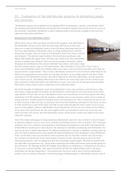
When stores such as Tesco purchase stock from the suppliers, they hold them in
the distribution centres so the stock has more space till they go to the store.
there are a couple of distribution centres in the UK where they keep stock for all
the Tesco supermarkets, distribution centre is a large building that is used for
temporarily storage. There are total of 20 distribution centres for Tesco in the UK
and Scotland. “The big four supermarkets in the UK all have warehouses and
depots that handle the supply chain, and there are a total of 20 Tesco distribution
centres in England and Scotland. These are for the storage of inventory, before
the goods are distributed to the various individual Tesco stores. Such stores range
from the smaller Express shops to the hypermarkets, often branded as Tesco Extra. There is also a
Tesco.com Distribution Centre near Enfield which covers items such as furniture and other items that you
may not find in a supermarket.” There is also a distribution centre for Tesco’s furniture, which they do not
hold in the supermarkets because they are too large and there is not enough space in the store. While
the stock is in the distribution centres, the staff is required to check the expiry dates, as some products
such as food can rot, and adding rotten food to the shelves can cause huge issues for the company and
their customers. If the food expires, the staff throw it away. Tesco sell a lot of fresh groceries and other
fresh food, so they need to keep a careful eye on the expiration dates.
One of the benefits of holding the stock in the distribution centre and warehouse is that there is a big
open space, a high quantity of products can be held there, and it helps to save some space in the Tesco
supermarkets. If Tesco did not use a distribution centre and a warehouse to store their goods, then they
would have to fill the shelves with the products, and they may run out of space, which can be a waste of
money and time. Another benefit of holding stock in the warehouse for Tesco is that they do not run out
of stock, because if they do, they can just grab some from the warehouse and take it to the store, on lorry
or if the warehouse is part of the store, the staff can just walk and take the stock. It gives Tesco an easy
access to the supplies, without a distribution centre/warehouse, If Tesco ran out of stock on the shelves
in the store; they would have to order new supplies which can sometimes come from across the seas
which can take a lot of time, with the distribution centre, all the stock is ready to be taken to the stores
whenever required.
One of the major advantages of using warehouse/distribution centre for Tesco is that it is much cheaper
to hold the supplies in one or a few areas, instead of spending money on lots of locations. This is because
paying for the rent is reduced, and spending on technology and equipment, and all the staff required for
all the different warehouses is also reduced. “By choosing to centralize warehousing and distribution, the
need to pay rent or utility expenditures for different warehouses is reduced. In addition to paying more for
rent, the need to spend more on new equipment and technologies for each warehouse is also eliminated.”
Tesco can set their prices low and attract more customers due to reduction in these costs. By having a
few numbers of warehouses it also means better customer service, because they can focus on their
warehouses properly, such as making sure that the technology is good quality, the staff are packed with
the right skills and experience etc. Using better technology and skilled staff means good quality goods for
the customers. “By choosing to limit the number of warehouses or distributors, a company can now focus
its resources on fewer facilities. This means the facility will have the highly skilled workers, the latest
technology and the best equipment.” The business also has more control due to the few distribution
centres, such as control on the stock. The disadvantage of holding goods in a distribution centre is that it
1
D1 - Evaluation of the distribution systems in delivering goods
and services
“Distribution systems can be defined as the sequential flow of procedures, systems, and activities which
are designed and linked to facilitate and monitor the movement of goods and services from the source to
the consumer. Essentially, distribution is about making products and services available to the end users
when and where they need them.”
Storing stock in the distribution centres
When stores such as Tesco purchase stock from the suppliers, they hold them in
the distribution centres so the stock has more space till they go to the store.
there are a couple of distribution centres in the UK where they keep stock for all
the Tesco supermarkets, distribution centre is a large building that is used for
temporarily storage. There are total of 20 distribution centres for Tesco in the UK
and Scotland. “The big four supermarkets in the UK all have warehouses and
depots that handle the supply chain, and there are a total of 20 Tesco distribution
centres in England and Scotland. These are for the storage of inventory, before
the goods are distributed to the various individual Tesco stores. Such stores range
from the smaller Express shops to the hypermarkets, often branded as Tesco Extra. There is also a
Tesco.com Distribution Centre near Enfield which covers items such as furniture and other items that you
may not find in a supermarket.” There is also a distribution centre for Tesco’s furniture, which they do not
hold in the supermarkets because they are too large and there is not enough space in the store. While
the stock is in the distribution centres, the staff is required to check the expiry dates, as some products
such as food can rot, and adding rotten food to the shelves can cause huge issues for the company and
their customers. If the food expires, the staff throw it away. Tesco sell a lot of fresh groceries and other
fresh food, so they need to keep a careful eye on the expiration dates.
One of the benefits of holding the stock in the distribution centre and warehouse is that there is a big
open space, a high quantity of products can be held there, and it helps to save some space in the Tesco
supermarkets. If Tesco did not use a distribution centre and a warehouse to store their goods, then they
would have to fill the shelves with the products, and they may run out of space, which can be a waste of
money and time. Another benefit of holding stock in the warehouse for Tesco is that they do not run out
of stock, because if they do, they can just grab some from the warehouse and take it to the store, on lorry
or if the warehouse is part of the store, the staff can just walk and take the stock. It gives Tesco an easy
access to the supplies, without a distribution centre/warehouse, If Tesco ran out of stock on the shelves
in the store; they would have to order new supplies which can sometimes come from across the seas
which can take a lot of time, with the distribution centre, all the stock is ready to be taken to the stores
whenever required.
One of the major advantages of using warehouse/distribution centre for Tesco is that it is much cheaper
to hold the supplies in one or a few areas, instead of spending money on lots of locations. This is because
paying for the rent is reduced, and spending on technology and equipment, and all the staff required for
all the different warehouses is also reduced. “By choosing to centralize warehousing and distribution, the
need to pay rent or utility expenditures for different warehouses is reduced. In addition to paying more for
rent, the need to spend more on new equipment and technologies for each warehouse is also eliminated.”
Tesco can set their prices low and attract more customers due to reduction in these costs. By having a
few numbers of warehouses it also means better customer service, because they can focus on their
warehouses properly, such as making sure that the technology is good quality, the staff are packed with
the right skills and experience etc. Using better technology and skilled staff means good quality goods for
the customers. “By choosing to limit the number of warehouses or distributors, a company can now focus
its resources on fewer facilities. This means the facility will have the highly skilled workers, the latest
technology and the best equipment.” The business also has more control due to the few distribution
centres, such as control on the stock. The disadvantage of holding goods in a distribution centre is that it
1