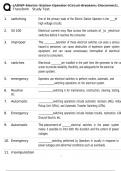
LADWP Electric Station Operator (Circuit Breakers, Disconnects,
Transform Study Test.
1. switching One of the primary tasks of the Electric Station Operator is the of
high voltage circuits.
2. 50 100 Electrical current may flow across the contacts of to electrical
switches before it reaches the consumer.
3. improper The operation of these electrical switches can pose a serious
hazard to personnel, can cause destruction of expensive power system
equipment, and can cause unnecessary interruption of electrical
service to consumers.
4. switches Electrical are installed in the path from the generator to the co
sumer to provide reliability, flexibility, and safeguards for the electrical
power system.
5. emergency Operators use electrical switches to perform routine, automatic, and
switching operations on the electrical system.
6. Routine switching is for maintenance, construction, cleaning, testing,
etc.
7. Automatic switching operations include automatic reclosers (ARs), Voltag
Pickup Unit (VPUs), and Automatic Transfer Switching (ATSs).
8. Emergency switching operations include insolate trouble, restoration, 4.8k
Ground Search, etc.
9. Automatic The placement of electrical switches in the power system
makes it possible to limit both the duration and the extent of power
outages.
10. Emergency switching performed by Operators in usually in response to
power outages and abnormal conditions such as overloads.
11. manipulation
1/
18
, LADWP Electric Station Operator (Circuit Breakers, Disconnects,
Transform Study Test.
The electrical function of switches falls into two categories; of
relatively high values of current and voltage under load AND the
switching of circuits to provide a visual confirmation of de-
energization.
12. Circuit breakers are electrical switches that are used to manipulate high values
of
current and voltage in circuits that are carrying current or will be carrying current
following the operation.
13. Circuit breakers Transformers and voltage regulators must be energized and de-
energized using
.
14. Circuit breakers are designed to open, close, energize, de-energize, and interru
normal and abnormal values of current flow in electrical circuits
15. Disconnects are provided as a method of visually confirming that a circuit
has
been "disconnected" from specified sources of electrical energy.
16. Disconnects are used to energize or de-energize short sections of
conductor such as leads connecting a circuit breaker to its associated
disconnects.
17. Disconnects are not designed to interrupts current flow, open or close
circuits, or energize and de-energize circuits other than short sections.
18. 10 20 During abnormal conditions, current often exceeds the normal limitation of
these devices by as much as to times their normal rating.
19. Dielectric This is the insulating mechanism that occupies the space between
medi- um the open contacts of a CB and prevents the flow of current through the
device while the contacts are in the open position.
2/
18
, LADWP Electric Station Operator (Circuit Breakers, Disconnects,
Transform Study Test.
20. Dielectric The ability of a substance to prevent the flow of electrical current is
described as its strength.
3/
18
Transform Study Test.
1. switching One of the primary tasks of the Electric Station Operator is the of
high voltage circuits.
2. 50 100 Electrical current may flow across the contacts of to electrical
switches before it reaches the consumer.
3. improper The operation of these electrical switches can pose a serious
hazard to personnel, can cause destruction of expensive power system
equipment, and can cause unnecessary interruption of electrical
service to consumers.
4. switches Electrical are installed in the path from the generator to the co
sumer to provide reliability, flexibility, and safeguards for the electrical
power system.
5. emergency Operators use electrical switches to perform routine, automatic, and
switching operations on the electrical system.
6. Routine switching is for maintenance, construction, cleaning, testing,
etc.
7. Automatic switching operations include automatic reclosers (ARs), Voltag
Pickup Unit (VPUs), and Automatic Transfer Switching (ATSs).
8. Emergency switching operations include insolate trouble, restoration, 4.8k
Ground Search, etc.
9. Automatic The placement of electrical switches in the power system
makes it possible to limit both the duration and the extent of power
outages.
10. Emergency switching performed by Operators in usually in response to
power outages and abnormal conditions such as overloads.
11. manipulation
1/
18
, LADWP Electric Station Operator (Circuit Breakers, Disconnects,
Transform Study Test.
The electrical function of switches falls into two categories; of
relatively high values of current and voltage under load AND the
switching of circuits to provide a visual confirmation of de-
energization.
12. Circuit breakers are electrical switches that are used to manipulate high values
of
current and voltage in circuits that are carrying current or will be carrying current
following the operation.
13. Circuit breakers Transformers and voltage regulators must be energized and de-
energized using
.
14. Circuit breakers are designed to open, close, energize, de-energize, and interru
normal and abnormal values of current flow in electrical circuits
15. Disconnects are provided as a method of visually confirming that a circuit
has
been "disconnected" from specified sources of electrical energy.
16. Disconnects are used to energize or de-energize short sections of
conductor such as leads connecting a circuit breaker to its associated
disconnects.
17. Disconnects are not designed to interrupts current flow, open or close
circuits, or energize and de-energize circuits other than short sections.
18. 10 20 During abnormal conditions, current often exceeds the normal limitation of
these devices by as much as to times their normal rating.
19. Dielectric This is the insulating mechanism that occupies the space between
medi- um the open contacts of a CB and prevents the flow of current through the
device while the contacts are in the open position.
2/
18
, LADWP Electric Station Operator (Circuit Breakers, Disconnects,
Transform Study Test.
20. Dielectric The ability of a substance to prevent the flow of electrical current is
described as its strength.
3/
18