

Written by students who passed Immediately available after payment Read online or as PDF Wrong document? Swap it for free 4.6 TrustPilot
logo-home
Document preview thumbnail
Preview 2 out of 9 pages
Exam (elaborations)

EXSS 181 Exam 2

Document preview thumbnail
Preview 2 out of 9 pages

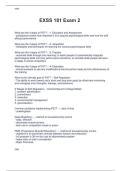
What are the 4 steps of PST? - -1. Education and Assessment - participants realize how important it is to acquire psychological skills and how the skill affects performance What are the 4 steps of PST? - -2. Acquisition - Strategies and techniques for learning the various psychological skills What are the 4 steps of PST? - -3. Practice - automate skills through over learning; to teach people to systematically integrate psychological skills into their performance situations; to simulate skills people will want to apply in actual competition What are the 4 steps of PST? - -4. Evaluation - should evaluate to see any modifications that should be made and the effectiveness of the training What is the ultimate goal of PST? - -Self-Regulation - The ability to work toward one's short and long term goals by effectively monitoring and managing one's thoughts, feelings, and behaviors 5 Stages of Self-Regulation - -Kirschenbaum's 5-Stage Model: 1. problem identification 2. commitment 3. execution 4. environmental management 5. generalization Common problems implementing PST? - -- lack of time - unwillingness Deep Breathing - -- method of arousal/anxiety control - easy, effective - decreases muscle tension - best use in competition: break in action PMR (Progressive Muscle Relaxation) - -- method of arousal/anxiety control - objective is to teach/train contrast between tension and relaxation - full program is 30 min but can do abbreviated program - helps relax on-site in competition - Major Premises: EXSS EXSS 1. tension and relaxation can't occur at the same time 2. relaxation of body contributes to relaxation of mind Autogenic Training - -- method of arousal/anxiety control - longer time to learn, extensive practice - focuses on warmth and heaviness rather than tension and relaxation - aims to produce 6 sensations: - heaviness in extremities - warmth in extremities - regulation of heart rate - regulation of breathing - abdominal warmth - cool forehead Biofeedback - -- visual and/or auditory feedback of muscle activity, skin temperature, brain wave, heart rate Common coping strategies of elite athletes? - -- thought stopping - narrowing focus - rational thinking and self-talk - positive focus - social support - PST - time management On-site coping/relaxation techniques? - -- smile in response to tension - enjoy the situation - slow down - stay focused in the present - be prepared Techniques that can increase athlete arousal? - -- increase breathing rate - act energized - self-talk - energizing music - energizing imagery - pre competitive workout Imagery - -- creating or recreating an experience on the mind - recall from memory pieces stored and shape them into useful information - imagery = recall + construction - visual - auditory - tactile - olfactory EXSS EXSS 2 characteristics of skilled/effective imagery? - -- vividness - controllability Internal vs. External Imagery - -- Internal: seeing things in a 1st person view - External: seeing things from a 3rd person view Common Uses of Imagery - -- improve concentration - enhance motivation - build confidence - control emotional response - develop sport skills - acquire and practice strategy - solve problems - cope with injury - competition prep Imagery vs. physical practice to improve skill? - -- physical practice is primary (imagery should be in addition to practice) - imagery better than nothing at all Psychoneuromuscular Theory of Imagery - -- imagined events innervate the muscles in somewhat the same way that physically practicing the movement does Symbolic Learning Theory of Imagery - -- one way individuals learn skills is by becoming familiar with what needs to be done to successfully perform them Bioinformational Theory of Imagery - -- a description of an image consists of 2 main types of statements: - response propositions: statements that describe the imager's response to the particular scenario - stimulus propositions: statements that describe specific stimulus features of the scenario to be imagined Triple Code Theory of Imagery - -- highlights understanding 3 effects that are essential parts of imagery: 1. image itself 2. somatic response 3. meaning of the image Self-Confidence - -- belief that you can successfully perform a desired behavior Benefits of Self-Confidence - -- arouses positive emotions - facilitates concentration - affects goals - increases effort - affects game strategies EXSS EXSS - affects psychological momentum - affects performance 5 misconceptions of self-confidence? - -1. either you have it or you don't 2. only positive feedback can build confidence 3. success always builds confidence 4. confidence equals outspoken arrogance 5. mistakes inevitably destroy confidence Sport Confidence Model - -1. Factors Influencing Sport Confidence: demographic and personality characteristics, organizational culture 2. Sources of Sport Confidence: achievement, self-regulation, social climate 3. Constructs of Sport Confidence: confidence in decision-making skills, confidence in physical skills and training, confidence in resiliency 4. Consequences of Sport Confidence: refer to athletes' affect (A), behavior (B), and cognitions (C) Self-Efficacy vs. Self-Confidence - -- Self-Efficacy: the strength of a person's conviction that he/she can execute the behavior needed for a specific performance RIGHT NOW - Confidence v. Efficacy: can you do it right now? Key Antecedents of Self-Efficacy - -- Performance Accomplishments: most powerful effect on self-efficacy; coaching tactics to elicit feelings of successful performance - Vicarious Experience: watching someone else accomplish the skill - Verbal Persuasion: danger of undermining credibility and trust - Imaginal Experiences: imagining selves or others - Physiological/Psychological States: perceptions of arousal/nervousness influence efficacy Why does goal-setting work? - -- Indirect Thought Process View: goal setting -- increasing confidence, reducing anxiety, enhancing satisfaction -- performance - Direct Mechanistic View: - directs attention to important elements - mobilizes effort (i.e., motivation) - prolongs effort (i.e., persistence) - fosters the development of new learning strategies Outcome, Performance, Process Goals - -- Outcome Goals: winning - Performance Goals: improving personal best - Process Goals: improving dribbling Advantages of Short-Term and Long-Term Goals - -- Short-Term: serve as immediate steps leading to long-term objectives - Long-Term: provide direction Common Problems in Goal-Setting - -- convincing athletes to set goals EXSS EXSS - failing to set SPECIFIC goals - setting too many goals too soon - failing to adjust goals - failing to recognize individual differences - not providing follow-up and evaluation SMART Goals - -S- specific M- measurable A- action-oriented R- realistic T- time-specific 4 Components of Attention - -1. focusing on the relevant cues in the environment 2. maintaining attentional focus over time 3. having awareness of the situation and performance errors 4. shifting attentional focus when necessary Attentional Selectivity - -- letting some information into the information-processing system while screening out or ignoring other information Attentional Capacity - -- attention is limited in that one can process only so much information at one time Attentional Alertness - -- related to the notion that increases in emotional arousal narrow the attentional field because of a systematic reduction in the range of cues that a performer considers in executing a skill Width vs. Direction of Attentional Focus - -- Width: broad v. na

Content preview

EXSS


EXSS 181 Exam 2

What are the 4 steps of PST? - -1. Education and Assessment
- participants realize how important it is to acquire psychological skills and how the skill
affects performance

What are the 4 steps of PST? - -2. Acquisition
- Strategies and techniques for learning the various psychological skills

What are the 4 steps of PST? - -3. Practice
- automate skills through over learning; to teach people to systematically integrate
psychological skills into their performance situations; to simulate skills people will want
to apply in actual competition

What are the 4 steps of PST? - -4. Evaluation
- should evaluate to see any modifications that should be made and the effectiveness of
the training

What is the ultimate goal of PST? - -Self-Regulation
- The ability to work toward one's short and long term goals by effectively monitoring
and managing one's thoughts, feelings, and behaviors

5 Stages of Self-Regulation - -Kirschenbaum's 5-Stage Model:
1. problem identification
2. commitment
3. execution
4. environmental management
5. generalization

Common problems implementing PST? - -- lack of time
- unwillingness

Deep Breathing - -- method of arousal/anxiety control
- easy, effective
- decreases muscle tension
- best use in competition: break in action

PMR (Progressive Muscle Relaxation) - -- method of arousal/anxiety control
- objective is to teach/train contrast between tension and relaxation
- full program is 30 min but can do abbreviated program
- helps relax on-site in competition
- Major Premises:

EXSS

, EXSS


1. tension and relaxation can't occur at the same time
2. relaxation of body contributes to relaxation of mind

Autogenic Training - -- method of arousal/anxiety control
- longer time to learn, extensive practice
- focuses on warmth and heaviness rather than tension and relaxation
- aims to produce 6 sensations:
- heaviness in extremities
- warmth in extremities
- regulation of heart rate
- regulation of breathing
- abdominal warmth
- cool forehead

Biofeedback - -- visual and/or auditory feedback of muscle activity, skin temperature,
brain wave, heart rate

Common coping strategies of elite athletes? - -- thought stopping
- narrowing focus
- rational thinking and self-talk
- positive focus
- social support
- PST
- time management

On-site coping/relaxation techniques? - -- smile in response to tension
- enjoy the situation
- slow down
- stay focused in the present
- be prepared

Techniques that can increase athlete arousal? - -- increase breathing rate
- act energized
- self-talk
- energizing music
- energizing imagery
- pre competitive workout

Imagery - -- creating or recreating an experience on the mind
- recall from memory pieces stored and shape them into useful information
- imagery = recall + construction
- visual
- auditory
- tactile
- olfactory


EXSS

Document information

Uploaded on
July 23, 2025
Number of pages
9
Written in
2024/2025
Type
Exam (elaborations)
Contains
Questions & answers
$13.79

Wrong document? Swap it for free Within 14 days of purchase and before downloading, you can choose a different document. You can simply spend the amount again.
Written by students who passed
Immediately available after payment
Read online or as PDF

Seller avatar
Reputation scores are based on the amount of documents a seller has sold for a fee and the reviews they have received for those documents. There are three levels: Bronze, Silver and Gold. The better the reputation, the more your can rely on the quality of the sellers work.
AlexScorer
2.5
(2)
Sold
11
Followers
0
Items
1800
Last sold
2 weeks ago


Why students choose Stuvia

Created by fellow students, verified by reviews

Quality you can trust: written by students who passed their tests and reviewed by others who've used these notes.

Didn't get what you expected? Choose another document

No worries! You can instantly pick a different document that better fits what you're looking for.

Pay as you like, start learning right away

No subscription, no commitments. Pay the way you're used to via credit card and download your PDF document instantly.

Student with book image

“Bought, downloaded, and aced it. It really can be that simple.”

Alisha Student

Working on your references?

Create accurate citations in APA, MLA and Harvard with our free citation generator.

Working on your references?

Frequently asked questions
