Unit 2: TEFL Methodology
Study online at https://quizlet.com/_9z2375
1. What should be the end goal of all types of lesson preparation structures,
strategies and methods?: To get students to use the language for themselves.
2. What are the benefits of using a student- centred learning approach?: -
Students will discover the language for themselves
- Will listen more attentively
- They will build their own (and arguably better) awareness of language structure,
grammar & vocabulary etc.
- Will likely remember more (with greater comprehension)
-Build their confidence
- Help consolidate their knowledge
- Move on to new points that enhance their ability
- Help them to learn in the way that works best for them
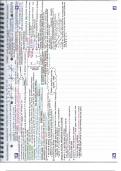
3. What is the structure of the PPP (presentation, practise, production) style
lesson preparation?: See image
4. What are the benefits of using a PPP lesson preparation style?: - Ideal format
for guiding students towards using target language for themselves. (progressing
from controlled exercises to free practises).
- It maximises STT (student talking time).
5. What happens in the 'lead in' section of the PPP lesson?: - This is the first part
of the lesson.
- Only takes 5% of lesson
- Engaging students
- Reviewing what they already know
- Sets scene for/ introduces the lesson topic.
6. What happens in the 'presentation' section of the PPP lesson?: - The second
part of the lesson
- Be 10-30% of the lesson
- Will start using target language.
This stage features the most TTT (around 50% of time explaining language features
but aim to include students as much as possible)
- Will build on student's prior knowledge
- Need to concept check.
- Need to teach the following three things
Meaning :- Help students discover meaning for themselves, use guided discovery,
consolidate what they learn by explaining terms in way they have learnt them.
Pronunciation:-Repetition to get feel for word, focus on problem area, e.g. contrac-
tion words.
Form:- Modelling language by writing on board to see spelling and structure.
1/7
, Unit 2: TEFL Methodology
Study online at https://quizlet.com/_9z2375
7. What happens in the 'practise (controlled)' section of the PPP lesson?: -
Practise what they've learned through structured activities that look at meaning,
pronunciation and form of TL. The focus is on accuracy, not fluency. A chance to
make sure they get it right.
May use as many as 3 activities, each getting more difficult.
Activities include; group/ pair work, writing & speaking activities, fill in the gaps,
correct the incorrect sentences.
Mostly student-centred.
Takes 20-30% of the lesson time.
8. What happens in the 'production (free)' section of the PPP lesson?: Once
students have grasped what has been taught and practised it with little difficulty.
Gives time to practise new target language with all previous knowledge.
Focus is on fluency, rather than accuracy.
Students engage in activities, mostly independently.
Roleplay/ group discussions good activity choices.
Takes 30-50% of lesson time and is STT.
9. What is the structure of the ESA (Engage, Study, Activate) style lesson
preparation?: See Image
10. What are the benefits of using a ESA lesson preparation style?: -It allows
you to move backwards and forwards in the lesson stages (useful when recapturing
interest).
-It's similar to PPP style.
- Suits lessons which focus on vocabulary and grammar.
- Allows for a lot of eliciting and STT.
- More flexible than PPP
11. What happens in the 'engage' section of the ESA lesson?: - Teacher gets
students interested and involved in lessons so they are more stimulating and fun.
- Reduce inhibitions & relaxes students= environment conducive to learning.
- Necessary for students get involved.
- Use games, discussions,
12. What happens in the 'study' section of the ESA lesson?: - Focus on lan-
guage and how constructed.
- Teacher elicits TL from students.
- Gives them chance to discover it for themselves.
- Good for eilciting questions/ tasks, group/ pair work, texts to study vocabulary/
speaking styles.
2/7
Study online at https://quizlet.com/_9z2375
1. What should be the end goal of all types of lesson preparation structures,
strategies and methods?: To get students to use the language for themselves.
2. What are the benefits of using a student- centred learning approach?: -
Students will discover the language for themselves
- Will listen more attentively
- They will build their own (and arguably better) awareness of language structure,
grammar & vocabulary etc.
- Will likely remember more (with greater comprehension)
-Build their confidence
- Help consolidate their knowledge
- Move on to new points that enhance their ability
- Help them to learn in the way that works best for them
3. What is the structure of the PPP (presentation, practise, production) style
lesson preparation?: See image
4. What are the benefits of using a PPP lesson preparation style?: - Ideal format
for guiding students towards using target language for themselves. (progressing
from controlled exercises to free practises).
- It maximises STT (student talking time).
5. What happens in the 'lead in' section of the PPP lesson?: - This is the first part
of the lesson.
- Only takes 5% of lesson
- Engaging students
- Reviewing what they already know
- Sets scene for/ introduces the lesson topic.
6. What happens in the 'presentation' section of the PPP lesson?: - The second
part of the lesson
- Be 10-30% of the lesson
- Will start using target language.
This stage features the most TTT (around 50% of time explaining language features
but aim to include students as much as possible)
- Will build on student's prior knowledge
- Need to concept check.
- Need to teach the following three things
Meaning :- Help students discover meaning for themselves, use guided discovery,
consolidate what they learn by explaining terms in way they have learnt them.
Pronunciation:-Repetition to get feel for word, focus on problem area, e.g. contrac-
tion words.
Form:- Modelling language by writing on board to see spelling and structure.
1/7
, Unit 2: TEFL Methodology
Study online at https://quizlet.com/_9z2375
7. What happens in the 'practise (controlled)' section of the PPP lesson?: -
Practise what they've learned through structured activities that look at meaning,
pronunciation and form of TL. The focus is on accuracy, not fluency. A chance to
make sure they get it right.
May use as many as 3 activities, each getting more difficult.
Activities include; group/ pair work, writing & speaking activities, fill in the gaps,
correct the incorrect sentences.
Mostly student-centred.
Takes 20-30% of the lesson time.
8. What happens in the 'production (free)' section of the PPP lesson?: Once
students have grasped what has been taught and practised it with little difficulty.
Gives time to practise new target language with all previous knowledge.
Focus is on fluency, rather than accuracy.
Students engage in activities, mostly independently.
Roleplay/ group discussions good activity choices.
Takes 30-50% of lesson time and is STT.
9. What is the structure of the ESA (Engage, Study, Activate) style lesson
preparation?: See Image
10. What are the benefits of using a ESA lesson preparation style?: -It allows
you to move backwards and forwards in the lesson stages (useful when recapturing
interest).
-It's similar to PPP style.
- Suits lessons which focus on vocabulary and grammar.
- Allows for a lot of eliciting and STT.
- More flexible than PPP
11. What happens in the 'engage' section of the ESA lesson?: - Teacher gets
students interested and involved in lessons so they are more stimulating and fun.
- Reduce inhibitions & relaxes students= environment conducive to learning.
- Necessary for students get involved.
- Use games, discussions,
12. What happens in the 'study' section of the ESA lesson?: - Focus on lan-
guage and how constructed.
- Teacher elicits TL from students.
- Gives them chance to discover it for themselves.
- Good for eilciting questions/ tasks, group/ pair work, texts to study vocabulary/
speaking styles.
2/7