

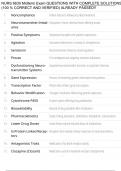
NURS 6630 Midterm Exam QUESTIONS WITH COMPLETE SOLUTIONS
NURS 6630 Midterm Exam Test Bank
(100 % Study
CORRECT AND VERIFIED) ALREADY PASSED!!
online at https://quizlet.com/_hj6ckb
1. Noncompliance Patient refusal to follow prescribed treatment.
2. Neurotransmitter Imbal- Disruption in brain chemical levels affecting mood.
ance
3. Positive Symptoms Symptoms that add to the patient's experience.
4. Agitation Increased restlessness or anxiety in schizophrenia.
5. Serotonin Neurotransmitter linked to mood regulation.
6. Prozac First antidepressant targeting serotonin imbalance.
7. Dysfunctioning Neuro- Impaired neurotransmitter functions in psychiatric illnesses.
transmitter Systems
8. Gene Expression Process of converting genetic information into proteins.
9. Transcription Factor Protein that initiates gene transcription.
10. Behavior Modification Changes in behavior influencing genetic expression.
11. Cytochrome P450 Enzyme system affecting drug metabolism.
12. Bioavailability Amount of drug available after metabolism.
13. Pharmacokinetics Study of drug absorption, distribution, metabolism, and excretion.
14. Lower Drug Doses Some Asians require reduced doses of medications.
15. G-Protein Linked Recep- Receptors that mediate cellular responses to neurotransmitters.
tors
16. Antagonistic Traits Medications that block receptor activity.
17. Clozapine (Clozaril) Medication used for treatment-resistant schizophrenia.
, NURS 6630 Midterm Exam Test Bank
Study online at https://quizlet.com/_hj6ckb
18. Smoking Impact Smoking can alter medication metabolism.
19. Carbamazepine (Tegre- Mood stabilizer associated with thrombocytopenia.
tol)
20. Mood Stabilizer Medication used to treat mood disorders.
21. Amitriptyline (Elavil) Antidepressant also used for chronic pain.
22. Fluoxetine (Prozac) SSRI antidepressant for depression and anxiety.
23. Drug-Induced Thrombo- Low platelet count caused by medication.
cytopenia
24. Amitriptyline (Elavil) An antidepressant used for mood disorders.
25. Inverse agonist Decreases serotonin and dopamine activity.
26. Benzodiazepines Medications for anxiety and panic disorders.
27. Ionotropic receptors Receptors that mediate rapid synaptic transmission.
28. Varenicline (Chantix) Medication used for smoking cessation.
29. Partial agonists Drugs that partially stimulate receptors.
30. Anticonvulsants Medications used to stabilize mood and treat seizures.
31. Ligand-gated ion chan- Channels activated by neurotransmitter binding.
nels
32. Sertraline An SSRI used to treat panic disorder.
33. Short-acting benzodi- Used temporarily to manage anxiety symptoms.
azepine
, NURS 6630 Midterm Exam Test Bank
Study online at https://quizlet.com/_hj6ckb
34. Mood stabilizers Medications that prevent mood swings in bipolar disorder.
35. MAO inhibitors Antidepressants with significant food interactions.
36. Fluoxetine An SSRI with uncommon sedation side effects.
37. Manic symptoms Signs of elevated mood and hyperactivity.
38. D2 receptors Dopamine receptors targeted by antipsychotics.
39. Tardive dyskinesia Involuntary movements from long-term antipsychotic use.
40. Hypertensive crisis Severe increase in blood pressure from food interactions.
41. Serotonin 3 receptors Receptors involved in serotonin signaling.
42. Nicotinic receptors Cholinergic receptors that respond to acetylcholine.
43. Cholinergic receptors Receptors activated by the neurotransmitter acetylcholine.
44. Glycine receptors Inhibitory receptors in the central nervous system.
45. Dopamine agonist Stimulates dopamine receptors to treat Parkinson's disease.
46. D2 Receptors Primary binding site for dopamine agonists.
47. Mesocorticol Projections Pathways influencing cognitive symptoms in schizophrenia.
48. Fluoxetine Antidepressant with rare induction of mania.
49. MAO Inhibitors Medications requiring avoidance of certain decongestants.
50. Hypertensive Crisis Severe increase in blood pressure from drug interactions.
51. Residual Symptoms Symptoms persisting despite treatment for major depression.
NURS 6630 Midterm Exam Test Bank
(100 % Study
CORRECT AND VERIFIED) ALREADY PASSED!!
online at https://quizlet.com/_hj6ckb
1. Noncompliance Patient refusal to follow prescribed treatment.
2. Neurotransmitter Imbal- Disruption in brain chemical levels affecting mood.
ance
3. Positive Symptoms Symptoms that add to the patient's experience.
4. Agitation Increased restlessness or anxiety in schizophrenia.
5. Serotonin Neurotransmitter linked to mood regulation.
6. Prozac First antidepressant targeting serotonin imbalance.
7. Dysfunctioning Neuro- Impaired neurotransmitter functions in psychiatric illnesses.
transmitter Systems
8. Gene Expression Process of converting genetic information into proteins.
9. Transcription Factor Protein that initiates gene transcription.
10. Behavior Modification Changes in behavior influencing genetic expression.
11. Cytochrome P450 Enzyme system affecting drug metabolism.
12. Bioavailability Amount of drug available after metabolism.
13. Pharmacokinetics Study of drug absorption, distribution, metabolism, and excretion.
14. Lower Drug Doses Some Asians require reduced doses of medications.
15. G-Protein Linked Recep- Receptors that mediate cellular responses to neurotransmitters.
tors
16. Antagonistic Traits Medications that block receptor activity.
17. Clozapine (Clozaril) Medication used for treatment-resistant schizophrenia.
, NURS 6630 Midterm Exam Test Bank
Study online at https://quizlet.com/_hj6ckb
18. Smoking Impact Smoking can alter medication metabolism.
19. Carbamazepine (Tegre- Mood stabilizer associated with thrombocytopenia.
tol)
20. Mood Stabilizer Medication used to treat mood disorders.
21. Amitriptyline (Elavil) Antidepressant also used for chronic pain.
22. Fluoxetine (Prozac) SSRI antidepressant for depression and anxiety.
23. Drug-Induced Thrombo- Low platelet count caused by medication.
cytopenia
24. Amitriptyline (Elavil) An antidepressant used for mood disorders.
25. Inverse agonist Decreases serotonin and dopamine activity.
26. Benzodiazepines Medications for anxiety and panic disorders.
27. Ionotropic receptors Receptors that mediate rapid synaptic transmission.
28. Varenicline (Chantix) Medication used for smoking cessation.
29. Partial agonists Drugs that partially stimulate receptors.
30. Anticonvulsants Medications used to stabilize mood and treat seizures.
31. Ligand-gated ion chan- Channels activated by neurotransmitter binding.
nels
32. Sertraline An SSRI used to treat panic disorder.
33. Short-acting benzodi- Used temporarily to manage anxiety symptoms.
azepine
, NURS 6630 Midterm Exam Test Bank
Study online at https://quizlet.com/_hj6ckb
34. Mood stabilizers Medications that prevent mood swings in bipolar disorder.
35. MAO inhibitors Antidepressants with significant food interactions.
36. Fluoxetine An SSRI with uncommon sedation side effects.
37. Manic symptoms Signs of elevated mood and hyperactivity.
38. D2 receptors Dopamine receptors targeted by antipsychotics.
39. Tardive dyskinesia Involuntary movements from long-term antipsychotic use.
40. Hypertensive crisis Severe increase in blood pressure from food interactions.
41. Serotonin 3 receptors Receptors involved in serotonin signaling.
42. Nicotinic receptors Cholinergic receptors that respond to acetylcholine.
43. Cholinergic receptors Receptors activated by the neurotransmitter acetylcholine.
44. Glycine receptors Inhibitory receptors in the central nervous system.
45. Dopamine agonist Stimulates dopamine receptors to treat Parkinson's disease.
46. D2 Receptors Primary binding site for dopamine agonists.
47. Mesocorticol Projections Pathways influencing cognitive symptoms in schizophrenia.
48. Fluoxetine Antidepressant with rare induction of mania.
49. MAO Inhibitors Medications requiring avoidance of certain decongestants.
50. Hypertensive Crisis Severe increase in blood pressure from drug interactions.
51. Residual Symptoms Symptoms persisting despite treatment for major depression.


