

1
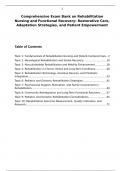
Comprehensive Exam Bank on Rehabilitation
Nursing and Functional Recovery: Restorative Care,
Adaptation Strategies, and Patient Empowerment
Table of Contents
Topic 1: Fundamentals of Rehabilitation Nursing and Patient-Centered Care. .2
Topic 2: Neurological Rehabilitation and Stroke Recovery.............................10
Topic 3: Musculoskeletal Rehabilitation and Mobility Enhancement...............18
Topic 4: Rehabilitation in Chronic Illness and Long-Term Conditions..............26
Topic 5: Rehabilitation Technology, Assistive Devices, and Prosthetic
Integration.....................................................................................................33
Topic 6: Pediatric and Geriatric Rehabilitation Strategies..............................41
Topic 7: Psychosocial Support, Motivation, and Family Involvement in
Rehabilitation.................................................................................................49
Topic 8: Community Reintegration and Long-Term Functional Recovery........57
Topic 9: Pediatric and Geriatric Rehabilitation Considerations.......................65
Topic 10: Rehabilitation Outcome Measurement, Quality Indicators, and
Research........................................................................................................72
, 2
Topic 1: Fundamentals of Rehabilitation
Nursing and Patient-Centered Care
Questions 1–20
1. Which of the following best describes the primary goal of rehabilitation
nursing?
A. Cure of chronic illness
B. Prolongation of hospital stay
C. Restoration of function and promotion of independence
D. Dependence on assistive devices
Correct Answer: C
Rationale: The central goal of rehabilitation nursing is to help individuals
regain optimal function and independence following illness, injury, or
surgery, not merely to cure or extend hospital stay.
2. What is the nurse's most critical role during the rehabilitation phase of a
spinal cord injury?
A. Administering medications
B. Facilitating mobility and self-care independence
C. Ordering diagnostic tests
D. Scheduling physician rounds
Correct Answer: B
Rationale: The nurse is key in assisting the patient with strategies and
training that promote mobility and self-care, essential for functional recovery
after spinal cord injuries.
, 3
3. Which assessment tool is commonly used in rehabilitation to evaluate a
patient’s level of independence in activities of daily living (ADLs)?
A. GCS (Glasgow Coma Scale)
B. Braden Scale
C. Functional Independence Measure (FIM)
D. Morse Fall Scale
Correct Answer: C
Rationale: The FIM assesses physical and cognitive disability and the burden
of care required, making it a standard tool in rehabilitation nursing to gauge
independence in ADLs.
4. A rehabilitation nurse uses motivational interviewing techniques to help a
stroke patient regain interest in self-care. This approach best exemplifies:
A. Prescriptive teaching
B. Patient empowerment
C. Direct delegation
D. Paternalism
Correct Answer: B
Rationale: Motivational interviewing fosters self-efficacy and encourages
patients to actively participate in their recovery journey, a cornerstone of
empowerment in rehabilitation nursing.
5. A patient recovering from a hip replacement asks why therapy started the
day after surgery. The best response from the nurse is:
A. "We want you to stay busy."
B. "Early mobilization promotes faster recovery and reduces complications."
C. "The doctor ordered it."
, 4
D. "It's hospital policy."
Correct Answer: B
Rationale: Early mobilization improves circulation, prevents complications
like DVT or pneumonia, and enhances joint function, all essential in post-
operative rehabilitation.
6. Which interdisciplinary team member focuses on helping a patient relearn
daily tasks such as dressing and eating?
A. Physical therapist
B. Occupational therapist
C. Social worker
D. Speech-language pathologist
Correct Answer: B
Rationale: Occupational therapists specialize in restoring the ability to
perform ADLs, which is vital in functional recovery.
7. The concept of neuroplasticity in stroke rehabilitation is best described as:
A. Muscular hypertrophy through exercise
B. The brain's ability to reorganize itself by forming new neural connections
C. Loss of function due to neuron death
D. The stiffening of cerebral arteries
Correct Answer: B
Rationale: Neuroplasticity refers to the brain's ability to adapt and
compensate for lost functions, making it a fundamental concept in
neurological rehabilitation.
Comprehensive Exam Bank on Rehabilitation
Nursing and Functional Recovery: Restorative Care,
Adaptation Strategies, and Patient Empowerment
Table of Contents
Topic 1: Fundamentals of Rehabilitation Nursing and Patient-Centered Care. .2
Topic 2: Neurological Rehabilitation and Stroke Recovery.............................10
Topic 3: Musculoskeletal Rehabilitation and Mobility Enhancement...............18
Topic 4: Rehabilitation in Chronic Illness and Long-Term Conditions..............26
Topic 5: Rehabilitation Technology, Assistive Devices, and Prosthetic
Integration.....................................................................................................33
Topic 6: Pediatric and Geriatric Rehabilitation Strategies..............................41
Topic 7: Psychosocial Support, Motivation, and Family Involvement in
Rehabilitation.................................................................................................49
Topic 8: Community Reintegration and Long-Term Functional Recovery........57
Topic 9: Pediatric and Geriatric Rehabilitation Considerations.......................65
Topic 10: Rehabilitation Outcome Measurement, Quality Indicators, and
Research........................................................................................................72
, 2
Topic 1: Fundamentals of Rehabilitation
Nursing and Patient-Centered Care
Questions 1–20
1. Which of the following best describes the primary goal of rehabilitation
nursing?
A. Cure of chronic illness
B. Prolongation of hospital stay
C. Restoration of function and promotion of independence
D. Dependence on assistive devices
Correct Answer: C
Rationale: The central goal of rehabilitation nursing is to help individuals
regain optimal function and independence following illness, injury, or
surgery, not merely to cure or extend hospital stay.
2. What is the nurse's most critical role during the rehabilitation phase of a
spinal cord injury?
A. Administering medications
B. Facilitating mobility and self-care independence
C. Ordering diagnostic tests
D. Scheduling physician rounds
Correct Answer: B
Rationale: The nurse is key in assisting the patient with strategies and
training that promote mobility and self-care, essential for functional recovery
after spinal cord injuries.
, 3
3. Which assessment tool is commonly used in rehabilitation to evaluate a
patient’s level of independence in activities of daily living (ADLs)?
A. GCS (Glasgow Coma Scale)
B. Braden Scale
C. Functional Independence Measure (FIM)
D. Morse Fall Scale
Correct Answer: C
Rationale: The FIM assesses physical and cognitive disability and the burden
of care required, making it a standard tool in rehabilitation nursing to gauge
independence in ADLs.
4. A rehabilitation nurse uses motivational interviewing techniques to help a
stroke patient regain interest in self-care. This approach best exemplifies:
A. Prescriptive teaching
B. Patient empowerment
C. Direct delegation
D. Paternalism
Correct Answer: B
Rationale: Motivational interviewing fosters self-efficacy and encourages
patients to actively participate in their recovery journey, a cornerstone of
empowerment in rehabilitation nursing.
5. A patient recovering from a hip replacement asks why therapy started the
day after surgery. The best response from the nurse is:
A. "We want you to stay busy."
B. "Early mobilization promotes faster recovery and reduces complications."
C. "The doctor ordered it."
, 4
D. "It's hospital policy."
Correct Answer: B
Rationale: Early mobilization improves circulation, prevents complications
like DVT or pneumonia, and enhances joint function, all essential in post-
operative rehabilitation.
6. Which interdisciplinary team member focuses on helping a patient relearn
daily tasks such as dressing and eating?
A. Physical therapist
B. Occupational therapist
C. Social worker
D. Speech-language pathologist
Correct Answer: B
Rationale: Occupational therapists specialize in restoring the ability to
perform ADLs, which is vital in functional recovery.
7. The concept of neuroplasticity in stroke rehabilitation is best described as:
A. Muscular hypertrophy through exercise
B. The brain's ability to reorganize itself by forming new neural connections
C. Loss of function due to neuron death
D. The stiffening of cerebral arteries
Correct Answer: B
Rationale: Neuroplasticity refers to the brain's ability to adapt and
compensate for lost functions, making it a fundamental concept in
neurological rehabilitation.


