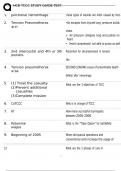
HCB TCCC STUDY GUIDE TEST.
1. Junctional hemorrhage These types of wounds are often caused by IEDS
2. Tension Pneumothorax •Air escapes from injured lung- pressure builds
up on
chest
• Air pressure collapses lung and pushes on
heart
• Heart compressed- not able to pump as well
3. 2nd intercostal and 4th or 5th Placement for decompression in tension
pneumotho-
rax
4. Tension pneumothorax SECOND LEADING cause of preventable death
on bat-
tlefield after hemorrhage
5. (1) Treat the casualty What are the 3 objectives of TCCC
(2)Prevent additional
casualties
(3)Complete mission
6. CoTCCC Who is in charge of TCCC
7. 67 How many successful tourniquets
between 2005-2006
8. Ketamine What is the "Triple Option" for battlefield
analgesia
9. Beginning of 2005 When did special operations and
conventional units increase the usage of
12 What are the 3 phases of care in
. TCCC
1/
15
, HCB TCCC STUDY GUIDE TEST.
TCCC
10. Tactical and environmental factorsWhat two factors have a profound impact on
trauma
care rendered on the battlefield
11. Up to 24% What percentage of combat deaths today are
poten- tially preventable
12 What are the 3 phases of care in
. TCCC
1/
15
, HCB TCCC
Study online at
https://quizlet.com/_611ip1
(1)Care under fire
(CUF)
(2)Tactical field care
(TFC)
(3)TACEVAC care Care Under Fire
13. •return fire
• move patient
• apply tourniquet
14. Fire Superiority What is the best medicine on the battlefield?
15. No Do penetrating head and neck injuries
require C-Spine stabilization?
16. When not under hostile fire When is the ONLY time you would apply C-
Spine in a
tactical combat setting
17. •one person drag Types of carries for care under fire
with/without line
• two-person drag with/without
line
• SEAL team three carry
(also called shoulder-belt
carry)
• Hawes Carry (also called
modified firearms carry or
pack strap carry)
18. Control of severe hemorrhage The number one medical priority in CUF is
22 Tactical Field Care
. (TFC)
2/
15
1. Junctional hemorrhage These types of wounds are often caused by IEDS
2. Tension Pneumothorax •Air escapes from injured lung- pressure builds
up on
chest
• Air pressure collapses lung and pushes on
heart
• Heart compressed- not able to pump as well
3. 2nd intercostal and 4th or 5th Placement for decompression in tension
pneumotho-
rax
4. Tension pneumothorax SECOND LEADING cause of preventable death
on bat-
tlefield after hemorrhage
5. (1) Treat the casualty What are the 3 objectives of TCCC
(2)Prevent additional
casualties
(3)Complete mission
6. CoTCCC Who is in charge of TCCC
7. 67 How many successful tourniquets
between 2005-2006
8. Ketamine What is the "Triple Option" for battlefield
analgesia
9. Beginning of 2005 When did special operations and
conventional units increase the usage of
12 What are the 3 phases of care in
. TCCC
1/
15
, HCB TCCC STUDY GUIDE TEST.
TCCC
10. Tactical and environmental factorsWhat two factors have a profound impact on
trauma
care rendered on the battlefield
11. Up to 24% What percentage of combat deaths today are
poten- tially preventable
12 What are the 3 phases of care in
. TCCC
1/
15
, HCB TCCC
Study online at
https://quizlet.com/_611ip1
(1)Care under fire
(CUF)
(2)Tactical field care
(TFC)
(3)TACEVAC care Care Under Fire
13. •return fire
• move patient
• apply tourniquet
14. Fire Superiority What is the best medicine on the battlefield?
15. No Do penetrating head and neck injuries
require C-Spine stabilization?
16. When not under hostile fire When is the ONLY time you would apply C-
Spine in a
tactical combat setting
17. •one person drag Types of carries for care under fire
with/without line
• two-person drag with/without
line
• SEAL team three carry
(also called shoulder-belt
carry)
• Hawes Carry (also called
modified firearms carry or
pack strap carry)
18. Control of severe hemorrhage The number one medical priority in CUF is
22 Tactical Field Care
. (TFC)
2/
15