

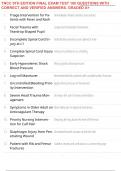
TNCC 9TH EDITION FINAL EXAM TEST 100 QUESTIONS WITH
TNCC 9th Edition Final Exam Prep
CORRECT AND VERIFIED ANSWERS. GRADED A+
Study online at https://quizlet.com/_gy9nd2
1. Triage Intervention for Pa- Immediately initiate isolation precautions
tients with Fever and Rash
2. Facial Trauma with Suspected retrobulbar hematoma
Teardrop-Shaped Pupil
3. Incomplete Spinal Cord In- Indicated by voluntary anal sphincter tone
jury at L1
4. Complete Spinal Cord Injury Urinary incontinence as a finding
Suspicion
5. Early Hypovolemic Shock Rising systolic blood pressure
Blood Pressure
6. Log-roll Maneuver Recommended for patients with unstable pelvic fractures
7. Uncontrolled Bleeding Prior- Apply direct pressure to the wound
ity Intervention
8. Severe Head Trauma Man- Decrease the rate of manual ventilation
agement
9. Symptoms in Older Adult on Most likely due to epidural hematoma
Anticoagulant Therapy
10. Priority Nursing Interven- Elevating the leg above the level of the heart
tion for Calf Pain
11. Diaphragm Injury from Pen- Decreased breath sounds on the left side
etrating Wound
12. Patient with Rib and Femur Sudden anxiety and confusion as a concerning sign
Fractures
1/7
, TNCC 9th Edition Final Exam Prep
Study online at https://quizlet.com/_gy9nd2
13. Petechiae Tiny red or purple spots on the skin
14. American College of Sur- Criteria used to determine the need for cervical spine imaging
geons screening guidelines
15. Blast trauma Injuries caused by explosions, categorized into primary, sec-
ondary, tertiary, or quaternary
16. Nasopharyngeal airway Device inserted through the nose to maintain an open airway
17. Pelvic binder Device used to stabilize pelvic fractures and reduce bleeding
18. Balanced resuscitation Administering various blood products to stabilize a patient
19. Disaster triage principles Guidelines for prioritizing care in mass casualty incidents
20. Needle decompression Emergency procedure to relieve tension pneumothorax
21. Tranexamic acid Medication used to prevent excessive bleeding
22. Spinal shock Temporary loss of spinal reflex activity below the level of injury
23. Mean arterial pressure Average pressure in a patient's arteries during one cardiac cycle
(MAP)
24. Reflex tachycardia Increased heart rate in response to low blood pressure
25. Backboard Device used to immobilize a patient's spine during transport
26. Priority Intervention for Ac- Control the bleeding
tive Bleeding
27. Best Position for Intubation Ramped
Visualization
28. Notify the provider of the change
2/7
TNCC 9th Edition Final Exam Prep
CORRECT AND VERIFIED ANSWERS. GRADED A+
Study online at https://quizlet.com/_gy9nd2
1. Triage Intervention for Pa- Immediately initiate isolation precautions
tients with Fever and Rash
2. Facial Trauma with Suspected retrobulbar hematoma
Teardrop-Shaped Pupil
3. Incomplete Spinal Cord In- Indicated by voluntary anal sphincter tone
jury at L1
4. Complete Spinal Cord Injury Urinary incontinence as a finding
Suspicion
5. Early Hypovolemic Shock Rising systolic blood pressure
Blood Pressure
6. Log-roll Maneuver Recommended for patients with unstable pelvic fractures
7. Uncontrolled Bleeding Prior- Apply direct pressure to the wound
ity Intervention
8. Severe Head Trauma Man- Decrease the rate of manual ventilation
agement
9. Symptoms in Older Adult on Most likely due to epidural hematoma
Anticoagulant Therapy
10. Priority Nursing Interven- Elevating the leg above the level of the heart
tion for Calf Pain
11. Diaphragm Injury from Pen- Decreased breath sounds on the left side
etrating Wound
12. Patient with Rib and Femur Sudden anxiety and confusion as a concerning sign
Fractures
1/7
, TNCC 9th Edition Final Exam Prep
Study online at https://quizlet.com/_gy9nd2
13. Petechiae Tiny red or purple spots on the skin
14. American College of Sur- Criteria used to determine the need for cervical spine imaging
geons screening guidelines
15. Blast trauma Injuries caused by explosions, categorized into primary, sec-
ondary, tertiary, or quaternary
16. Nasopharyngeal airway Device inserted through the nose to maintain an open airway
17. Pelvic binder Device used to stabilize pelvic fractures and reduce bleeding
18. Balanced resuscitation Administering various blood products to stabilize a patient
19. Disaster triage principles Guidelines for prioritizing care in mass casualty incidents
20. Needle decompression Emergency procedure to relieve tension pneumothorax
21. Tranexamic acid Medication used to prevent excessive bleeding
22. Spinal shock Temporary loss of spinal reflex activity below the level of injury
23. Mean arterial pressure Average pressure in a patient's arteries during one cardiac cycle
(MAP)
24. Reflex tachycardia Increased heart rate in response to low blood pressure
25. Backboard Device used to immobilize a patient's spine during transport
26. Priority Intervention for Ac- Control the bleeding
tive Bleeding
27. Best Position for Intubation Ramped
Visualization
28. Notify the provider of the change
2/7


