

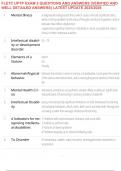
FLETC UPTP EXAM 2 QUESTIONS AND ANSWERS (VERIFIED AND
FLETC UPTP Exam 2
WELL DETAILED ANSWERS) LATEST UPDATE 2025/2026
Study online at https://quizlet.com/_hchb42
1. Mental Illness a diagnosed/undiagnosed illness which causes clinically significant stress,
while creating a problem in the areas of thought, emotional regulation, and/or
behavior that reflects dysfunction
-experiences significant distress or disability in social, occupational, educa-
tional, or other important activities
2. Intellectual disabil- IQ < 70
ity or development
disorder
3. Elements of a Intent
Statute Act
Penalty
4. Abnormal/Atypical behavior that violates a norm in society, is maladaptive, is rare given the context
behavior of the culture and environment, and is causing the person distress in their daily
life
5. Mental Health Cri- behavioral, emotional, or psychiatric situation likely resulting in significantly
sis reduced levels of functioning in primary activities of daily life
6. Intellectual Disabil- being characterized by significant limitations in both intellectual functioning
ity and adaptive behaviors, which covers both social and daily skills. Recognized
as having a lower than average intellectual functioning
7. 4 Indicators for rec- 1 Problems with communication, behavior, and social skills
ognizing intellectu- 2 Inability to perform tasks
al disabilities 3 Features of down syndrome
4 Problems keeping up in school & following rules
8. Tic Disorder An involuntary, sudden, rapid, recurrent, stereotyped motor movement or
vocalization
, FLETC UPTP Exam 2
Study online at https://quizlet.com/_hchb42
9. Tourette's Disorder generally longer in duration or complexity than a tic disorder, but is recognized
as a tic disorder
10. Communication occurs when someone, frequently a child, is having difficulty in speech or
Disorder language that is not otherwise explained by other causes
11. attention-deficit/hy- displays a frequent pattern of inattentiveness and/or hyperactivity that inter-
peractivity feres with functioning or development
disorder (ADHD)
12. Dementia brain deterioration; syndrome due to disease of the brain, usually chronic or
progressive
13. Hallucinations false sensory experiences, such as seeing something in the absence of an
external visual stimulus
14. Delusions false beliefs contrary to reality
15. Schizophrenia Distortion in the perception of reality, or losing touch
16. Mood Disorder person exhibits depression, bipolar disorder or both in an alternating fashion
17. Bipolar Disorder One or more manic episodes, and usually one or more major depressive
episodes
18. Stress-Related Dis- Acute stress disorder- less than one month
orders Post Traumatic Stress Disorder- longer than one month
19. Autism a mental condition, present from early childhood, characterized by difficulty
in communicating and forming relationships with other people and in using
language and abstract concepts.
20. Stereotypical be- Repetitive body movements or repetitive movement of objects
havior
, FLETC UPTP Exam 2
Study online at https://quizlet.com/_hchb42
21. Wandering individual trying to leave the safety of a responsible person's care or safe area
22. Excited Delirium Psychotic behavior, elevated temperature, and extreme fight or flight response
Syndrome ExDS by nervous system
23. Actual Medical con- Head injuries
ditions or Physical Stroke
illnesses Brain tumor
Sever infection & high fever
Epilepsy
Diabetes
24. Officer assisted sui- suicidal intent whereby the suicidal subject, with the intent to die and un-
cide derstanding the finality of the act engages in consciously, life-threatening
behavior to the degree that it compels a police officer to respond with deadly
force
25. Crime an act or failure to act, prohibited by law and punishable by the government
26. Tort An act, or failure to act, in which the law provides a remedy for the victim
through a civil action
27. 2 kinds of criminal General Intent Offenses
intent Specific Intent Offenses
28. General Intent Of- only requires the intent to do the prohibited act
fenses
29. Specific Intent Of- requires proof of a particular mental state; requires proof that the perpetrator
fenses desired the consequences of the actions, as set forth in the statute
30. Penalty All criminal statutes require penalty
ex: jail, fines, death
classified as: misdemeanor or felony
FLETC UPTP Exam 2
WELL DETAILED ANSWERS) LATEST UPDATE 2025/2026
Study online at https://quizlet.com/_hchb42
1. Mental Illness a diagnosed/undiagnosed illness which causes clinically significant stress,
while creating a problem in the areas of thought, emotional regulation, and/or
behavior that reflects dysfunction
-experiences significant distress or disability in social, occupational, educa-
tional, or other important activities
2. Intellectual disabil- IQ < 70
ity or development
disorder
3. Elements of a Intent
Statute Act
Penalty
4. Abnormal/Atypical behavior that violates a norm in society, is maladaptive, is rare given the context
behavior of the culture and environment, and is causing the person distress in their daily
life
5. Mental Health Cri- behavioral, emotional, or psychiatric situation likely resulting in significantly
sis reduced levels of functioning in primary activities of daily life
6. Intellectual Disabil- being characterized by significant limitations in both intellectual functioning
ity and adaptive behaviors, which covers both social and daily skills. Recognized
as having a lower than average intellectual functioning
7. 4 Indicators for rec- 1 Problems with communication, behavior, and social skills
ognizing intellectu- 2 Inability to perform tasks
al disabilities 3 Features of down syndrome
4 Problems keeping up in school & following rules
8. Tic Disorder An involuntary, sudden, rapid, recurrent, stereotyped motor movement or
vocalization
, FLETC UPTP Exam 2
Study online at https://quizlet.com/_hchb42
9. Tourette's Disorder generally longer in duration or complexity than a tic disorder, but is recognized
as a tic disorder
10. Communication occurs when someone, frequently a child, is having difficulty in speech or
Disorder language that is not otherwise explained by other causes
11. attention-deficit/hy- displays a frequent pattern of inattentiveness and/or hyperactivity that inter-
peractivity feres with functioning or development
disorder (ADHD)
12. Dementia brain deterioration; syndrome due to disease of the brain, usually chronic or
progressive
13. Hallucinations false sensory experiences, such as seeing something in the absence of an
external visual stimulus
14. Delusions false beliefs contrary to reality
15. Schizophrenia Distortion in the perception of reality, or losing touch
16. Mood Disorder person exhibits depression, bipolar disorder or both in an alternating fashion
17. Bipolar Disorder One or more manic episodes, and usually one or more major depressive
episodes
18. Stress-Related Dis- Acute stress disorder- less than one month
orders Post Traumatic Stress Disorder- longer than one month
19. Autism a mental condition, present from early childhood, characterized by difficulty
in communicating and forming relationships with other people and in using
language and abstract concepts.
20. Stereotypical be- Repetitive body movements or repetitive movement of objects
havior
, FLETC UPTP Exam 2
Study online at https://quizlet.com/_hchb42
21. Wandering individual trying to leave the safety of a responsible person's care or safe area
22. Excited Delirium Psychotic behavior, elevated temperature, and extreme fight or flight response
Syndrome ExDS by nervous system
23. Actual Medical con- Head injuries
ditions or Physical Stroke
illnesses Brain tumor
Sever infection & high fever
Epilepsy
Diabetes
24. Officer assisted sui- suicidal intent whereby the suicidal subject, with the intent to die and un-
cide derstanding the finality of the act engages in consciously, life-threatening
behavior to the degree that it compels a police officer to respond with deadly
force
25. Crime an act or failure to act, prohibited by law and punishable by the government
26. Tort An act, or failure to act, in which the law provides a remedy for the victim
through a civil action
27. 2 kinds of criminal General Intent Offenses
intent Specific Intent Offenses
28. General Intent Of- only requires the intent to do the prohibited act
fenses
29. Specific Intent Of- requires proof of a particular mental state; requires proof that the perpetrator
fenses desired the consequences of the actions, as set forth in the statute
30. Penalty All criminal statutes require penalty
ex: jail, fines, death
classified as: misdemeanor or felony


