AHIMA Anatomy, Physiology & Human Disease Final Exam
Test.
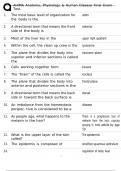
1. The most basic level of organization for atom
the body is the
2. A directional term that means the front anterior
side of the body is
3. Most of the liver lies in the upper right quadrant
4. Within the cell, the clean up crew is the lysosome
5. The plane that divides the body into transverse plane
superior and inferior sections is called
the
6. Cells working together form tissues
7. The "brain" of the cells is called the nucleus
8. The plane that divides the body into frontal plane
anterior and posterior sections is the
9. A directional term that means the back dorsal
side or toward the back surface is
10. An imbalance from the homeostasis disease
perspec- tive is considered to be a
11. As people age, what happens to the There is a progressive loss of
melanin in the hair? melanin from the hair, causing
graying in most adults by age
50
12. What is the upper layer of the skin The epidermis
called?
13. The epidermis is composed of stratified squamous epithelium
14. regulation of body heat
1/
20
, AHIMA Anatomy, Physiology & Human Disease Final Exam
Test.
Sudeoriferous glands (sweat glands) are
im- portant for what purpose?
15. A pigmented spot on the skin that contains ar- melanoma
eas of different colors is an indication of what?
16. What is the "tanning" effect caused by? melanin
17. What happens to collagen and elastin levels in It decreases
the skin as people age?
18. What is the layer of skin below the dermis that subcutaneous
helps to support, nourish, insulate and
cush- ion the skin?
19. The sac that hair fiber grows in is called the hair follicle
20. What is the tough protein within the keratin
skin that helps prevent it from soaking
up moisture like a sponge?
21. What is another name for skin? integumentary system
22. The disease, , is where the osteroporosis
bones lose calcium and become brittle
increasing the risk of broken bones
23. The elbow can be both a joint and a hinge and pivot
joint
24. What are 3 functions of bones? providing a framework for the
body, providing protection for
the body, forming blood
cells
2/
20
, AHIMA Anatomy, Physiology & Human Disease Final Exam
Test.
25. True or false, bones provide a source of vitamin FALSE
D
26. The bones of the extremities are parts of the appendicular skeleton
27. How do bones help in maintaining by providing a storage area for
homeosta- sis of the body? calci- um
28. As people age, what happens to the calcium in it is progressively los
the bones?
29. What section of the spinal column have the lumbar section
five vertebrae
30. What is a fracture with no break in the closed fracture
skin called?
31. What is inflammation of the joint characterized arthritis
by pain, swelling, and stiffness called?
32. What is a fracture caused by repetitive low-im- Stress fracture
pact forces such as running called?
33. What is muscular dystrophy? a genetic disease of the
muscular sys- tem in which the
muscles weaken and atrophy
and become replaced with
fatty tissue
34. When your arms and legs move laterally Abduction
away from the midline of your body,
what is this motion called?
35. Define hematopoiesis the production of blood cells
and platelets which occur in
bone marrow
3/
20
Test.
1. The most basic level of organization for atom
the body is the
2. A directional term that means the front anterior
side of the body is
3. Most of the liver lies in the upper right quadrant
4. Within the cell, the clean up crew is the lysosome
5. The plane that divides the body into transverse plane
superior and inferior sections is called
the
6. Cells working together form tissues
7. The "brain" of the cells is called the nucleus
8. The plane that divides the body into frontal plane
anterior and posterior sections is the
9. A directional term that means the back dorsal
side or toward the back surface is
10. An imbalance from the homeostasis disease
perspec- tive is considered to be a
11. As people age, what happens to the There is a progressive loss of
melanin in the hair? melanin from the hair, causing
graying in most adults by age
50
12. What is the upper layer of the skin The epidermis
called?
13. The epidermis is composed of stratified squamous epithelium
14. regulation of body heat
1/
20
, AHIMA Anatomy, Physiology & Human Disease Final Exam
Test.
Sudeoriferous glands (sweat glands) are
im- portant for what purpose?
15. A pigmented spot on the skin that contains ar- melanoma
eas of different colors is an indication of what?
16. What is the "tanning" effect caused by? melanin
17. What happens to collagen and elastin levels in It decreases
the skin as people age?
18. What is the layer of skin below the dermis that subcutaneous
helps to support, nourish, insulate and
cush- ion the skin?
19. The sac that hair fiber grows in is called the hair follicle
20. What is the tough protein within the keratin
skin that helps prevent it from soaking
up moisture like a sponge?
21. What is another name for skin? integumentary system
22. The disease, , is where the osteroporosis
bones lose calcium and become brittle
increasing the risk of broken bones
23. The elbow can be both a joint and a hinge and pivot
joint
24. What are 3 functions of bones? providing a framework for the
body, providing protection for
the body, forming blood
cells
2/
20
, AHIMA Anatomy, Physiology & Human Disease Final Exam
Test.
25. True or false, bones provide a source of vitamin FALSE
D
26. The bones of the extremities are parts of the appendicular skeleton
27. How do bones help in maintaining by providing a storage area for
homeosta- sis of the body? calci- um
28. As people age, what happens to the calcium in it is progressively los
the bones?
29. What section of the spinal column have the lumbar section
five vertebrae
30. What is a fracture with no break in the closed fracture
skin called?
31. What is inflammation of the joint characterized arthritis
by pain, swelling, and stiffness called?
32. What is a fracture caused by repetitive low-im- Stress fracture
pact forces such as running called?
33. What is muscular dystrophy? a genetic disease of the
muscular sys- tem in which the
muscles weaken and atrophy
and become replaced with
fatty tissue
34. When your arms and legs move laterally Abduction
away from the midline of your body,
what is this motion called?
35. Define hematopoiesis the production of blood cells
and platelets which occur in
bone marrow
3/
20