

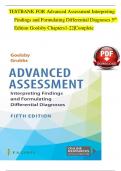
TESTBANK FOR Advanced Assessment Interpreting
a
Findings and Formulating Differential Diagnoses 5th
Edition Goolsby Chapters1-22|Complete
, TABLE OF CONTENTS a d ad
Chapter 1. Assessme nt and Clinical Decision Making: An Overvie w
ad a d ad ad ad a d ad ad ad a d a d a d ad ad
Chapter 2. Genomic Assessme nt: Interpretin g Findings and Formulating Differen tial Diagnoses
ad a d a d a d ad a d ad ad a d a d a d ad ad a d ad ad ad ad a d
Chapter 3. Skin
ad a d ad
Chapter 4. Head, Face, and Neck
ad a d ad a d a d a d
Chapter 5. The Eye
ad a d ad a d
Chapter 6. Ear, Nose, Mouth, and Throat
ad ad ad ad a d ad
Chapter 7. Cardiac and Peripheral Vascular Systems
ad a d ad a d ad ad ad a d ad a d ad
Chapter 8. Respirato ry System
ad a d a d ad ad a d ad
Chapter 9. Breasts
ad a d ad
Chapter 10. Abdomen
ad ad
Chapter 11. Genitou rinary System
ad a d a d ad ad a d ad
Chapter 12. Male Reproductive System
ad a d ad a d ad a d ad
Chapter 13. Female Reproductive System
ad a d a d a d ad a d ad
Chapter 14. Musculoske le ta l System
ad a d a d ad ad ad a d ad
Chapterad a d 15. Neurologica l Syste m
a d ad a d ad
Chapterad a d 16. Nonspec ific
a d ad a d Compla ints ad
Chapter 17. Psychiatric Mental Health
ad a d a d ad a d ad a d
Chapter 18. Pediatric Patients
ad a d a d a d ad
Chapter 19. Pregnant Patients
ad a d a d ad a d
Chapter 20. Assessmen t of the Transgender or Gender Diverse Adult
ad a d a d ad ad a d ad a d ad ad a d ad ad a d a d
Chapter 21. Older Patients
ad a d a d a d
Chapter 22. Persons With Disabilities
ad a d a d a d a d ad
, Chapter 1. Assessment and Clinical Decision Making: An Overview
a d ad a d a d a d a d a d a d
Multiple a d Choice
Identify the choice that best completes the statement or answers the question.
a d ad ad ad ad a d ad a d ad a d ad
1. Which type of clinical decision-m aki ng is most reliable?
ad ad ad a d ad ad a d ad ad
A. Intuitive
B. Analytical
C. Experiential
D. Augenblick
2. Which of the following is false? To obtain adequat e history, health-care providers must be:
a d ad ad a d ad a d ad ad ad a d a d a d a d a d
A. Methodical and systematic a d ad
B. Attentive to the patient’s verbal and nonverb al language
a d ad ad a d a d ad ad a d
C. Able to accurat ely interpret the patient’s responses
ad ad ad a d a d ad a d
D. Adept at reading into the patient’s statements
a d ad a d ad ad a d
3. Essential parts of a health history include all of the following except:
a d a d ad ad a d ad a d ad ad ad a d
A. Chief complaint a d
B. History of the present illness
ad ad ad a d
C. Current vital signs a d ad
D. All of the above are essential history compon ent s
ad ad ad a d ad a d ad ad ad
4. Which of the following is false? While performi ng the physical examin atio n , the examiner must be able to:
a d ad ad a d ad a d ad ad a d ad a d ad ad ad a d ad a d ad ad ad
A. Differentiate between normal and abnorm al findingsa d a d a d ad ad a d
B. Recall knowledg e of a range of conditions and their associated signs and symptoms
a d ad a d ad ad a d ad a d ad ad a d ad ad
C. Recognize how certain condition s affect the respons e to other conditions
a d ad a d ad a d a d ad ad a d ad a d
D. Foresee unpredict abl e a d ad ad a d findings
5. The following is the least reliable source of informatio n for diagnostic statistics:
ad a d ad ad ad a d a d ad ad a d ad a d
A. Evidence-bas ed ad a d a d investigatio ns ad
B. Primaryrep o rts ad ad a d of research ad
C. Estimation based on a provider’s experien ce
a d a d ad ad a d ad
D. Published meta-an al ys es a d ad ad ad
6. The following can be used to assist in sound clinical decision-m akin g:
ad a d ad ad ad ad a d ad ad a d ad ad
A. Algorithm published in a peer-reviewed journal article
ad ad ad ad ad ad
, B. Clinical practice guidelines
ad a d
C. Evidence-b as ed ad ad a d a d research
D. All of the above
ad ad ad
7. If a diagnostic study has high sensitivity, this indicates
ad ad ad ad ad ad a d ad a d a:
A. High percent age of persons with the given condition will have an abnorm al result
ad ad ad a d ad a d ad ad a d a d ad a d ad ad a d
B. Low percent age
ad ad ad a d of persons with the given condition will have an abnorm al result
ad a d ad ad a d a d ad a d ad ad a d
C. Low likelihood of normal result in persons
ad a d ad a d a d ad a d without a given condition a d ad a d
D. None of the above
ad ad ad
8. If a diagnostic study has high specificity,
ad ad ad ad a d ad a d this indicates a:
ad a d
A. Low percentage
ad a d of healthy individuals will show a normal result
ad ad a d ad ad ad a d
B. High percentag e of healthy individuals will show a normal result
ad ad a d ad ad a d ad ad ad a d
C. High percent ag e
ad ad ad a d of individuals with a disorder will show a normal result
ad a d ad ad a d ad ad ad a d
D. Low percentag e of individuals with a disorder will show an abnormal result
ad ad a d ad a d ad ad a d ad a d ad a d
9. A likelihood ratio above 1 indicates that a diagnostic test showing a:
ad a d ad a d ad a d a d ad a d a d a d
A. Positive result is strongly associated
ad a d ad a d a d with the disease
ad ad
B. Negative result is strongly associated
a d ad ad a d a d with absence of the disease
ad a d ad ad
C. Positive result is weakly associated with the disease
ad ad ad a d a d ad ad
D. Negative result is weakly associated with absence of the disease
a d ad ad a d a d ad a d ad ad
a
Findings and Formulating Differential Diagnoses 5th
Edition Goolsby Chapters1-22|Complete
, TABLE OF CONTENTS a d ad
Chapter 1. Assessme nt and Clinical Decision Making: An Overvie w
ad a d ad ad ad a d ad ad ad a d a d a d ad ad
Chapter 2. Genomic Assessme nt: Interpretin g Findings and Formulating Differen tial Diagnoses
ad a d a d a d ad a d ad ad a d a d a d ad ad a d ad ad ad ad a d
Chapter 3. Skin
ad a d ad
Chapter 4. Head, Face, and Neck
ad a d ad a d a d a d
Chapter 5. The Eye
ad a d ad a d
Chapter 6. Ear, Nose, Mouth, and Throat
ad ad ad ad a d ad
Chapter 7. Cardiac and Peripheral Vascular Systems
ad a d ad a d ad ad ad a d ad a d ad
Chapter 8. Respirato ry System
ad a d a d ad ad a d ad
Chapter 9. Breasts
ad a d ad
Chapter 10. Abdomen
ad ad
Chapter 11. Genitou rinary System
ad a d a d ad ad a d ad
Chapter 12. Male Reproductive System
ad a d ad a d ad a d ad
Chapter 13. Female Reproductive System
ad a d a d a d ad a d ad
Chapter 14. Musculoske le ta l System
ad a d a d ad ad ad a d ad
Chapterad a d 15. Neurologica l Syste m
a d ad a d ad
Chapterad a d 16. Nonspec ific
a d ad a d Compla ints ad
Chapter 17. Psychiatric Mental Health
ad a d a d ad a d ad a d
Chapter 18. Pediatric Patients
ad a d a d a d ad
Chapter 19. Pregnant Patients
ad a d a d ad a d
Chapter 20. Assessmen t of the Transgender or Gender Diverse Adult
ad a d a d ad ad a d ad a d ad ad a d ad ad a d a d
Chapter 21. Older Patients
ad a d a d a d
Chapter 22. Persons With Disabilities
ad a d a d a d a d ad
, Chapter 1. Assessment and Clinical Decision Making: An Overview
a d ad a d a d a d a d a d a d
Multiple a d Choice
Identify the choice that best completes the statement or answers the question.
a d ad ad ad ad a d ad a d ad a d ad
1. Which type of clinical decision-m aki ng is most reliable?
ad ad ad a d ad ad a d ad ad
A. Intuitive
B. Analytical
C. Experiential
D. Augenblick
2. Which of the following is false? To obtain adequat e history, health-care providers must be:
a d ad ad a d ad a d ad ad ad a d a d a d a d a d
A. Methodical and systematic a d ad
B. Attentive to the patient’s verbal and nonverb al language
a d ad ad a d a d ad ad a d
C. Able to accurat ely interpret the patient’s responses
ad ad ad a d a d ad a d
D. Adept at reading into the patient’s statements
a d ad a d ad ad a d
3. Essential parts of a health history include all of the following except:
a d a d ad ad a d ad a d ad ad ad a d
A. Chief complaint a d
B. History of the present illness
ad ad ad a d
C. Current vital signs a d ad
D. All of the above are essential history compon ent s
ad ad ad a d ad a d ad ad ad
4. Which of the following is false? While performi ng the physical examin atio n , the examiner must be able to:
a d ad ad a d ad a d ad ad a d ad a d ad ad ad a d ad a d ad ad ad
A. Differentiate between normal and abnorm al findingsa d a d a d ad ad a d
B. Recall knowledg e of a range of conditions and their associated signs and symptoms
a d ad a d ad ad a d ad a d ad ad a d ad ad
C. Recognize how certain condition s affect the respons e to other conditions
a d ad a d ad a d a d ad ad a d ad a d
D. Foresee unpredict abl e a d ad ad a d findings
5. The following is the least reliable source of informatio n for diagnostic statistics:
ad a d ad ad ad a d a d ad ad a d ad a d
A. Evidence-bas ed ad a d a d investigatio ns ad
B. Primaryrep o rts ad ad a d of research ad
C. Estimation based on a provider’s experien ce
a d a d ad ad a d ad
D. Published meta-an al ys es a d ad ad ad
6. The following can be used to assist in sound clinical decision-m akin g:
ad a d ad ad ad ad a d ad ad a d ad ad
A. Algorithm published in a peer-reviewed journal article
ad ad ad ad ad ad
, B. Clinical practice guidelines
ad a d
C. Evidence-b as ed ad ad a d a d research
D. All of the above
ad ad ad
7. If a diagnostic study has high sensitivity, this indicates
ad ad ad ad ad ad a d ad a d a:
A. High percent age of persons with the given condition will have an abnorm al result
ad ad ad a d ad a d ad ad a d a d ad a d ad ad a d
B. Low percent age
ad ad ad a d of persons with the given condition will have an abnorm al result
ad a d ad ad a d a d ad a d ad ad a d
C. Low likelihood of normal result in persons
ad a d ad a d a d ad a d without a given condition a d ad a d
D. None of the above
ad ad ad
8. If a diagnostic study has high specificity,
ad ad ad ad a d ad a d this indicates a:
ad a d
A. Low percentage
ad a d of healthy individuals will show a normal result
ad ad a d ad ad ad a d
B. High percentag e of healthy individuals will show a normal result
ad ad a d ad ad a d ad ad ad a d
C. High percent ag e
ad ad ad a d of individuals with a disorder will show a normal result
ad a d ad ad a d ad ad ad a d
D. Low percentag e of individuals with a disorder will show an abnormal result
ad ad a d ad a d ad ad a d ad a d ad a d
9. A likelihood ratio above 1 indicates that a diagnostic test showing a:
ad a d ad a d ad a d a d ad a d a d a d
A. Positive result is strongly associated
ad a d ad a d a d with the disease
ad ad
B. Negative result is strongly associated
a d ad ad a d a d with absence of the disease
ad a d ad ad
C. Positive result is weakly associated with the disease
ad ad ad a d a d ad ad
D. Negative result is weakly associated with absence of the disease
a d ad ad a d a d ad a d ad ad


