MSN 629 Ryan Turner
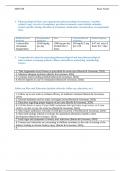
1. Pharmacological Plan: most appropriate pharmacological treatment. Consider
patient’s age, severity of symptoms, previous treatments, must include rationale,
patient specific dosing, duration of treatment, medication concentration, recommended
dose.
Medication and Recommended Dose Concentration (if Route/Frequency
Rationale mg/kg/day pertinent)
1.amoxicillin 20-40 mg/kg 1000 mg per day 240 mg/62.5 mg 6.67 mL every 8
clavulanate per day divided into 3 per 5 ml hours for 7 days
(Augmentin) doses
2. Comprehensive plan incorporating pharmacological and non-pharmacological
interventions to manage patient’s illness and address underlying contributing
factors.
1. Take Augmentin every 8 hours as prescribed for seven days (Barola & Grossman, 2024).
2. Maintain adequate hydration (Barola & Grossman, 2024).
3. Continue timed voiding schedule (Barola & Grossman, 2024).
4. Bowel regimen in case of constipation (Barola & Grossman, 2024).
Follow-up Plan and Education (include referrals, follow up, education, etc.)
1. Follow up in one week to evaluate efficacy of antibiotic treatment (Barola & Grossman,
2024).
2. Increase hydration such as water, not sugary juices (Barola & Grossman, 2024).
3. Education regarding proper hygiene of peri area (Barola & Grossman, 2024).
4. Call the doctor or nurse if your child's symptoms don't get better or get worse, or if your
child is not able to take the medicine (Barola & Grossman, 2024).
5. May require antibiotics everyday if child gets recurrent UTIs (Barola & Grossman, 2024).
6. May need urology referral to evaluate for anatomical alterations related to utero
development (Barola & Grossman, 2024).
7. Early signs and symptoms of urinary tract infections (Barola & Grossman, 2024).
8. Urinary tract infections are concerning in children secondary to the risk of scarring of the
kidneys leading to chronic kidney injury (Barola & Grossman, 2024).
9.
1. Pharmacological Plan: most appropriate pharmacological treatment. Consider
patient’s age, severity of symptoms, previous treatments, must include rationale,
patient specific dosing, duration of treatment, medication concentration, recommended
dose.
Medication and Recommended Dose Concentration (if Route/Frequency
Rationale mg/kg/day pertinent)
1.amoxicillin 20-40 mg/kg 1000 mg per day 240 mg/62.5 mg 6.67 mL every 8
clavulanate per day divided into 3 per 5 ml hours for 7 days
(Augmentin) doses
2. Comprehensive plan incorporating pharmacological and non-pharmacological
interventions to manage patient’s illness and address underlying contributing
factors.
1. Take Augmentin every 8 hours as prescribed for seven days (Barola & Grossman, 2024).
2. Maintain adequate hydration (Barola & Grossman, 2024).
3. Continue timed voiding schedule (Barola & Grossman, 2024).
4. Bowel regimen in case of constipation (Barola & Grossman, 2024).
Follow-up Plan and Education (include referrals, follow up, education, etc.)
1. Follow up in one week to evaluate efficacy of antibiotic treatment (Barola & Grossman,
2024).
2. Increase hydration such as water, not sugary juices (Barola & Grossman, 2024).
3. Education regarding proper hygiene of peri area (Barola & Grossman, 2024).
4. Call the doctor or nurse if your child's symptoms don't get better or get worse, or if your
child is not able to take the medicine (Barola & Grossman, 2024).
5. May require antibiotics everyday if child gets recurrent UTIs (Barola & Grossman, 2024).
6. May need urology referral to evaluate for anatomical alterations related to utero
development (Barola & Grossman, 2024).
7. Early signs and symptoms of urinary tract infections (Barola & Grossman, 2024).
8. Urinary tract infections are concerning in children secondary to the risk of scarring of the
kidneys leading to chronic kidney injury (Barola & Grossman, 2024).
9.