

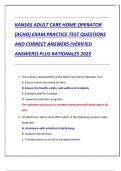
KANSAS ADULT CARE HOME OPERATOR
(ACHO) EXAM PRACTICE TEST QUESTIONS
AND CORRECT ANSWERS (VERIFIED
ANSWERS) PLUS RATIONALES 2025
1. The primary responsibility of the Adult Care Home Operator is to:
A. Ensure meals are served on time
B. Ensure the health, safety, and welfare of residents
C. Schedule staff for holidays
D. Supervise volunteer programs
The operator must focus on resident safety and well-being above all
else.
2. An Adult Care Home must offer which of the following services under
state law?
A. Assistance with activities of daily living
B. Surgical interventions
C. Transportation to out-of-state appointments
, D. Emergency hospital care
Assistance with ADLs is a required basic service for residents.
3. Who is responsible for approving and maintaining resident care plans?
A. Activities director
B. Licensed nurse or interdisciplinary team
C. Dietary manager
D. Maintenance supervisor
Care plans are clinical documents requiring professional oversight.
4. A resident’s rights must be:
A. Optional based on facility policy
B. Signed once at admission and never revisited
C. Clearly communicated, posted, and protected at all times
D. Explained only if requested
Federal and state regulations mandate continuous awareness and
protection of resident rights.
5. The minimum age to be admitted into an adult care home is:
A. 21
B. 18
C. 25
D. 65
ACHOs may admit adults 18 and older if they require long-term care.
6. In Kansas, the licensing agency for Adult Care Homes is:
A. OSHA
, B. CMS
C. KDADS (Kansas Department for Aging and Disability Services)
D. ACHA
KDADS regulates adult care homes in Kansas.
7. An example of a resident right is:
A. Right to unlimited medication
B. Right to refuse treatment
C. Right to own the facility
D. Right to direct nursing care
Residents may refuse care, even if it is recommended.
8. Incident reports must be filed when:
A. A resident complains about food
B. A resident falls or experiences an injury
C. There is a visitor disagreement
D. The facility receives a call from KDADS
All injuries or events threatening safety must be documented.
9. The primary purpose of in-service training is to:
A. Increase staff wages
B. Maintain and improve staff competency
C. Eliminate evaluations
D. Replace initial training
Ongoing training ensures quality and compliance with standards.
(ACHO) EXAM PRACTICE TEST QUESTIONS
AND CORRECT ANSWERS (VERIFIED
ANSWERS) PLUS RATIONALES 2025
1. The primary responsibility of the Adult Care Home Operator is to:
A. Ensure meals are served on time
B. Ensure the health, safety, and welfare of residents
C. Schedule staff for holidays
D. Supervise volunteer programs
The operator must focus on resident safety and well-being above all
else.
2. An Adult Care Home must offer which of the following services under
state law?
A. Assistance with activities of daily living
B. Surgical interventions
C. Transportation to out-of-state appointments
, D. Emergency hospital care
Assistance with ADLs is a required basic service for residents.
3. Who is responsible for approving and maintaining resident care plans?
A. Activities director
B. Licensed nurse or interdisciplinary team
C. Dietary manager
D. Maintenance supervisor
Care plans are clinical documents requiring professional oversight.
4. A resident’s rights must be:
A. Optional based on facility policy
B. Signed once at admission and never revisited
C. Clearly communicated, posted, and protected at all times
D. Explained only if requested
Federal and state regulations mandate continuous awareness and
protection of resident rights.
5. The minimum age to be admitted into an adult care home is:
A. 21
B. 18
C. 25
D. 65
ACHOs may admit adults 18 and older if they require long-term care.
6. In Kansas, the licensing agency for Adult Care Homes is:
A. OSHA
, B. CMS
C. KDADS (Kansas Department for Aging and Disability Services)
D. ACHA
KDADS regulates adult care homes in Kansas.
7. An example of a resident right is:
A. Right to unlimited medication
B. Right to refuse treatment
C. Right to own the facility
D. Right to direct nursing care
Residents may refuse care, even if it is recommended.
8. Incident reports must be filed when:
A. A resident complains about food
B. A resident falls or experiences an injury
C. There is a visitor disagreement
D. The facility receives a call from KDADS
All injuries or events threatening safety must be documented.
9. The primary purpose of in-service training is to:
A. Increase staff wages
B. Maintain and improve staff competency
C. Eliminate evaluations
D. Replace initial training
Ongoing training ensures quality and compliance with standards.



