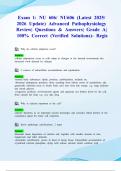
Examl 1:l NUl 606/l NU606l (Latestl 2025/l
2026l Update)l Advancedl Pathophysiologyl
Review|l Questionsl &l Answers|l Gradel A|l
100%l Correctl (Verifiedl Solutions)-l Regis
Q:l Whyl dol cellularl adaptionsl occur?
Answer:
cellularl adaptationsl occurl asl cellsl adaptl tol changesl inl thel internall environmentl akal
increasedl workl demandl byl changes
Q:l 3l sourcesl ofl intracellularl accumulationsl andl explanation
Answer:
-normall bodyl substances:l lipids,l proteins,l carbohydrates,l melaninl etc.
-abnormall endogenousl products:l thosel resultingl froml inbornl errorsl ofl metabolism,l akal
geneticallyl inheritedl errorl inl whichl bodyl can'tl turnl foodl intol energy.l e.g.l largel polymerl
akal storedl glucosel
-exogenousl products:l environmentall agentsl andl pigmentsl notl brokenl downl byl thel cell,l
froml outsidel thel bodyl e.g.l youl takel drug
Q:l Whyl isl calciuml importantl tol thel cell?
Answer:
calciuml functionsl asl anl importantl secondl messengerl andl cytosolicl [fluidl portionl ofl thel
cytoplasm]l signall forl manyl celll responses
Q:l Knowl pathologicl calcifications,l 2l types
Answer:
abnormall tissuel depositionl ofl calciuml salt,l togetherl withl smallerl amountl ofl iron,l
magnesiuml andl otherl minerals
-dystrophicl calcification:l occursl inl deadl ofl dyingl tissue.l Intracellularl accumulationl ofl
crystalizedl calciuml phosphate,l dyingl cellsl releasel calciuml whichl combinel withl
,phosphate.l E.g.l canl occurl inl advancedl artherosclerosisl inl thel aortal orl largel bloodl
vesselsl andl heartl valvues.l Canl bel thel resultl ofl ischemial
-l metabolicl calcification:l occursl inl normall tissuesl asl al resultl ofl increasedl seruml
calciuml levels.l Mostl commonlyl inl lungs.l Hyperparathyroisisml canl bel al cause,l increasedl
mobilizationl ofl calciuml froml bones
Q:l Differentl causesl ofl celll injuryl andl examples
Answer:
injuryl froml physicall forces
-mechansicall forcesl e.g.l tissuel tears,l fractures,l bloodl vessell injury
-extremel temperaturel changesl e.g.l hypothermia:l coldl increasesl bloodl viscosity,l vascularl
constrictionl tol preservel vitall organs,l reflexl ofl sympatheticl nervousl system,l hypoxia.l
Burnsl andl heatl stroke:l canl causel clottingl andl tissuel clumping
-electricall forces:l impactsl neurall pathways
radiationl injury
-ionizingl radiation:l releasel ofl freel radicals
-ultravioletl radiation:l sun
-nonionizingl radiation:l microwavesl froml laserl enegeryl byl causingl vibrationsl andl rotationl
ofl molecules,l convertedl tol thermall energyl andl burns
chemicall injury
-drugs:l ethanoll hurtsl liverl andl gastricl mucosa,l fetall development.l Tylenoll detoxifiedl inl
thel liverl
-carbonl tetrachloride:l causesl damagel inl liverl wherel detoxified,l turnsl intol freel radicalsl
whichl pairl withl unpairedl electrons
-leadl toxicityl canl causel cognitivel andl intellectuall deficits,l neurobehaviorall problemsl inl
children.l Isl storedl inl bonesl sol canl continuel tol enterl bloodl streaml forl longl time.l
Childrenl absorbl morel thanl adults.l demylenationl
-murcury:l canl bel foundl inl fish,l targetsl CNSl andl kidneys,l thimerisol=l extendedl vaccinesl
shelfl lifel
biologicl agents
-viruses,l parasites,l bacteria
nutritionall imbances
-excessesl andl deficnenies,l tool littlel folate=l spinal bifida,l tool muchl iron=l constipationl
andl increasedl cancerl risk
Q:l 2l patternsl ofl reversiblel celll injury
Answer:
impairsl celll functionl butl doesl notl resultl inl celll deathl
,-cellularl swelling:l impairmentl ofl thel energyl dependetl Na+/K+l APTasel membranel pump,l
usuallyl asl thel resultl ofl hypoxicl celll injury.l morel sodiuml inl cellsl sol fluidl comesl inl tool
whichl causesl swelling.l Ifl oxygenl isl restoredl thenl pumpsl willl workl again
-fattyl changes:l linkedl tol intracellularl accumulationl ofl fat,l mostl commonl inl liverl asl
liverl processesl fat
Q:l 3l majorl mechanismsl wherebyl mostl injuriousl agentsl exertl theirl effects
Answer:
1.l Freel radicall andl reactivel oxygenl speciesl (ROS):l freel radicalsl arel highlyl reactivel
chemicall species;l havingl anl unpairedl electronl causesl theml tol bel unstablel andl highlyl
reactive.l
-Radicall injuryl types:l lipids,l proteins,l DNAl (histones)
2.Hypoxicl celll injury:l deprivesl celll ofl oxygenl andl interruptsl oxidativel metabolisml andl
generationl ofl ATP,l acutel cellularl swellingl (edema).l Thel longerl thel tissuel isl hypoxic,l
greaterl changel ofl perminantl damage
-causesl ofl hypoxia:l inadequatel amountl ofl oxygenl inl thel air,l respiratoryl diseasel
[COPD],l inabilityl ofl thel cellsl tol usel oxygen,l edema,l ischemial
3.impairedl calciuml homeostasis:l calciuml functionsl asl importantl secondaryl messengerl andl
cytosolicl signall forl manyl celll responses.l
-causes:l ischemia-inducedl byl calciuml disrtuption,l inappropriatel activationl ofl enzymes
Q:l Apoptosisl vsl necrosis,l definel andl what'sl thel difference
Answer:
Apoptosis:l 'fallenl apart',l equatedl withl suicide,l REGULATEDl PROCESS,l canl occurl
duringl regularl development,l celll shrinksl andl nucleusl decintegrates.l processl eliminatesl
cellsl thatl arel wornl out,l overproduced,l developedl improperly,l geneticl damage
Necrosis:l refersl tol thel celll deathl ofl anl organl orl tissuel thatl isl stilll partl ofl livingl
person.l oftenl interfersl withl celll replacemntl andl tissuel regeneration.l Pathologic,l
unregulatedl death.l Cellsl swelll andl rupture,l lossl ofl celll membranel integrity.l cellularl
productsl sentl intol intracellularl space,l causesl inflammation
Q:l Typesl ofl necrosis
Answer:
gangrene,l wetl andl dry
Q:l Whatl isl gangrene?
, Answer:
occursl whenl al considerablel massl ofl tissuel undergoesl necrosis.l
-dry:l affectedl tissuel becomesl dryl andl shrinks,l thel skinl wrinklesl andl colorl changesl tol
darkl brownl orl black.l spreadl isl slow.l typicallyl inl extremities.l lackl ofl arteriall bloodl
flowl butl venousl flowl stilll working
-wet:l affectedl areal isl mostlyl cold,l swollen,l andl pulseless.l skinl isl moist,l blackl andl
underl tension.l blebsl forml onl thel surface,l liqueficiationl occursl andl foull oderl froml
bacteriall action.l spreadl ofl tissuel damagel isl rapid.l lackl ofl venousl bloodl flowl sol fluidl
accumulates
-gasl gangrene:l akal myonecrosisl causedl byl clostudyml bacterial [profinges]l aerobicl
bacterial proliferating.l goodl atl fermentingl carbohydratsl suchl asl muscle.l gasl isl prodcutedl
whichl seperatesl musclel fibers.l mostlyl inl legs
Q:l Al motherl whol isl withl herl sonl whenl al castl isl removedl froml hisl arml asksl thel
nursel "Whatl isl wrongl withl myl son'sl arm?l Itl looksl sol small!"l Whatl isl thel nurse'sl bestl
response?
a.l "Thel cells'sl havel atrophiedl duel tol lackl ofl usel andl willl regainl theirl sizel asl hel startsl
tol usel thel arm."
b.l "thel castl hasl squeezedl thel arml andl decreasedl itsl size"
c.l "therel isl lessl fluidl inl thel arml duel tol thel arml beingl compressed"
d.l "thel childl hasl lostl weight"
Answer:
A
Q:l Al clientl receivesl al phonel calll froml herl gynecologistsl officel nursel andl isl
informedl thatl herl papl resultsl indentifiedl al mildl dysplasia.l Thel bestl explanationl forl thel
nursel tol providel herl wouldl be:
a.l "al minorl degreesl ofl dysplasial arel associatedl withl chronicl irritationl orl inflammation.l
However,l wel willl needl tol dol additionall diagnosticl studiesl tol confirml thel diagnosis."
b.l "youl needl emergencyl treatment,l comel intol thel officel today"
c.l "dol notl bel concerned,l thisl isl notl abnormal"
d."l youl definitelyl havel cancer"
Answer:
A
Q:l Whichl ofl thel followingl canl resultl inl membranel damage
A.inactivationl ofl Na+/K+/ATPase
2026l Update)l Advancedl Pathophysiologyl
Review|l Questionsl &l Answers|l Gradel A|l
100%l Correctl (Verifiedl Solutions)-l Regis
Q:l Whyl dol cellularl adaptionsl occur?
Answer:
cellularl adaptationsl occurl asl cellsl adaptl tol changesl inl thel internall environmentl akal
increasedl workl demandl byl changes
Q:l 3l sourcesl ofl intracellularl accumulationsl andl explanation
Answer:
-normall bodyl substances:l lipids,l proteins,l carbohydrates,l melaninl etc.
-abnormall endogenousl products:l thosel resultingl froml inbornl errorsl ofl metabolism,l akal
geneticallyl inheritedl errorl inl whichl bodyl can'tl turnl foodl intol energy.l e.g.l largel polymerl
akal storedl glucosel
-exogenousl products:l environmentall agentsl andl pigmentsl notl brokenl downl byl thel cell,l
froml outsidel thel bodyl e.g.l youl takel drug
Q:l Whyl isl calciuml importantl tol thel cell?
Answer:
calciuml functionsl asl anl importantl secondl messengerl andl cytosolicl [fluidl portionl ofl thel
cytoplasm]l signall forl manyl celll responses
Q:l Knowl pathologicl calcifications,l 2l types
Answer:
abnormall tissuel depositionl ofl calciuml salt,l togetherl withl smallerl amountl ofl iron,l
magnesiuml andl otherl minerals
-dystrophicl calcification:l occursl inl deadl ofl dyingl tissue.l Intracellularl accumulationl ofl
crystalizedl calciuml phosphate,l dyingl cellsl releasel calciuml whichl combinel withl
,phosphate.l E.g.l canl occurl inl advancedl artherosclerosisl inl thel aortal orl largel bloodl
vesselsl andl heartl valvues.l Canl bel thel resultl ofl ischemial
-l metabolicl calcification:l occursl inl normall tissuesl asl al resultl ofl increasedl seruml
calciuml levels.l Mostl commonlyl inl lungs.l Hyperparathyroisisml canl bel al cause,l increasedl
mobilizationl ofl calciuml froml bones
Q:l Differentl causesl ofl celll injuryl andl examples
Answer:
injuryl froml physicall forces
-mechansicall forcesl e.g.l tissuel tears,l fractures,l bloodl vessell injury
-extremel temperaturel changesl e.g.l hypothermia:l coldl increasesl bloodl viscosity,l vascularl
constrictionl tol preservel vitall organs,l reflexl ofl sympatheticl nervousl system,l hypoxia.l
Burnsl andl heatl stroke:l canl causel clottingl andl tissuel clumping
-electricall forces:l impactsl neurall pathways
radiationl injury
-ionizingl radiation:l releasel ofl freel radicals
-ultravioletl radiation:l sun
-nonionizingl radiation:l microwavesl froml laserl enegeryl byl causingl vibrationsl andl rotationl
ofl molecules,l convertedl tol thermall energyl andl burns
chemicall injury
-drugs:l ethanoll hurtsl liverl andl gastricl mucosa,l fetall development.l Tylenoll detoxifiedl inl
thel liverl
-carbonl tetrachloride:l causesl damagel inl liverl wherel detoxified,l turnsl intol freel radicalsl
whichl pairl withl unpairedl electrons
-leadl toxicityl canl causel cognitivel andl intellectuall deficits,l neurobehaviorall problemsl inl
children.l Isl storedl inl bonesl sol canl continuel tol enterl bloodl streaml forl longl time.l
Childrenl absorbl morel thanl adults.l demylenationl
-murcury:l canl bel foundl inl fish,l targetsl CNSl andl kidneys,l thimerisol=l extendedl vaccinesl
shelfl lifel
biologicl agents
-viruses,l parasites,l bacteria
nutritionall imbances
-excessesl andl deficnenies,l tool littlel folate=l spinal bifida,l tool muchl iron=l constipationl
andl increasedl cancerl risk
Q:l 2l patternsl ofl reversiblel celll injury
Answer:
impairsl celll functionl butl doesl notl resultl inl celll deathl
,-cellularl swelling:l impairmentl ofl thel energyl dependetl Na+/K+l APTasel membranel pump,l
usuallyl asl thel resultl ofl hypoxicl celll injury.l morel sodiuml inl cellsl sol fluidl comesl inl tool
whichl causesl swelling.l Ifl oxygenl isl restoredl thenl pumpsl willl workl again
-fattyl changes:l linkedl tol intracellularl accumulationl ofl fat,l mostl commonl inl liverl asl
liverl processesl fat
Q:l 3l majorl mechanismsl wherebyl mostl injuriousl agentsl exertl theirl effects
Answer:
1.l Freel radicall andl reactivel oxygenl speciesl (ROS):l freel radicalsl arel highlyl reactivel
chemicall species;l havingl anl unpairedl electronl causesl theml tol bel unstablel andl highlyl
reactive.l
-Radicall injuryl types:l lipids,l proteins,l DNAl (histones)
2.Hypoxicl celll injury:l deprivesl celll ofl oxygenl andl interruptsl oxidativel metabolisml andl
generationl ofl ATP,l acutel cellularl swellingl (edema).l Thel longerl thel tissuel isl hypoxic,l
greaterl changel ofl perminantl damage
-causesl ofl hypoxia:l inadequatel amountl ofl oxygenl inl thel air,l respiratoryl diseasel
[COPD],l inabilityl ofl thel cellsl tol usel oxygen,l edema,l ischemial
3.impairedl calciuml homeostasis:l calciuml functionsl asl importantl secondaryl messengerl andl
cytosolicl signall forl manyl celll responses.l
-causes:l ischemia-inducedl byl calciuml disrtuption,l inappropriatel activationl ofl enzymes
Q:l Apoptosisl vsl necrosis,l definel andl what'sl thel difference
Answer:
Apoptosis:l 'fallenl apart',l equatedl withl suicide,l REGULATEDl PROCESS,l canl occurl
duringl regularl development,l celll shrinksl andl nucleusl decintegrates.l processl eliminatesl
cellsl thatl arel wornl out,l overproduced,l developedl improperly,l geneticl damage
Necrosis:l refersl tol thel celll deathl ofl anl organl orl tissuel thatl isl stilll partl ofl livingl
person.l oftenl interfersl withl celll replacemntl andl tissuel regeneration.l Pathologic,l
unregulatedl death.l Cellsl swelll andl rupture,l lossl ofl celll membranel integrity.l cellularl
productsl sentl intol intracellularl space,l causesl inflammation
Q:l Typesl ofl necrosis
Answer:
gangrene,l wetl andl dry
Q:l Whatl isl gangrene?
, Answer:
occursl whenl al considerablel massl ofl tissuel undergoesl necrosis.l
-dry:l affectedl tissuel becomesl dryl andl shrinks,l thel skinl wrinklesl andl colorl changesl tol
darkl brownl orl black.l spreadl isl slow.l typicallyl inl extremities.l lackl ofl arteriall bloodl
flowl butl venousl flowl stilll working
-wet:l affectedl areal isl mostlyl cold,l swollen,l andl pulseless.l skinl isl moist,l blackl andl
underl tension.l blebsl forml onl thel surface,l liqueficiationl occursl andl foull oderl froml
bacteriall action.l spreadl ofl tissuel damagel isl rapid.l lackl ofl venousl bloodl flowl sol fluidl
accumulates
-gasl gangrene:l akal myonecrosisl causedl byl clostudyml bacterial [profinges]l aerobicl
bacterial proliferating.l goodl atl fermentingl carbohydratsl suchl asl muscle.l gasl isl prodcutedl
whichl seperatesl musclel fibers.l mostlyl inl legs
Q:l Al motherl whol isl withl herl sonl whenl al castl isl removedl froml hisl arml asksl thel
nursel "Whatl isl wrongl withl myl son'sl arm?l Itl looksl sol small!"l Whatl isl thel nurse'sl bestl
response?
a.l "Thel cells'sl havel atrophiedl duel tol lackl ofl usel andl willl regainl theirl sizel asl hel startsl
tol usel thel arm."
b.l "thel castl hasl squeezedl thel arml andl decreasedl itsl size"
c.l "therel isl lessl fluidl inl thel arml duel tol thel arml beingl compressed"
d.l "thel childl hasl lostl weight"
Answer:
A
Q:l Al clientl receivesl al phonel calll froml herl gynecologistsl officel nursel andl isl
informedl thatl herl papl resultsl indentifiedl al mildl dysplasia.l Thel bestl explanationl forl thel
nursel tol providel herl wouldl be:
a.l "al minorl degreesl ofl dysplasial arel associatedl withl chronicl irritationl orl inflammation.l
However,l wel willl needl tol dol additionall diagnosticl studiesl tol confirml thel diagnosis."
b.l "youl needl emergencyl treatment,l comel intol thel officel today"
c.l "dol notl bel concerned,l thisl isl notl abnormal"
d."l youl definitelyl havel cancer"
Answer:
A
Q:l Whichl ofl thel followingl canl resultl inl membranel damage
A.inactivationl ofl Na+/K+/ATPase