2
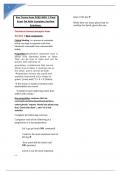
Key Terms from D265 WGU 1 Final meal of the day.P
Exam OA With Complete Verified
While there are many places that we
Solutions. could go for lunch, given that you
Technical terms/concepts from
Section 1 Basic components
Critical thinking -is a process of evaluation
which uses logic to separate truth from
falsehood, reasonable from unreasonable
beliefs.
Proposition.declarative staments that is
either true (denoted either or false.
That can be true or false and can be
proven with certainty of
guarantee. a statement that can be
either true or false; it must be one or
the other, and it cannot be both.
•Proposition mirrors the world and
explains how world is.Ex: Grass is
green",(true) and( "2 + 5 = 5"(False).
“if the moon is made of cheese then
basketballs are round.
“if spiders have eight legs then Sam
walks with a limp.”
Non-proposition- sentence that are
commands,exclaimed,questioned,perform,
exhort,pleads/ request. Would you please stop
that. Close the door", and "Is it hot
outside.
Complete the following exercises:
Categorize each of the following as a
proposition or a non-proposition.
Let’s go get lunch.NP( command)
Lunch is the most important meal of
the day.P
How much did the lunch cost?
NP( question)
Lunch is not the most important
®™
, 2
are a vegetarian, we should go to
that café on the corner.P
Make sure you get enough to eat.NP
• · simple proposition: have no
internal logical structure.
Independent/Declarative
sentences
w/o commands that are one thought
true or false based on how the
world is.
Complex propsition: statements
that have internal logical structure
which compose of simple
propositions that are connected.
Complete the following exercises:
Break each complex proposition
down into its simple propositions.
I am hungry, and I want to go to
lunch.
I am hungry. I want to go to lunch. .
(breakdown)
You are not hungry, but you should
come to lunch with me.
You are not hungry. You should
come to lunch with me.
(breakdown)
If it costs too much, then I will not
buy it.
If it costs too much. I will not buy it.
.(breakdown)
Argument- “argument”: set of statements,
some of which (the premises) attempt to
provide a reason for thinking that some other
statement (the conclusion) is true.
• SN;All arguments contain at least
two statements or propositions: a
conclusion and one or more
premises that lend support to the
conclusion.
®™
Key Terms from D265 WGU 1 Final meal of the day.P
Exam OA With Complete Verified
While there are many places that we
Solutions. could go for lunch, given that you
Technical terms/concepts from
Section 1 Basic components
Critical thinking -is a process of evaluation
which uses logic to separate truth from
falsehood, reasonable from unreasonable
beliefs.
Proposition.declarative staments that is
either true (denoted either or false.
That can be true or false and can be
proven with certainty of
guarantee. a statement that can be
either true or false; it must be one or
the other, and it cannot be both.
•Proposition mirrors the world and
explains how world is.Ex: Grass is
green",(true) and( "2 + 5 = 5"(False).
“if the moon is made of cheese then
basketballs are round.
“if spiders have eight legs then Sam
walks with a limp.”
Non-proposition- sentence that are
commands,exclaimed,questioned,perform,
exhort,pleads/ request. Would you please stop
that. Close the door", and "Is it hot
outside.
Complete the following exercises:
Categorize each of the following as a
proposition or a non-proposition.
Let’s go get lunch.NP( command)
Lunch is the most important meal of
the day.P
How much did the lunch cost?
NP( question)
Lunch is not the most important
®™
, 2
are a vegetarian, we should go to
that café on the corner.P
Make sure you get enough to eat.NP
• · simple proposition: have no
internal logical structure.
Independent/Declarative
sentences
w/o commands that are one thought
true or false based on how the
world is.
Complex propsition: statements
that have internal logical structure
which compose of simple
propositions that are connected.
Complete the following exercises:
Break each complex proposition
down into its simple propositions.
I am hungry, and I want to go to
lunch.
I am hungry. I want to go to lunch. .
(breakdown)
You are not hungry, but you should
come to lunch with me.
You are not hungry. You should
come to lunch with me.
(breakdown)
If it costs too much, then I will not
buy it.
If it costs too much. I will not buy it.
.(breakdown)
Argument- “argument”: set of statements,
some of which (the premises) attempt to
provide a reason for thinking that some other
statement (the conclusion) is true.
• SN;All arguments contain at least
two statements or propositions: a
conclusion and one or more
premises that lend support to the
conclusion.
®™