

● Heterochromatin is tightly condensed chromatin that is not expressed
○ In order for it to be expressed, promoter needs to be free
● In every nucleosome, DNA is wrapped around the histone protein
○ Histones are proteins
○ Acetylation of histone tails promotes loos chromatin structure to allow it to be
accessible for transcription to initiate
● DNA molecules are flexible and enhancer can bend backwards
● Promoters- DNA sequence that is usually directly adjacent to the gene
○ Binds RNA polymerase
○ Often have TATA box
○ Allows basal (low) level of transcription
● Enhancer- DNA sequence that can be far away from gene
○ Augment or repress basal level of transcription
○ May be located either 5’ or 3’ to transcription start site
○ Still functions when moved to different position relative to promoter
■ binds transcription factors, allowing RNA polymerase to bind and start
synthesis
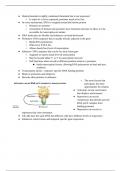
● Transcription factors - sequence specific DNA binding proteins
● Binds to promoters and enhancers
● Recruits other proteins to influence
○ The more factors that
participate, the more
opportunities for relation
● Activators recruit coactivators
that displace nucleosomes
● Repressors can recruit
corepressors that directly prevent
RNA pol II complex from
binding promoter
● Repressors can recruit co
repressors that close chromatin
● All cells have the same DNA but different cells have different levels of expression
● Enhancers control tissue and temporal specific gene expression
○ In order for it to be expressed, promoter needs to be free
● In every nucleosome, DNA is wrapped around the histone protein
○ Histones are proteins
○ Acetylation of histone tails promotes loos chromatin structure to allow it to be
accessible for transcription to initiate
● DNA molecules are flexible and enhancer can bend backwards
● Promoters- DNA sequence that is usually directly adjacent to the gene
○ Binds RNA polymerase
○ Often have TATA box
○ Allows basal (low) level of transcription
● Enhancer- DNA sequence that can be far away from gene
○ Augment or repress basal level of transcription
○ May be located either 5’ or 3’ to transcription start site
○ Still functions when moved to different position relative to promoter
■ binds transcription factors, allowing RNA polymerase to bind and start
synthesis
● Transcription factors - sequence specific DNA binding proteins
● Binds to promoters and enhancers
● Recruits other proteins to influence
○ The more factors that
participate, the more
opportunities for relation
● Activators recruit coactivators
that displace nucleosomes
● Repressors can recruit
corepressors that directly prevent
RNA pol II complex from
binding promoter
● Repressors can recruit co
repressors that close chromatin
● All cells have the same DNA but different cells have different levels of expression
● Enhancers control tissue and temporal specific gene expression


