RELATIONSHIPS ADVANCED INFORMATION 2022
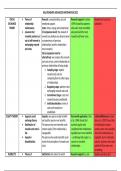
SOCIAL Theory of Rewards: companionship, sex and Research support: Kurdeck Rewards and costs are
EXCHANGE relationship emotional support. (1995) found that partners subjective.
THEORY maintenance. Costs: stress, energy and compromise. who were most committed
Assumes that Cl (comparison level): the amount of also perceived the most
romantic partners act rewards you believe you deserve based rewards and fewer costs.
out of self-interest in on experiences of previous
exchanging rewards relationships (worthy relationship =
and costs. more rewards).
Clat (comparison level for
alternatives): we compare the rewards
and costs of our current relationship to
previous relationships of being single.
1. Sampling stage: explore
rewards and costs by
comparing them to other types
of relationships.
2. Bargaining stage: partners start
exchanging rewards and costs.
3. Commitment stage: costs and
rewards become predictable.
4. Institutionalisation: norms of
costs and rewards are
established.
EQUITY THEORY Supports social Inequity: one person under benefits Real-world application: Utne Cultural differences: Aumer-
exchange theory. and another person over benefits. et al. (1984) found that Ryan et al. (2007) found that
Distribution of The person who over-benefits could married couples who in individualist cultures,
rewards and costs is restore equity (if the relationship is considered their relationship partners were most satisfied
fair. salvageable). equitable were most satisfied when the relationship was
Inequity = The person who under-benefits could – confirming that equity is a equitable, but in collectivist
dissatisfaction. revise their perception of rewards and concern in romantic cultures, partners were most
costs. relationships. satisfied if they were over-
benefitting.
RUSBULT’S Theory of Satisfaction: the extent to which Research support: Le and Studies used by Le and
SOCIAL Theory of Rewards: companionship, sex and Research support: Kurdeck Rewards and costs are
EXCHANGE relationship emotional support. (1995) found that partners subjective.
THEORY maintenance. Costs: stress, energy and compromise. who were most committed
Assumes that Cl (comparison level): the amount of also perceived the most
romantic partners act rewards you believe you deserve based rewards and fewer costs.
out of self-interest in on experiences of previous
exchanging rewards relationships (worthy relationship =
and costs. more rewards).
Clat (comparison level for
alternatives): we compare the rewards
and costs of our current relationship to
previous relationships of being single.
1. Sampling stage: explore
rewards and costs by
comparing them to other types
of relationships.
2. Bargaining stage: partners start
exchanging rewards and costs.
3. Commitment stage: costs and
rewards become predictable.
4. Institutionalisation: norms of
costs and rewards are
established.
EQUITY THEORY Supports social Inequity: one person under benefits Real-world application: Utne Cultural differences: Aumer-
exchange theory. and another person over benefits. et al. (1984) found that Ryan et al. (2007) found that
Distribution of The person who over-benefits could married couples who in individualist cultures,
rewards and costs is restore equity (if the relationship is considered their relationship partners were most satisfied
fair. salvageable). equitable were most satisfied when the relationship was
Inequity = The person who under-benefits could – confirming that equity is a equitable, but in collectivist
dissatisfaction. revise their perception of rewards and concern in romantic cultures, partners were most
costs. relationships. satisfied if they were over-
benefitting.
RUSBULT’S Theory of Satisfaction: the extent to which Research support: Le and Studies used by Le and