
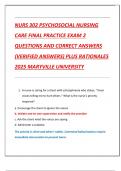
NURS 302 PSYCHOSOCIAL NURSING
CARE FINAL PRACTICE EXAM 2
QUESTIONS AND CORRECT ANSWERS
(VERIFIED ANSWERS) PLUS RATIONALES
2025 MARYVILLE UNIVERSITY
1. A nurse is caring for a client with schizophrenia who states, "I hear
voices telling me to hurt others." What is the nurse’s priority
response?
a. Encourage the client to ignore the voices
b. Initiate one-to-one supervision and notify the provider
c. Ask the client what the voices are saying
d. Administer a sedative
The priority is client and others' safety. Command hallucinations require
immediate intervention to prevent harm.
, 2. Which communication technique is most therapeutic when a client is
expressing feelings of hopelessness?
a. Giving advice
b. Changing the subject
c. Active listening
d. Providing false reassurance
Active listening allows the nurse to show empathy and helps the client feel
understood.
3. A nurse assesses a client with major depressive disorder. Which
finding is most concerning?
a. Sleep disturbances
b. Statement of having a suicide plan
c. Low appetite
d. Fatigue
A suicide plan indicates intent and increases the risk of suicide, requiring
immediate action.
4. A client with PTSD experiences flashbacks. What is the best initial
nursing intervention?
a. Help the client use grounding techniques
b. Encourage sleep
c. Use open-ended questions
d. Explore childhood trauma
, Grounding techniques help the client stay in the present and manage
dissociation.
5. Which is a sign of moderate anxiety?
a. Inability to focus
b. Complete disorientation
c. Increased heart rate and narrowed focus
d. Hallucinations
Moderate anxiety narrows focus and increases physiological arousal but
does not cause psychosis.
6. What is the primary goal during the orientation phase of the nurse-
client relationship?
a. Implement interventions
b. Establish trust and rapport
c. Evaluate progress
d. Explore termination issues
Trust-building sets the foundation for therapeutic interaction.
7. A client with bipolar disorder is experiencing a manic episode. What is
the nurse’s priority intervention?
a. Provide detailed instructions
b. Reduce environmental stimuli
c. Encourage group activities
d. Allow client autonomy
CARE FINAL PRACTICE EXAM 2
QUESTIONS AND CORRECT ANSWERS
(VERIFIED ANSWERS) PLUS RATIONALES
2025 MARYVILLE UNIVERSITY
1. A nurse is caring for a client with schizophrenia who states, "I hear
voices telling me to hurt others." What is the nurse’s priority
response?
a. Encourage the client to ignore the voices
b. Initiate one-to-one supervision and notify the provider
c. Ask the client what the voices are saying
d. Administer a sedative
The priority is client and others' safety. Command hallucinations require
immediate intervention to prevent harm.
, 2. Which communication technique is most therapeutic when a client is
expressing feelings of hopelessness?
a. Giving advice
b. Changing the subject
c. Active listening
d. Providing false reassurance
Active listening allows the nurse to show empathy and helps the client feel
understood.
3. A nurse assesses a client with major depressive disorder. Which
finding is most concerning?
a. Sleep disturbances
b. Statement of having a suicide plan
c. Low appetite
d. Fatigue
A suicide plan indicates intent and increases the risk of suicide, requiring
immediate action.
4. A client with PTSD experiences flashbacks. What is the best initial
nursing intervention?
a. Help the client use grounding techniques
b. Encourage sleep
c. Use open-ended questions
d. Explore childhood trauma
, Grounding techniques help the client stay in the present and manage
dissociation.
5. Which is a sign of moderate anxiety?
a. Inability to focus
b. Complete disorientation
c. Increased heart rate and narrowed focus
d. Hallucinations
Moderate anxiety narrows focus and increases physiological arousal but
does not cause psychosis.
6. What is the primary goal during the orientation phase of the nurse-
client relationship?
a. Implement interventions
b. Establish trust and rapport
c. Evaluate progress
d. Explore termination issues
Trust-building sets the foundation for therapeutic interaction.
7. A client with bipolar disorder is experiencing a manic episode. What is
the nurse’s priority intervention?
a. Provide detailed instructions
b. Reduce environmental stimuli
c. Encourage group activities
d. Allow client autonomy


