DR ERIC DR ERIC DR ERIC
TO GET ALL CHAPTERS EMAIL ME AT>>>>>
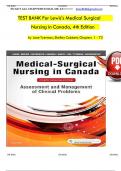
TEST BANK For Lewis's Medical Surgical
Nursing in Canada, 4th Edition
by Jane Tyerman, Shelley Cobbett, Chapters 1 - 72
DR ERIC DR ERIC DR ERIC
,DR ERIC DR ERIC DR ERIC
TO GET ALL CHAPTERS EMAIL ME AT>>>>>
TABLE OF CONTENTS
Section One – Concepts in Nursing Practice
1 Introduction to Medical-Surgical Nursing Practice in Canada 2
Cultural Competence and Health Equity in Care
3 Health History and Physical Examination 4
Patient and Caregiver Teaching
5 Chronic Illness
6 Community-Based Nursing and Home Care 7
Older Adults
8 Stress and Stress Management 9
Sleep and Sleep Disorders
10 Pain
11 Substance Use
12 Complementary and Alternative Therapies 13
Palliative Care at the End of Life
Section Two – Pathophysiological Mechanisms of Disease 14
Inflammation and Wound Healing
15 Genetics
16 Altered Immune Response and Transplantation
17 Infection and Human Immunodeficiency Virus Infection 18
Cancer
19 Fluid, Electrolyte, and Acid–Base Imbalances
Section Three – Perioperative Care
20 Nursing Management: Preoperative Care 21
Nursing Management: Intraoperative Care 22
Nursing Management: Post-operative Care
Section Four – Problems Related to Altered Sensory Input 23
Nursing Assessment: Visual and Auditory Systems
24 Nursing Management: Visual and Auditory Problems 25
Nursing Assessment: Integumentary System
26 Nursing Management: Integumentary Problems 27
Nursing Management: Burns
Section Five – Problems of Oxygenation: Ventilation 28
Nursing Assessment: Respiratory System
29 Nursing Management: Upper Respiratory Problems 30
Nursing Management: Lower Respiratory Problems
31 Nursing Management: Obstructive Pulmonary Diseases Section
Six – Problems of Oxygenation: Transport
32 Nursing Assessment: Hematological System 33
Nursing Management: Hematological Problems
Section Seven – Problems of Oxygenation: Perfusion 34
Nursing Assessment: Cardiovascular SystemDR ERIC
DR ERIC DR ERIC
35 Nursing Management: Hypertension
,DR ERIC DR ERIC DR ERIC
TO GET ALL CHAPTERS EMAIL ME AT>>>>>
36 Nursing Management: Coronary Artery Disease and Acute Coronary Syndrome
DR ERIC DR ERIC DR ERIC
, DR ERIC DR ERIC DR ERIC
TO GET ALL CHAPTERS EMAIL ME AT>>>>>
37 Nursing Management: Heart Failure 38
Nursing Management: Dysrhythmias
39 Nursing Management: Inflammatory and Structural Heart Diseases 40
Nursing Management: Vascular Disorders
Section Eight – Problems of Ingestion, Digestion, Absorption, and Elimination 41 Nursing
Assessment: Gastrointestinal System
42 Nursing Management: Nutritional Problems 43
Nursing Management: Obesity
44 Nursing Management: Upper Gastrointestinal Problems 45
Nursing Management: Lower Gastrointestinal Problems
46 Nursing Management: Liver, Pancreas, and Biliary Tract Problems Section
Nine – Problems of Urinary Function
47 Nursing Assessment: Urinary System
48 Nursing Management: Renal and Urological Problems
49 Nursing Management: Acute Kidney Injury and Chronic Kidney Disease Section Ten
– Problems Related to Regulatory and Reproductive Mechanisms 50 Nursing
Assessment: Endocrine System
51 Nursing Management: Endocrine Problems 52
Nursing Management: Diabetes Mellitus
53 Nursing Assessment: Reproductive System 54
Nursing Management: Breast Disorders
55 Nursing Management: Sexually Transmitted Infections 56
Nursing Management: Female Reproductive Problems 57
Nursing Management: Male Reproductive Problems
Section Eleven – Problems Related to Movement and Coordination 58
Nursing Assessment: Nervous System
59 Nursing Management: Acute Intracranial Problems 60
Nursing Management: Stroke
61 Nursing Management: Chronic Neurological Problems
62 Nursing Management: Delirium, Alzheimer’s Disease, and Other Dementias
63 Nursing Management: Peripheral Nerve and Spinal Cord Problems 64
Nursing Assessment: Musculoskeletal System
65 Nursing Management: Musculoskeletal Trauma and Orthopedic Surgery 66
Nursing Management: Musculoskeletal Problems
67 Nursing Management: Arthritis and Connective Tissue Diseases Section
Twelve – Nursing Care in Specialized Settings
68 Nursing Management: Critical Care Environment
69 Nursing Management: Shock, Systemic Inflammatory Response Syndrome, and Multiple-
Organ Dysfunction Syndrome
70 Nursing Management: Respiratory Failure and Acute Respiratory Distress
Syndrome
71 Nursing Management: Emergency Care Situations 72
Emergency Management and Disaster Planning
DR ERIC DR ERIC DR ERIC
TO GET ALL CHAPTERS EMAIL ME AT>>>>>
TEST BANK For Lewis's Medical Surgical
Nursing in Canada, 4th Edition
by Jane Tyerman, Shelley Cobbett, Chapters 1 - 72
DR ERIC DR ERIC DR ERIC
,DR ERIC DR ERIC DR ERIC
TO GET ALL CHAPTERS EMAIL ME AT>>>>>
TABLE OF CONTENTS
Section One – Concepts in Nursing Practice
1 Introduction to Medical-Surgical Nursing Practice in Canada 2
Cultural Competence and Health Equity in Care
3 Health History and Physical Examination 4
Patient and Caregiver Teaching
5 Chronic Illness
6 Community-Based Nursing and Home Care 7
Older Adults
8 Stress and Stress Management 9
Sleep and Sleep Disorders
10 Pain
11 Substance Use
12 Complementary and Alternative Therapies 13
Palliative Care at the End of Life
Section Two – Pathophysiological Mechanisms of Disease 14
Inflammation and Wound Healing
15 Genetics
16 Altered Immune Response and Transplantation
17 Infection and Human Immunodeficiency Virus Infection 18
Cancer
19 Fluid, Electrolyte, and Acid–Base Imbalances
Section Three – Perioperative Care
20 Nursing Management: Preoperative Care 21
Nursing Management: Intraoperative Care 22
Nursing Management: Post-operative Care
Section Four – Problems Related to Altered Sensory Input 23
Nursing Assessment: Visual and Auditory Systems
24 Nursing Management: Visual and Auditory Problems 25
Nursing Assessment: Integumentary System
26 Nursing Management: Integumentary Problems 27
Nursing Management: Burns
Section Five – Problems of Oxygenation: Ventilation 28
Nursing Assessment: Respiratory System
29 Nursing Management: Upper Respiratory Problems 30
Nursing Management: Lower Respiratory Problems
31 Nursing Management: Obstructive Pulmonary Diseases Section
Six – Problems of Oxygenation: Transport
32 Nursing Assessment: Hematological System 33
Nursing Management: Hematological Problems
Section Seven – Problems of Oxygenation: Perfusion 34
Nursing Assessment: Cardiovascular SystemDR ERIC
DR ERIC DR ERIC
35 Nursing Management: Hypertension
,DR ERIC DR ERIC DR ERIC
TO GET ALL CHAPTERS EMAIL ME AT>>>>>
36 Nursing Management: Coronary Artery Disease and Acute Coronary Syndrome
DR ERIC DR ERIC DR ERIC
, DR ERIC DR ERIC DR ERIC
TO GET ALL CHAPTERS EMAIL ME AT>>>>>
37 Nursing Management: Heart Failure 38
Nursing Management: Dysrhythmias
39 Nursing Management: Inflammatory and Structural Heart Diseases 40
Nursing Management: Vascular Disorders
Section Eight – Problems of Ingestion, Digestion, Absorption, and Elimination 41 Nursing
Assessment: Gastrointestinal System
42 Nursing Management: Nutritional Problems 43
Nursing Management: Obesity
44 Nursing Management: Upper Gastrointestinal Problems 45
Nursing Management: Lower Gastrointestinal Problems
46 Nursing Management: Liver, Pancreas, and Biliary Tract Problems Section
Nine – Problems of Urinary Function
47 Nursing Assessment: Urinary System
48 Nursing Management: Renal and Urological Problems
49 Nursing Management: Acute Kidney Injury and Chronic Kidney Disease Section Ten
– Problems Related to Regulatory and Reproductive Mechanisms 50 Nursing
Assessment: Endocrine System
51 Nursing Management: Endocrine Problems 52
Nursing Management: Diabetes Mellitus
53 Nursing Assessment: Reproductive System 54
Nursing Management: Breast Disorders
55 Nursing Management: Sexually Transmitted Infections 56
Nursing Management: Female Reproductive Problems 57
Nursing Management: Male Reproductive Problems
Section Eleven – Problems Related to Movement and Coordination 58
Nursing Assessment: Nervous System
59 Nursing Management: Acute Intracranial Problems 60
Nursing Management: Stroke
61 Nursing Management: Chronic Neurological Problems
62 Nursing Management: Delirium, Alzheimer’s Disease, and Other Dementias
63 Nursing Management: Peripheral Nerve and Spinal Cord Problems 64
Nursing Assessment: Musculoskeletal System
65 Nursing Management: Musculoskeletal Trauma and Orthopedic Surgery 66
Nursing Management: Musculoskeletal Problems
67 Nursing Management: Arthritis and Connective Tissue Diseases Section
Twelve – Nursing Care in Specialized Settings
68 Nursing Management: Critical Care Environment
69 Nursing Management: Shock, Systemic Inflammatory Response Syndrome, and Multiple-
Organ Dysfunction Syndrome
70 Nursing Management: Respiratory Failure and Acute Respiratory Distress
Syndrome
71 Nursing Management: Emergency Care Situations 72
Emergency Management and Disaster Planning
DR ERIC DR ERIC DR ERIC