

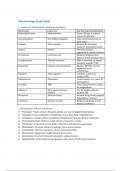
Pharmacology Study Guide
1. Common Medications and Nursing Notes
Medication Class/Use Key Nursing Considerations
Diphenhydramine Antihistamine Treats allergic reactions;
causes drowsiness
Acetaminophen Non-NSAID Analgesic Pain relief, hepatotoxic in
large doses
Heparin Anticoagulant Monitor for bleeding;
antidote: protamine sulfate
Aspirin NSAID Prevents platelet
aggregation; risk of GI bleed
Prednisone Corticosteroid Reduces inflammation;
taper to avoid adrenal crisis
Levothyroxine Thyroid hormone Take in morning on empty
stomach; monitor TSH
Verapamil Calcium channel blocker Monitor BP, HR; used for
hypertension or
arrhythmias
Warfarin Anticoagulant Antidote: vitamin K;
monitor INR
Ondansetron Antiemetic Treats nausea; can cause QT
prolongation
Losartan ARB Treats hypertension; watch
for angioedema
Albuterol Beta-agonist (rescue Use for asthma attacks;
inhaler) monitor HR
Phenytoin Anticonvulsant Monitor drug levels; gingival
hyperplasia common
Lactulose Osmotic laxative Reduces ammonia in liver
disease (cirrhosis)
2. Medication Flash Card Notes
● Phenytoin: Treats seizures. Requires dental care due to gingival hyperplasia.
● Tramadol: Treats moderate to moderately severe pain. Risk of dependence.
● Carbidopa-Levodopa: Treats symptoms of Parkinson’s disease. Risk of dyskinesia.
● Dextromethorphan: Relieves cough. Not for productive coughs.
● Prednisone: Long-term use can lead to bone loss and adrenal suppression.
● Montelukast: Prevents asthma symptoms. Not a rescue inhaler.
● Sumatriptan: Used for migraines. Causes vasoconstriction.
● Benzonatate: Suppresses cough reflex in the airways.
● Benztropine: Used in Parkinson’s disease to reduce tremors.
● Methotrexate: Treats autoimmune diseases and cancer. Monitor liver function.
1. Common Medications and Nursing Notes
Medication Class/Use Key Nursing Considerations
Diphenhydramine Antihistamine Treats allergic reactions;
causes drowsiness
Acetaminophen Non-NSAID Analgesic Pain relief, hepatotoxic in
large doses
Heparin Anticoagulant Monitor for bleeding;
antidote: protamine sulfate
Aspirin NSAID Prevents platelet
aggregation; risk of GI bleed
Prednisone Corticosteroid Reduces inflammation;
taper to avoid adrenal crisis
Levothyroxine Thyroid hormone Take in morning on empty
stomach; monitor TSH
Verapamil Calcium channel blocker Monitor BP, HR; used for
hypertension or
arrhythmias
Warfarin Anticoagulant Antidote: vitamin K;
monitor INR
Ondansetron Antiemetic Treats nausea; can cause QT
prolongation
Losartan ARB Treats hypertension; watch
for angioedema
Albuterol Beta-agonist (rescue Use for asthma attacks;
inhaler) monitor HR
Phenytoin Anticonvulsant Monitor drug levels; gingival
hyperplasia common
Lactulose Osmotic laxative Reduces ammonia in liver
disease (cirrhosis)
2. Medication Flash Card Notes
● Phenytoin: Treats seizures. Requires dental care due to gingival hyperplasia.
● Tramadol: Treats moderate to moderately severe pain. Risk of dependence.
● Carbidopa-Levodopa: Treats symptoms of Parkinson’s disease. Risk of dyskinesia.
● Dextromethorphan: Relieves cough. Not for productive coughs.
● Prednisone: Long-term use can lead to bone loss and adrenal suppression.
● Montelukast: Prevents asthma symptoms. Not a rescue inhaler.
● Sumatriptan: Used for migraines. Causes vasoconstriction.
● Benzonatate: Suppresses cough reflex in the airways.
● Benztropine: Used in Parkinson’s disease to reduce tremors.
● Methotrexate: Treats autoimmune diseases and cancer. Monitor liver function.


