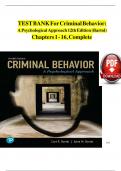
TEST BANK For Criminal Behavior:
q q q q
A Psychological Approach 12th Edition (Bartol)
q q q q q
Chapters 1 - 16, Complete
q q q q q
110
,Table of contents
q q
1. Introduction to Criminal Behavior q q q
2. Origins of Criminal Behavior: Developmental Risk and Protective Factors
q q q q q q q q
3. Origins of Criminal Behavior: Biological/Neurological Factors
q q q q q
4. Origins of Criminal Behavior: Learning and Situational Factors
q q q q q q q
5. Human Aggression and Violence
q q q
6. Juvenile Delinquency
q
7. Psychopathy
8. Crime and Mental Disorders
q q q
9. Homicide, Assault, and Intimate Partner and Family Violence
q q q q q q q
10.Multiple Murder, School, and Workplace Violence
q q q q q
11.Psychology of Modern Terrorism q q q
12.Sexual Assault
q
13.Sexual Assault of Children and Youth
q q q q q
14.Burglary, Home Invasions, Thefts, and "White-Collar" Offenses
q q q q q q
15.Violent Economic Crime, Cybercrime, and Crimes of Intimidation
q q q q q q q q
16. Substance Abuse and Crime
q q q q
111
,Criminal Behavior: A Psychological Approach, 12e (Bartol)
q q q q q q
q
Chapter 1 Introduction to Criminal Behavior
q qq q q q
1.1 Multiple-Choice Questions q
1) Criminal behavior is best defined as q q q q q
A) antisocial behavior. q
B) deviant behavior. q
C) an intentional act in violation of a criminal code.
q q q q q q q q
D) a failure to impede the criminal
q q q q q
process.ANSWER: C
q q q
Page Ref: 2
q q
Objective: Define criminal behavior and juvenile
q q q q q
delinquencyLevel: Basic
q q q
2) The end result of a theory that is not verified is
q q q q q q q q q q
A) justification.
B) falsification.
C) clarification.
D) subjugation. q
ANSWER: B q
Page Ref: 6
q q q
Objective: Identify the different perspectives of human nature that underlie the
q q q q q q q q q q
theoreticaldevelopment and research of criminal behavior
q q q q q q q
Level: Intermediate q
3) Which piece of data would be included in the UCR?
q q q q q q q q q
A) A reported robbery with no arrest
q q q q q
B) A reported forgery with no arrest
q q q q q
C) A reported simple assault with no arrest
q q q q q q
D) A reported statutory rape with no
q q q q q
arrestANSWER: A
q q q
Page Ref: 36
q q
Objective: Introduce the reader to the various measurements of criminal and delinquent
q q q q q q q q q q q
112
, behaviorLevel: Difficult
q q q
4) All of the following are consistent with the developmental approach to the study of
q q q q q q q q q q q q q
crimeexcept
q q
A) examining factors that place a child at risk of engaging in serious delinquency.
q q q q q q q q q q q q
B) identifying the age of onset of antisocial behavior.
q q q q q q q
C) searching for protective factors in a child's life.
q q q q q q q
113
q q q q
A Psychological Approach 12th Edition (Bartol)
q q q q q
Chapters 1 - 16, Complete
q q q q q
110
,Table of contents
q q
1. Introduction to Criminal Behavior q q q
2. Origins of Criminal Behavior: Developmental Risk and Protective Factors
q q q q q q q q
3. Origins of Criminal Behavior: Biological/Neurological Factors
q q q q q
4. Origins of Criminal Behavior: Learning and Situational Factors
q q q q q q q
5. Human Aggression and Violence
q q q
6. Juvenile Delinquency
q
7. Psychopathy
8. Crime and Mental Disorders
q q q
9. Homicide, Assault, and Intimate Partner and Family Violence
q q q q q q q
10.Multiple Murder, School, and Workplace Violence
q q q q q
11.Psychology of Modern Terrorism q q q
12.Sexual Assault
q
13.Sexual Assault of Children and Youth
q q q q q
14.Burglary, Home Invasions, Thefts, and "White-Collar" Offenses
q q q q q q
15.Violent Economic Crime, Cybercrime, and Crimes of Intimidation
q q q q q q q q
16. Substance Abuse and Crime
q q q q
111
,Criminal Behavior: A Psychological Approach, 12e (Bartol)
q q q q q q
q
Chapter 1 Introduction to Criminal Behavior
q qq q q q
1.1 Multiple-Choice Questions q
1) Criminal behavior is best defined as q q q q q
A) antisocial behavior. q
B) deviant behavior. q
C) an intentional act in violation of a criminal code.
q q q q q q q q
D) a failure to impede the criminal
q q q q q
process.ANSWER: C
q q q
Page Ref: 2
q q
Objective: Define criminal behavior and juvenile
q q q q q
delinquencyLevel: Basic
q q q
2) The end result of a theory that is not verified is
q q q q q q q q q q
A) justification.
B) falsification.
C) clarification.
D) subjugation. q
ANSWER: B q
Page Ref: 6
q q q
Objective: Identify the different perspectives of human nature that underlie the
q q q q q q q q q q
theoreticaldevelopment and research of criminal behavior
q q q q q q q
Level: Intermediate q
3) Which piece of data would be included in the UCR?
q q q q q q q q q
A) A reported robbery with no arrest
q q q q q
B) A reported forgery with no arrest
q q q q q
C) A reported simple assault with no arrest
q q q q q q
D) A reported statutory rape with no
q q q q q
arrestANSWER: A
q q q
Page Ref: 36
q q
Objective: Introduce the reader to the various measurements of criminal and delinquent
q q q q q q q q q q q
112
, behaviorLevel: Difficult
q q q
4) All of the following are consistent with the developmental approach to the study of
q q q q q q q q q q q q q
crimeexcept
q q
A) examining factors that place a child at risk of engaging in serious delinquency.
q q q q q q q q q q q q
B) identifying the age of onset of antisocial behavior.
q q q q q q q
C) searching for protective factors in a child's life.
q q q q q q q
113