6/14/25, 10:08 AM Lehne’s Pharmacotherapeutics for Advanced Practice Nurses and Physician Assistants (2nd Edition Rosenthal Test Bank) Flashca…
Lehne’s Pharmacotherapeutics for Advanced Practice Nurses and
Physician Assistants (2nd Edition Rosenthal Test Bank) ACTUAL EXAM
2025-2026 \LATEST UPDATE WITH COMPLETE QUESTIONS AND
CORRECT DETAILED ANSWERS \VERIFIED ANSWERS ALREADY
GRADED A+
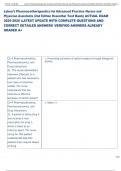
Ch 4 Pharmacokinetics, c. Preventing activation of opioid receptors through antagonist
Pharmacodynamics, and actions
Drug Interactions
21. The nurse administers
naloxone [Narcan] to a
patient who has received a
toxic dose of morphine
sulfate. The nurse
understands that the
naloxone is effective
because of which action?
Ch 4 Pharmacokinetics, c. higher; X
Pharmacodynamics, and
Drug Interactions
22. A patient is taking drug X
and receives a new
prescription for drug Y,
which is listed as an
inducing agent. The nurse
caring for this patient
understands that this
patient may require doses
of drug
… 1/364
,6/14/25, 10:08 AM Lehne’s Pharmacotherapeutics for Advanced Practice Nurses and Physician Assistants (2nd Edition Rosenthal Test Bank) Flashca…
Ch 4 Pharmacokinetics, d. "This drug would be inactivated by enzymes in the stomach."
Pharmacodynamics, and Drug
Interactions
23. The nurse is preparing to
administer penicillin G
intramuscularly to a child. The
child's parents ask why the
drug cannot be given in an
oral liquid form. What is the
nurse's reply?
Ch 4 Pharmacokinetics, d. Some foods can inhibit CYP isoenzymes and alter drug
Pharmacodynamics, and Drug metabolism.
Interactions
24. Which statement about food
and drug interactions is true?
Ch 4 Pharmacokinetics, b. Decreased elimination through the kidneys
Pharmacodynamics, and Drug
Interactions
25. A nurse is teaching a
patient about a drug that
induces P-glycoprotein. The
nurse will explain that this drug
may cause which effect on
other drugs?
Ch 4 Pharmacokinetics, c. Tablets can differ in composition and can have
Pharmacodynamics, and Drug differing rates of disintegration and dissolution, which
Interactions can alter the drug's effects in the body.
26. A patient claims to get
better effects with a tablet of
Brand X of a drug than with a
tablet of Brand Y of the same
drug. Both brands contain the
same amount of the active
ingredient. What does the
nurse know to be most
likely?
… 2/364
,6/14/25, 10:08 AM Lehne’s Pharmacotherapeutics for Advanced Practice Nurses and Physician Assistants (2nd Edition Rosenthal Test Bank) Flashca…
Ch 4 Pharmacokinetics, b. Affinity refers to the strength of the attraction between a drug
Pharmacodynamics, and Drug and its receptor.
c. Drugs with high affinity are strongly attracted to their
Interactions
receptors.
27. Two nurses are discussing
e. The affinity of a drug for its receptors is reflected in its potency.
theories of drug-receptor
interaction. Which statements
are true regarding the affinity of
a drug and its receptor?
Ch 4 Pharmacokinetics, c. Monitor plasma drug levels.
Pharmacodynamics, and Drug
Interactions
28. A patient receives a drug
that has a narrow therapeutic
range. The nurse administering
this medication will expect to do
what?
Ch 4 Pharmacokinetics, b. It increases or decreases the activity of that receptor.
Pharmacodynamics, and Drug
Interactions
29. What occurs when a drug
binds to a receptor in the
body?
Ch 4 Pharmacokinetics, c. The patient is taking another medication that binds to serum
Pharmacodynamics, and Drug albumin.
Interactions
30. A patient is receiving
intravenous gentamicin. A
serum drug test reveals toxic
levels. The dosing is correct,
and this medication has been
tolerated by this patient in
the past. Which could be a
probable cause of the test
result?
… 3/364
, 6/14/25, 10:08 AM Lehne’s Pharmacotherapeutics for Advanced Practice Nurses and Physician Assistants (2nd Edition Rosenthal Test Bank) Flashca…
Ch 4 Pharmacokinetics, c. Desensitization of receptor sites by continual exposure to the
Pharmacodynamics, and drug.
Drug Interactions
31. A patient reports
becoming "immune" to a
medication because it no
longer works to alleviate
symptoms. The nurse
recognizes that this
decreased effectiveness is
likely caused by:
Ch 4 Pharmacokinetics, d. It is selective to receptors that regulate more than one body
Pharmacodynamics, and process.
Drug Interactions
32. A patient who is taking
morphine for pain asks the
nurse how a pain medication
can also cause constipation.
What does the nurse know
about morphine?
Ch 4 Pharmacokinetics, a. Binding of one or both agents will be reduced.
Pharmacodynamics, and b. Plasma levels of free drug will rise.
Drug Interactions d. The increase in free drug will intensify effects.
33. The nurse is
administering morning
medications. The nurse
gives a patient multiple
medications, two of which
compete for plasma albumin
receptor sites. As a result of
this concurrent
administration, the nurse
can anticipate that what
might occur?
… 4/364
Lehne’s Pharmacotherapeutics for Advanced Practice Nurses and
Physician Assistants (2nd Edition Rosenthal Test Bank) ACTUAL EXAM
2025-2026 \LATEST UPDATE WITH COMPLETE QUESTIONS AND
CORRECT DETAILED ANSWERS \VERIFIED ANSWERS ALREADY
GRADED A+
Ch 4 Pharmacokinetics, c. Preventing activation of opioid receptors through antagonist
Pharmacodynamics, and actions
Drug Interactions
21. The nurse administers
naloxone [Narcan] to a
patient who has received a
toxic dose of morphine
sulfate. The nurse
understands that the
naloxone is effective
because of which action?
Ch 4 Pharmacokinetics, c. higher; X
Pharmacodynamics, and
Drug Interactions
22. A patient is taking drug X
and receives a new
prescription for drug Y,
which is listed as an
inducing agent. The nurse
caring for this patient
understands that this
patient may require doses
of drug
… 1/364
,6/14/25, 10:08 AM Lehne’s Pharmacotherapeutics for Advanced Practice Nurses and Physician Assistants (2nd Edition Rosenthal Test Bank) Flashca…
Ch 4 Pharmacokinetics, d. "This drug would be inactivated by enzymes in the stomach."
Pharmacodynamics, and Drug
Interactions
23. The nurse is preparing to
administer penicillin G
intramuscularly to a child. The
child's parents ask why the
drug cannot be given in an
oral liquid form. What is the
nurse's reply?
Ch 4 Pharmacokinetics, d. Some foods can inhibit CYP isoenzymes and alter drug
Pharmacodynamics, and Drug metabolism.
Interactions
24. Which statement about food
and drug interactions is true?
Ch 4 Pharmacokinetics, b. Decreased elimination through the kidneys
Pharmacodynamics, and Drug
Interactions
25. A nurse is teaching a
patient about a drug that
induces P-glycoprotein. The
nurse will explain that this drug
may cause which effect on
other drugs?
Ch 4 Pharmacokinetics, c. Tablets can differ in composition and can have
Pharmacodynamics, and Drug differing rates of disintegration and dissolution, which
Interactions can alter the drug's effects in the body.
26. A patient claims to get
better effects with a tablet of
Brand X of a drug than with a
tablet of Brand Y of the same
drug. Both brands contain the
same amount of the active
ingredient. What does the
nurse know to be most
likely?
… 2/364
,6/14/25, 10:08 AM Lehne’s Pharmacotherapeutics for Advanced Practice Nurses and Physician Assistants (2nd Edition Rosenthal Test Bank) Flashca…
Ch 4 Pharmacokinetics, b. Affinity refers to the strength of the attraction between a drug
Pharmacodynamics, and Drug and its receptor.
c. Drugs with high affinity are strongly attracted to their
Interactions
receptors.
27. Two nurses are discussing
e. The affinity of a drug for its receptors is reflected in its potency.
theories of drug-receptor
interaction. Which statements
are true regarding the affinity of
a drug and its receptor?
Ch 4 Pharmacokinetics, c. Monitor plasma drug levels.
Pharmacodynamics, and Drug
Interactions
28. A patient receives a drug
that has a narrow therapeutic
range. The nurse administering
this medication will expect to do
what?
Ch 4 Pharmacokinetics, b. It increases or decreases the activity of that receptor.
Pharmacodynamics, and Drug
Interactions
29. What occurs when a drug
binds to a receptor in the
body?
Ch 4 Pharmacokinetics, c. The patient is taking another medication that binds to serum
Pharmacodynamics, and Drug albumin.
Interactions
30. A patient is receiving
intravenous gentamicin. A
serum drug test reveals toxic
levels. The dosing is correct,
and this medication has been
tolerated by this patient in
the past. Which could be a
probable cause of the test
result?
… 3/364
, 6/14/25, 10:08 AM Lehne’s Pharmacotherapeutics for Advanced Practice Nurses and Physician Assistants (2nd Edition Rosenthal Test Bank) Flashca…
Ch 4 Pharmacokinetics, c. Desensitization of receptor sites by continual exposure to the
Pharmacodynamics, and drug.
Drug Interactions
31. A patient reports
becoming "immune" to a
medication because it no
longer works to alleviate
symptoms. The nurse
recognizes that this
decreased effectiveness is
likely caused by:
Ch 4 Pharmacokinetics, d. It is selective to receptors that regulate more than one body
Pharmacodynamics, and process.
Drug Interactions
32. A patient who is taking
morphine for pain asks the
nurse how a pain medication
can also cause constipation.
What does the nurse know
about morphine?
Ch 4 Pharmacokinetics, a. Binding of one or both agents will be reduced.
Pharmacodynamics, and b. Plasma levels of free drug will rise.
Drug Interactions d. The increase in free drug will intensify effects.
33. The nurse is
administering morning
medications. The nurse
gives a patient multiple
medications, two of which
compete for plasma albumin
receptor sites. As a result of
this concurrent
administration, the nurse
can anticipate that what
might occur?
… 4/364