
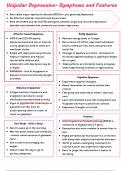
Unipolar Depression: Symptoms and Features
Also called major depressive disorder (MDD) or just generally depression.
An effective disorder characterised by low mood.
Both the DSM-5 and the ICD-10 distinguish between single and recurrent depressive
episodes and between mild, moderate and severe depression.
Affective (mood) Symptoms: Bodily Symptoms:
DSM-5 and ICD-10 specify Reduced energy levels or fatigue.
depressed mood and loss of interest Has a knock-off effect, depressed individuals
as key symptoms, both of which are tend to withdraw from work, education and
emotional states. social life.
People with depression may feel sad, Changes in appetite are listed - decreased or
empty or hopeless and may be increased appetite leading to significant weight
tearful while children and loss or gain.
adolescents with depression may be Sleep patterns are disrupted nearly everyday -
irritable. often experiencing insomnia or hypersomnia.
Anhedonia - lack of enjoyment or
pleasure found in previously enjoyed
Cognitive Symptoms:
activities.
Experience negative thoughts.
Blame themselves for events outside their
Behavioural Symptoms: control.
Fatigue and loss of pleasure and Feel guilty and unworthy of others’ time and
enjoyment can lead to social care.
withdrawal and diminished activity. Lack self-confidence and feel incompetent and
Signs of psychomotor retardation or incapable and have a pessimistic outlook.
agitation but this must be Experience thoughts of suicide.
observable by others in order to
count as symptoms.
Features:
Adult Psychiatric Morbidity Survey (AMPS) is
Case Study - Sofia’s Story: conducted in England every 7 years.
Hard to wake up in the morning. Depression was more common in women than in
Worries about exams and university men.
- missed school because of glandular Highly prevalent partly because it is co-morbid
fever. with many other physical and mental disorders.
She is tearful and snappy, lost 22.9% of women undergoing treatment for
weight. ovarian cancer also experience depression.
Doesn’t walk the dog or go to Hard to judge the contribution it makes to
parties, sleepovers. mortality.
Also called major depressive disorder (MDD) or just generally depression.
An effective disorder characterised by low mood.
Both the DSM-5 and the ICD-10 distinguish between single and recurrent depressive
episodes and between mild, moderate and severe depression.
Affective (mood) Symptoms: Bodily Symptoms:
DSM-5 and ICD-10 specify Reduced energy levels or fatigue.
depressed mood and loss of interest Has a knock-off effect, depressed individuals
as key symptoms, both of which are tend to withdraw from work, education and
emotional states. social life.
People with depression may feel sad, Changes in appetite are listed - decreased or
empty or hopeless and may be increased appetite leading to significant weight
tearful while children and loss or gain.
adolescents with depression may be Sleep patterns are disrupted nearly everyday -
irritable. often experiencing insomnia or hypersomnia.
Anhedonia - lack of enjoyment or
pleasure found in previously enjoyed
Cognitive Symptoms:
activities.
Experience negative thoughts.
Blame themselves for events outside their
Behavioural Symptoms: control.
Fatigue and loss of pleasure and Feel guilty and unworthy of others’ time and
enjoyment can lead to social care.
withdrawal and diminished activity. Lack self-confidence and feel incompetent and
Signs of psychomotor retardation or incapable and have a pessimistic outlook.
agitation but this must be Experience thoughts of suicide.
observable by others in order to
count as symptoms.
Features:
Adult Psychiatric Morbidity Survey (AMPS) is
Case Study - Sofia’s Story: conducted in England every 7 years.
Hard to wake up in the morning. Depression was more common in women than in
Worries about exams and university men.
- missed school because of glandular Highly prevalent partly because it is co-morbid
fever. with many other physical and mental disorders.
She is tearful and snappy, lost 22.9% of women undergoing treatment for
weight. ovarian cancer also experience depression.
Doesn’t walk the dog or go to Hard to judge the contribution it makes to
parties, sleepovers. mortality.


