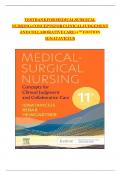
TEST BANK FOR MEDICAL SURGICAL
n’l n’l n ’l n’l
n’l NURSING:CONCEPTS FOR CLINICAL JUDGEMENT
n’l n’l n’l
AND COLLABORATIVE CARE 11TH EDITION
’l
n n ’l n’l n’l
n ’l
n’l IGNATAVICIUS
,TESTBANK
,Test Bank - Medical-Surgical Nursing: Concepts for Interprofessional
n ’ l n ’ l n ’ l n ’ l n ’ l n ’ l n ’ l 2
nCollaborative
’ l
Chapter 01: Overview of Professional Nursing Concepts for Medical-Surgical n ’ l n ’ l n ’ l n ’ l n ’ l n ’ l n ’ l n ’ l
n ’ l NursingMULTIPLE CHOICE ’l
n n’ l
1. A nurse wishes to provide client-centered care in all interactions.Which
n’ l n’ l n ’l n ’l n’ l n ’l n’ l n’ l n’ l ’l
n
n ’ l action by the nurse n’l n’l n’l n’l n ’ l bestdemonstrates n ’ l this n ’ l concept?
a. Assesses for n ’ l n ’ l cultural n ’ l influences n ’ l affecting n ’ l health n ’ l care
b. Ensures that n ’l n ’ l all n ’ l the n ’ l clients n ’ l basic n ’ l needs n ’ l are n ’ l met
c. Tells n ’ l the client and n ’ l n ’ l n ’ l family n ’ l about n ’ l all upcoming n’l n’l n ’ l tests
d. Thoroughly n ’ l orients the client n’l n ’ l n ’ l and n ’ l family n ’ l to n ’ l the n ’ l room
ANS: A n ’ l
Competency in client-focused care is demonstrated when the nurse focuses on n’ l n ’l n’ l n ’l n’ l n’ l n ’l n’ l n’ l n’ l
n’l communication, culture, respect compassion, client n’l n’l n’ l n ’l n ’ l education, n ’ l and
n ’ l empowerment.By ’l
n n ’ l assessing the n’l n ’l n ’ l effect of the n’l n’l n ’ l clients culture n ’l n ’ l on health care, n’l n’l n’ l n’l
n ’ l this n ’ l nurse n ’ l is practicing client- focused n’ l n ’l n’ l n ’ l care. n ’ l Providing n ’ l for n ’ l basic n ’ l needs
n ’ l does n ’ l not n ’ l demonstrate this competence. Simply n’l n’ l n ’l n ’ l telling n ’ l the n ’ l client n ’ l about
n ’ l all n ’ l upcoming n ’ l tests n ’ l is n ’ l not providing empowering education. n’l n’ l n’l
Orienting the client and family to n’l n’ l n’l n ’l n’ l n ’ l the n ’ l room n ’ l is n ’ l an n ’ l important n ’ l safety
n ’ l measure, n ’ l butnot directly ’l
n n’l n ’ l related to demonstrating client-centered care. n ’l n’ l n’ l n’l n’l
DIF: Understanding/Comprehension n ’ l n ’ l REF: n ’ l 3
KEY: Patient-centered care| culture MSC: Integrated n’l n’ l n’l n’l n’l
Process:
’l
n n ’ l CaringNOT: Client Needs n’l n’l n ’ l Category:
Psychosocial Integrity n ’ l
2. A nurse is caring for a postoperative client on the
n’ l n’ l n ’l n’ l n’ l n’ l n’l n’ l n ’l n ’ l surgical n ’ l unit. n ’ l The n ’ l clients
blood pressure was 142/76
’l
n n’ l n’l n ’l n ’ l mm n ’ l Hg n ’ l 30 n ’ l minutes n ’ l ago, n ’ l and n ’ l now n ’ l is
n ’ l 88/50 n ’ l mm Hg. What action by the n ’l n’l n’l n’l n’l n ’ l nurse is best? n’l n ’l
a. Call the Rapid n’ l n ’ l n ’ l Response n ’ l Team.
b. Document and n ’ l n ’ l continue n ’ l to n ’ l monitor.
c. Notify the n ’l n ’ l primary n ’ l care n ’ l provider.
d. Repeat blood n’l n ’ l pressure n ’ l measurement n ’ l in n ’ l 15 n ’ l minutes.
ANS: A n ’ l
The purpose of the Rapid Response Team (RRT)
n’l n’l n ’ l n’ l n’ l n ’ l n’l n’l n ’ l n’l n’l n ’ l n’ l n’l n ’ l n’l n’l n ’ l n’l n’ l n ’ l is to intervene when n’l n’ l n ’l
n’l clients are deteriorating before they suffer either respiratory n’ l n’ l n’l n’ l n’ l n’l n’l n ’ l or n ’ l cardiac n ’ l arrest.
n’l Since n ’ l the n ’ l client has manifested a n’l n’l n’l n’l n ’ l significant change, n’l n ’ l the n ’ l nurse should n’l n’l
, Test Bank - Medical-Surgical Nursing: Concepts for Interprofessional
n ’ l n ’ l n ’ l n ’ l n ’ l n ’ l n ’ l 3
n call the
Collaborative
’ l n ’ l n ’ l
n’l n’l n ’l n’l
n’l NURSING:CONCEPTS FOR CLINICAL JUDGEMENT
n’l n’l n’l
AND COLLABORATIVE CARE 11TH EDITION
’l
n n ’l n’l n’l
n ’l
n’l IGNATAVICIUS
,TESTBANK
,Test Bank - Medical-Surgical Nursing: Concepts for Interprofessional
n ’ l n ’ l n ’ l n ’ l n ’ l n ’ l n ’ l 2
nCollaborative
’ l
Chapter 01: Overview of Professional Nursing Concepts for Medical-Surgical n ’ l n ’ l n ’ l n ’ l n ’ l n ’ l n ’ l n ’ l
n ’ l NursingMULTIPLE CHOICE ’l
n n’ l
1. A nurse wishes to provide client-centered care in all interactions.Which
n’ l n’ l n ’l n ’l n’ l n ’l n’ l n’ l n’ l ’l
n
n ’ l action by the nurse n’l n’l n’l n’l n ’ l bestdemonstrates n ’ l this n ’ l concept?
a. Assesses for n ’ l n ’ l cultural n ’ l influences n ’ l affecting n ’ l health n ’ l care
b. Ensures that n ’l n ’ l all n ’ l the n ’ l clients n ’ l basic n ’ l needs n ’ l are n ’ l met
c. Tells n ’ l the client and n ’ l n ’ l n ’ l family n ’ l about n ’ l all upcoming n’l n’l n ’ l tests
d. Thoroughly n ’ l orients the client n’l n ’ l n ’ l and n ’ l family n ’ l to n ’ l the n ’ l room
ANS: A n ’ l
Competency in client-focused care is demonstrated when the nurse focuses on n’ l n ’l n’ l n ’l n’ l n’ l n ’l n’ l n’ l n’ l
n’l communication, culture, respect compassion, client n’l n’l n’ l n ’l n ’ l education, n ’ l and
n ’ l empowerment.By ’l
n n ’ l assessing the n’l n ’l n ’ l effect of the n’l n’l n ’ l clients culture n ’l n ’ l on health care, n’l n’l n’ l n’l
n ’ l this n ’ l nurse n ’ l is practicing client- focused n’ l n ’l n’ l n ’ l care. n ’ l Providing n ’ l for n ’ l basic n ’ l needs
n ’ l does n ’ l not n ’ l demonstrate this competence. Simply n’l n’ l n ’l n ’ l telling n ’ l the n ’ l client n ’ l about
n ’ l all n ’ l upcoming n ’ l tests n ’ l is n ’ l not providing empowering education. n’l n’ l n’l
Orienting the client and family to n’l n’ l n’l n ’l n’ l n ’ l the n ’ l room n ’ l is n ’ l an n ’ l important n ’ l safety
n ’ l measure, n ’ l butnot directly ’l
n n’l n ’ l related to demonstrating client-centered care. n ’l n’ l n’ l n’l n’l
DIF: Understanding/Comprehension n ’ l n ’ l REF: n ’ l 3
KEY: Patient-centered care| culture MSC: Integrated n’l n’ l n’l n’l n’l
Process:
’l
n n ’ l CaringNOT: Client Needs n’l n’l n ’ l Category:
Psychosocial Integrity n ’ l
2. A nurse is caring for a postoperative client on the
n’ l n’ l n ’l n’ l n’ l n’ l n’l n’ l n ’l n ’ l surgical n ’ l unit. n ’ l The n ’ l clients
blood pressure was 142/76
’l
n n’ l n’l n ’l n ’ l mm n ’ l Hg n ’ l 30 n ’ l minutes n ’ l ago, n ’ l and n ’ l now n ’ l is
n ’ l 88/50 n ’ l mm Hg. What action by the n ’l n’l n’l n’l n’l n ’ l nurse is best? n’l n ’l
a. Call the Rapid n’ l n ’ l n ’ l Response n ’ l Team.
b. Document and n ’ l n ’ l continue n ’ l to n ’ l monitor.
c. Notify the n ’l n ’ l primary n ’ l care n ’ l provider.
d. Repeat blood n’l n ’ l pressure n ’ l measurement n ’ l in n ’ l 15 n ’ l minutes.
ANS: A n ’ l
The purpose of the Rapid Response Team (RRT)
n’l n’l n ’ l n’ l n’ l n ’ l n’l n’l n ’ l n’l n’l n ’ l n’ l n’l n ’ l n’l n’l n ’ l n’l n’ l n ’ l is to intervene when n’l n’ l n ’l
n’l clients are deteriorating before they suffer either respiratory n’ l n’ l n’l n’ l n’ l n’l n’l n ’ l or n ’ l cardiac n ’ l arrest.
n’l Since n ’ l the n ’ l client has manifested a n’l n’l n’l n’l n ’ l significant change, n’l n ’ l the n ’ l nurse should n’l n’l
, Test Bank - Medical-Surgical Nursing: Concepts for Interprofessional
n ’ l n ’ l n ’ l n ’ l n ’ l n ’ l n ’ l 3
n call the
Collaborative
’ l n ’ l n ’ l