

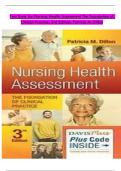
Test Bank for Nursing Health Assessment The Foundation of
Clinical Practice, 3rd Edition, Patricia M. Dillon
,1. Introduction to Assessment
qu qu qu
2. Assessing the Integumentary System
qu qu qu qu
3. Assessing the Head, Face and Neck
qu qu qu qu qu qu
4. Assessing Eyes and the Ears
qu qu qu qu qu
5. Assessing the Respiratory System
qu qu qu qu
6. Assessing the Cardiovascular System
qu qu qu qu
7. Assessing the Peripheral -Vascular and Lymphatic Systems
qu qu qu qu qu qu qu
8. Assessing the Breasts
qu qu qu
9. Assessing the Abdomen
qu qu qu
10. Assessing the Female Genitourinary
qu qu qu qu
11. Assessing the Male Genitourinary
qu qu qu qu
12. Assessing the Motor Musculoskeletal System
qu qu qu qu qu
13. Assessing the Sensory Neurological System
qu qu qu qu qu
14. Assessing the Mother to Be
qu qu qu qu qu
15. Assessing the Newborn and Infant
qu qu qu qu qu
16. Assessing the Toddler and Preschooler
qu qu qu qu qu
17. Assessing the School-Age Child and Adolescent
qu qu qu qu qu qu
18. Assessing the Older Adult
qu qu qu qu
19. Assessing the Homeless Person
qu qu qu qu
20. Assessing Pain
qu qu
21. Approach to the Mental Health Assessment
qu qu qu qu qu qu
22. Assessing Nutrition
qu qu
23. Assessing Spirituality
qu qu
,24. Assessing Culture
qu qu
25. Assessing the Patient’s Environment
qu qu qu qu
26. Assessing Abuse
qu qu
27. Assessing the Dying Patient—new
qu qu qu qu
, Chapter 01: The Complete Health Assessment
qu qu qu qu qu
Multiple Choice
qu
Identify the choice that best completes the statement or answers the question.
qu qu qu qu qu qu qu qu qu qu qu
1. Which critical thinking skill allows the nurse to think outside of the box when assessing a patient?
qu qu qu qu qu qu qu qu qu qu qu qu qu qu qu qu
1) Divergent thinking qu
2) Reasoning
3) Creativity
4) Reflection
2. The primary level of preventive health care focuses on which topic?
qu qu qu qu qu qu qu qu qu qu
1) Health promotion qu
2) Early detection qu
3) Promotion intervention qu
4) End-of-life care qu
3. The nurse is prioritizing data collected during the health assessment. Which data is primary?
qu qu qu qu qu qu qu qu qu qu qu qu qu
1) Pain rating of 4 on a 1 to 10 numeric scale
qu qu qu qu qu qu qu qu qu qu
2) New diagnosis of type 2 diabetes mellitus (DM)
qu qu qu qu qu qu qu
3) Blood pressure of 130/90 mmHg qu qu qu qu
4) Pulse oximetry reading of 73% qu qu qu qu
4. Which type of skill is most important when performing a physical assessment?
qu qu qu qu qu qu qu qu qu qu qu
1) Psychomotor
2) Interpersonal
3) Ethical
4) Affective
5. Which activity is an example of secondary prevention?
qu qu qu qu qu qu qu
1) Wound débridement qu
2) Immunization
3) Preoperative teaching qu
4) Long-term nasogastric feedings qu qu
6. Which assessment data is considered a symptom?
qu qu qu qu qu qu
1) Rapid respirations qu
2) Sweaty palms qu
3) Belching
4) Feelings of anxiety qu qu
7. Who or what is considered the primary data source for a toddler-age patient?
qu qu qu qu qu qu qu qu qu qu qu qu
1) The toddler qu
2) A parent qu
3) The medical record qu qu
4) Other healthcare providers qu qu
8. Which part of the assessment provides the most subjective data?
qu qu qu qu qu qu qu qu qu
1) Health history qu
2) Physical assessment qu
3) Review of medical records qu qu qu
4) Medication record qu
Clinical Practice, 3rd Edition, Patricia M. Dillon
,1. Introduction to Assessment
qu qu qu
2. Assessing the Integumentary System
qu qu qu qu
3. Assessing the Head, Face and Neck
qu qu qu qu qu qu
4. Assessing Eyes and the Ears
qu qu qu qu qu
5. Assessing the Respiratory System
qu qu qu qu
6. Assessing the Cardiovascular System
qu qu qu qu
7. Assessing the Peripheral -Vascular and Lymphatic Systems
qu qu qu qu qu qu qu
8. Assessing the Breasts
qu qu qu
9. Assessing the Abdomen
qu qu qu
10. Assessing the Female Genitourinary
qu qu qu qu
11. Assessing the Male Genitourinary
qu qu qu qu
12. Assessing the Motor Musculoskeletal System
qu qu qu qu qu
13. Assessing the Sensory Neurological System
qu qu qu qu qu
14. Assessing the Mother to Be
qu qu qu qu qu
15. Assessing the Newborn and Infant
qu qu qu qu qu
16. Assessing the Toddler and Preschooler
qu qu qu qu qu
17. Assessing the School-Age Child and Adolescent
qu qu qu qu qu qu
18. Assessing the Older Adult
qu qu qu qu
19. Assessing the Homeless Person
qu qu qu qu
20. Assessing Pain
qu qu
21. Approach to the Mental Health Assessment
qu qu qu qu qu qu
22. Assessing Nutrition
qu qu
23. Assessing Spirituality
qu qu
,24. Assessing Culture
qu qu
25. Assessing the Patient’s Environment
qu qu qu qu
26. Assessing Abuse
qu qu
27. Assessing the Dying Patient—new
qu qu qu qu
, Chapter 01: The Complete Health Assessment
qu qu qu qu qu
Multiple Choice
qu
Identify the choice that best completes the statement or answers the question.
qu qu qu qu qu qu qu qu qu qu qu
1. Which critical thinking skill allows the nurse to think outside of the box when assessing a patient?
qu qu qu qu qu qu qu qu qu qu qu qu qu qu qu qu
1) Divergent thinking qu
2) Reasoning
3) Creativity
4) Reflection
2. The primary level of preventive health care focuses on which topic?
qu qu qu qu qu qu qu qu qu qu
1) Health promotion qu
2) Early detection qu
3) Promotion intervention qu
4) End-of-life care qu
3. The nurse is prioritizing data collected during the health assessment. Which data is primary?
qu qu qu qu qu qu qu qu qu qu qu qu qu
1) Pain rating of 4 on a 1 to 10 numeric scale
qu qu qu qu qu qu qu qu qu qu
2) New diagnosis of type 2 diabetes mellitus (DM)
qu qu qu qu qu qu qu
3) Blood pressure of 130/90 mmHg qu qu qu qu
4) Pulse oximetry reading of 73% qu qu qu qu
4. Which type of skill is most important when performing a physical assessment?
qu qu qu qu qu qu qu qu qu qu qu
1) Psychomotor
2) Interpersonal
3) Ethical
4) Affective
5. Which activity is an example of secondary prevention?
qu qu qu qu qu qu qu
1) Wound débridement qu
2) Immunization
3) Preoperative teaching qu
4) Long-term nasogastric feedings qu qu
6. Which assessment data is considered a symptom?
qu qu qu qu qu qu
1) Rapid respirations qu
2) Sweaty palms qu
3) Belching
4) Feelings of anxiety qu qu
7. Who or what is considered the primary data source for a toddler-age patient?
qu qu qu qu qu qu qu qu qu qu qu qu
1) The toddler qu
2) A parent qu
3) The medical record qu qu
4) Other healthcare providers qu qu
8. Which part of the assessment provides the most subjective data?
qu qu qu qu qu qu qu qu qu
1) Health history qu
2) Physical assessment qu
3) Review of medical records qu qu qu
4) Medication record qu


