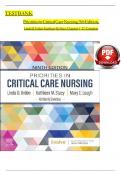
TEST BANK
c/t
Priorities in Critical Care Nursing, 9th Edition,
c/t c/t c/t c/t c/t c/t
Linda D. Urden, Kathleen M. Stacy, Chapters 1 - 27, Complete
c/t c/t c/t c/t c/t c/t c/t c/t c/t c/t c/t
,TABLE OF CONTENTS c/t c/t
UNIT ONE: FOUNDATIONS IN CRITICAL CARE NURSING
c/t c/t c/t c/t c/t c/t
1. Caring for the Critically Ill Patient
c/t c/t c/t c/t c/t c/t
2. Ethical and Legal Issues
c/t c/t c/t c/t
3. Facilitating Care Transitions
c/t c/t c/t
UNIT TWO: COMMON PROBLEMS IN CRITICAL CARE
c/t c/t c/t c/t c/t c/t
4. Psychosocial and Spiritual Considerations
c/t c/t c/t c/t
5. Nutritional Alterations and Management
c/t c/t c/t c/t
6. The Older Adult
c/t c/t c/t
7. Pain and Pain Management
c/t c/t c/t c/t
8. Sedation and Delirium Management
c/t c/t c/t c/t
9. Palliative and End-of-Life Care
c/t c/t c/t c/t
UNIT THREE: CARDIOVASCULAR ALTERATIONS
c/t c/t c/t
10. Cardiovascular Clinical Assessment and Diagnostic Procedures
c/t c/t c/t c/t c/t c/t
11. Cardiovascular Disorders
c/t c/t
12. Cardiovascular Therapeutic Management
c/t c/t c/t
UNIT FOUR: PULMONARY ALTERATIONS
c/t c/t c/t
13. Pulmonary Clinical Assessment and Diagnostic Procedures
c/t c/t c/t c/t c/t c/t
14. Pulmonary Disorders
c/t c/t
15. Pulmonary Therapeutic Management
c/t c/t c/t
UNIT FIVE: NEUROLOGICAL ALTERATIONS
c/t c/t c/t
16. Neurological Clinical Assessment and Diagnostic Procedures
c/t c/t c/t c/t c/t c/t
17. Neurologic Disorders and Therapeutic Management
c/t c/t c/t c/t c/t
UNIT SIX: KIDNEY ALTERATIONS
c/t c/t c/t
18. Kidney Clinical Assessment and Diagnostic Procedures
c/t c/t c/t c/t c/t c/t
19. Kidney Disorders and Therapeutic Management
c/t c/t c/t c/t c/t
UNIT SEVEN: GASTROINTESTINAL ALTERATIONS
c/t c/t c/t
20. Gastrointestinal Clinical Assessment and Diagnostic Procedures
c/t c/t c/t c/t c/t c/t
21. Gastrointestinal Disorders and Therapeutic Management
c/t c/t c/t c/t c/t
UNIT EIGHT: ENDOCRINE ALTERATIONS
c/t c/t c/t
22. Endocrine Clinical Assessment and Diagnostic Procedures
c/ t c/t c/t c/t c/t c/t
23. Endocrine Disorders and Therapeutic Management
c/t c/t c/t c/t c/t
UNIT NINE: MULTISYSTEM ALTERATIONS
c/t c/t c/t
24. Trauma
c/t
25. Burns
c/t
26. Shock, Sepsis, and Multiple Organ Dysfunction Syndrome
c/t c/t c/t c/t c/t c/t c/t
27. Hematological and Oncological Emergencies
c/t c/t c/t c/t
,Chapter 01: Critical Care Nursing Practice
c/t c/t c/t c/t c/t
Urden: Critical Care Nursing, 9th
t
c/ c/t c/t c/t c/t
MULTIPLE
CHOICE
t
c/
1. During WorldWarII, what type of wards were developed to care for criticallyinjured
c/t c/t c/t c/t c/t c/t c/t c/t c/t c/t c/t c/t c/t c/t
patients?
c/t
a. Intensive care c/t
b. Triage
c. Shock
d. Postoperative
ANS: C c/t
During World War II, shock wards were established to care for critically injured patients. Triage
c/t c/t c/t c/t c/t c/t c/t c/t c/t c/t c/t c/t c/t c/t
wards establish the order in which a patient is seen or treated upon arrival to a hospital.
c/t c/t c/t c/t c/t c/t c/t c/t c/t c/t c/t c/t c/t c/t c/t c/t c/ t
Postoperative wards were developed in 1900 and later evolved into intensive careunits.
c/t c/t c/t c/t c/t c/t c/t c/t c/t c/t c/t c/t c/t
PTS: 1 DIF: Cognitive Level: Remembering
c/t c/t c / t REF: p. 1 c/t c/t c/ t c/t
OBJ:
c/t Nursing Process Step: N/A TOP: Critical Care Nursing Practice
c / t c/t c/ t c/t c/t c/t c/t c/t
MSC: NCLEX: Safe and Effective Care Environment
c/t c/t c/t c/t c/t c/t c/t
2. What type of practitioner has a broad depth of specialty knowledge and expertise and
c/t c/t c/t c/t c/t c/t c/t c/t c/t c/t c/t c/t c/t
manages complex clinical and system issues?
c/t c/t c/ t c/t c/t c/ t
a. Registered nurses c/t
b. Advanced practice nurses c/t c/t
c. Clinical nurse leaders c/t c/t
d. Intensivists
ANS: B c/t
Advanced practice nurses (APNs) have a broad depth of knowledge and expertise in their c/t c/t c/t c/t c/t c/t c/t c/t c/t c/t c/t c/t c/t
specialty area and manage complex clinical and systems issues. Intensivists are medical
c/t c/t c/t c/t c/t c/t c/t c/t c/t c/t c/t c/t
practitioners who manage the critical ill patient. Registered nurses (RNs) are generally direct care
c/t c/t c/t c/t c/t c/t c/t c/t c/t c/t c/t c/t c/t c/t
providers. Clinical nurse leaders (CNLs) generally do not manage system issues.
c/t c/t c/t c/t c/t c/t c/t c/t c/t c/t c/t
PTS: 1 DIF: Cognitive Level: Remembering
c/t c/t c / t REF: p. 2 c/t c/t c/ t c/t
OBJ:
c/t Nursing Process Step: N/A TOP: Critical Care Nursing Practice
c / t c/t c/ t c/t c/t c/t c/t c/t
MSC: NCLEX: Safe and Effective Care Environment
c/t c/t c/t c/t c/t c/t c/t
3. What type of practitioner is instrumental in ensuring care that is evidence basedandthat
c/t c/t c/t c/t c/t c/t c/t c/t c/t c/t c/t c/t c/t c/t
safety programs are inplace?
c/t c/t c/t c/t c/t
a. Clinical nurse c/t
specialist b. Advanced
c/t c/t
c/t
practice nurse c.
c/t c/t c/t
Registered nurses c/t
d. Nurse practitioners
c/t
c/t
ANS: A c/t
, Clinical nurse specialists (CNSs) serve in specialty roles that use their clinical, teaching, research,
c/t c/t c/t c/t c/t c/t c/t c/t c/t c/t c/t c/t c/t
leadership, and consultative abilities. They are instrumental in ensuring that careis evidence based
c/t c/t c/t c/t c/t c/t c/t c/t c/t c/t c/t c/t c/t c/t
and that safety programs are in place. Advanced practice nurses (APNs)have
c/t c/t c/t c/t c/t c/t c/t c/t c/t c/t c/t c/t
a broad depth of knowledge and expertise in their specialty area and manage complex clinical
c/t c/t c/t c/t c/t c/t c/t c/t c/t c/t c/t c/t c/t c/t
and systems issues. Registered nurses are generally direct care providers. Nursepractitioners
c/t c/t c/t c/t c/t c/t c/t c/t c/t c/t c/t c/t
(NPs) manage direct clinical care of groups of patients.
c/t c/t c/t c/t c/t c/t c/t c/t c/t
PTS: 1 DIF: Cognitive Level: Remembering
c/t c/t c / t REF: p. 2 c/t c/t c/ t c/t
OBJ:
c/t Nursing Process Step: N/A TOP: Critical Care Nursing Practice
c / t c/t c/ t c/t c/t c/t c/t c/t
MSC: NCLEX: Safe and Effective Care Environment
c/t c/t c/t c/t c/t c/t c/t
4. Which professional organization administers critical care certification exams for
c/t c/t c/t c/t c/t c/t c/t c/t
registered nurses?
c/t c/t
a. State Board of Registered Nurses c/t c/t c/t c/t
b. National Association of Clinical NurseSpecialist c/t c/ t c/ t c/ t c/t
c. Societyof Critical CareMedicine c/t c/t c/t c/t
d. American Association of Critical-CareNurses c/t c/t c/ t c/t
ANS: D c/t
American Association of Critical-Care Nurses (AACN) administers certification exams for c/t c/t c/t c/ t c/t c/t c/t c/t c/t
registered nurses. The State Board of Registered Nurses (SBON) does not administer
c/t c/t c/t c/t c/t c/t c/t c/t c/t c/t c/t c/t
certification exams. National Association of Clinical Nurse Specialists (NACNS) does not
c/t c/t c/t c/t c/t c/t c/t c/t c/t c/t c/t
administer certification exams. Society of Critical Care Medicine (SCCM) does not administer
c/t c/t c/t c/t c/t c/t c/t c/t c/t c/t c/t c/t
nursing certification exams for registered nurses.
c/t c/t c/t c/t c/t c/t
PTS: 1 DIF: Cognitive Level: Remembering
c/t c/t c / t REF: p. 3 c/t c/t c/ t c/t
OBJ:
c/t Nursing Process Step: N/A TOP: Critical Care Nursing Practice
c / t c/t c/ t c/t c/t c/t c/t c/t
MSC: NCLEX: Safe and Effective Care Environment
c/t c/t c/t c/t c/t c/t c/t
5. Emphasis is on human integrityand stresses the theorythat the body,mind, and spiritare c/t c/t c/t c/t c/t c/t c/t c/t c/t c/t c/ t c/t c/t c/t c/t
interdependent and inseparable. This statement describes which methodology of care?
c/t c/t c/t c/t c/t c/t c/t c/t c/t c/t
a. Holistic care c/t
b. Individualized care c/t
c. Cultural care c/t
d. Interdisciplinarycare c/t
ANS: A c/t
Holistic care focuses on human integrity and stresses that the body, mind, and spirit are
c/t c/t c/t c/t c/t c/t c/t c/t c/t c/t c/t c/t c/t c/t
interdependent and inseparable. Individualized care recognizes the uniqueness of each patient’s
c/t c/t c/t c/t c/ t c/t c/t c/t c/t c/t c/ t
preferences, condition, and physiologic and psychosocial status. Cultural diversityin
c/t c/t c/t c/t c/t c/t c/t c/t c/t c/t
health care is not a new topic, but it is gaining emphasis and importance as the world becomes
c/t c/t c/t c/t c/t c/t c/t c/t c/t c/ t c/t c/t c/t c/t c/t c/t c/t
more accessible to all as the result of increasing technologies and interfaces withplaces and
c/t c/t c/t c/t c/t c/t c/t c/t c/t c/t c/t c/t c/t c/t c/t
peoples. Interdisciplinary care is care among a variety of health care professionals with the
c/t c/t c/t c/t c/t c/t c/t c/t c/t c/t c/t c/ t c/t c/t
patient’s health as the common goal.
c/t c/t c/t c/t c/t c/t
PTS: 1 DIF: Cognitive Level: Remembering
c/t c/t c / t REF: p. 4 c/t c/t c/ t c/t
OBJ:
c/t Nursing Process Step: N/A TOP: Critical Care Nursing Practice
c / t c/t c/ t c/t c/t c/t c/t c/t
MSC: NCLEX: Safe and Effective Care Environment
c/t c/t c/t c/t c/t c/t c/t
c/t
Priorities in Critical Care Nursing, 9th Edition,
c/t c/t c/t c/t c/t c/t
Linda D. Urden, Kathleen M. Stacy, Chapters 1 - 27, Complete
c/t c/t c/t c/t c/t c/t c/t c/t c/t c/t c/t
,TABLE OF CONTENTS c/t c/t
UNIT ONE: FOUNDATIONS IN CRITICAL CARE NURSING
c/t c/t c/t c/t c/t c/t
1. Caring for the Critically Ill Patient
c/t c/t c/t c/t c/t c/t
2. Ethical and Legal Issues
c/t c/t c/t c/t
3. Facilitating Care Transitions
c/t c/t c/t
UNIT TWO: COMMON PROBLEMS IN CRITICAL CARE
c/t c/t c/t c/t c/t c/t
4. Psychosocial and Spiritual Considerations
c/t c/t c/t c/t
5. Nutritional Alterations and Management
c/t c/t c/t c/t
6. The Older Adult
c/t c/t c/t
7. Pain and Pain Management
c/t c/t c/t c/t
8. Sedation and Delirium Management
c/t c/t c/t c/t
9. Palliative and End-of-Life Care
c/t c/t c/t c/t
UNIT THREE: CARDIOVASCULAR ALTERATIONS
c/t c/t c/t
10. Cardiovascular Clinical Assessment and Diagnostic Procedures
c/t c/t c/t c/t c/t c/t
11. Cardiovascular Disorders
c/t c/t
12. Cardiovascular Therapeutic Management
c/t c/t c/t
UNIT FOUR: PULMONARY ALTERATIONS
c/t c/t c/t
13. Pulmonary Clinical Assessment and Diagnostic Procedures
c/t c/t c/t c/t c/t c/t
14. Pulmonary Disorders
c/t c/t
15. Pulmonary Therapeutic Management
c/t c/t c/t
UNIT FIVE: NEUROLOGICAL ALTERATIONS
c/t c/t c/t
16. Neurological Clinical Assessment and Diagnostic Procedures
c/t c/t c/t c/t c/t c/t
17. Neurologic Disorders and Therapeutic Management
c/t c/t c/t c/t c/t
UNIT SIX: KIDNEY ALTERATIONS
c/t c/t c/t
18. Kidney Clinical Assessment and Diagnostic Procedures
c/t c/t c/t c/t c/t c/t
19. Kidney Disorders and Therapeutic Management
c/t c/t c/t c/t c/t
UNIT SEVEN: GASTROINTESTINAL ALTERATIONS
c/t c/t c/t
20. Gastrointestinal Clinical Assessment and Diagnostic Procedures
c/t c/t c/t c/t c/t c/t
21. Gastrointestinal Disorders and Therapeutic Management
c/t c/t c/t c/t c/t
UNIT EIGHT: ENDOCRINE ALTERATIONS
c/t c/t c/t
22. Endocrine Clinical Assessment and Diagnostic Procedures
c/ t c/t c/t c/t c/t c/t
23. Endocrine Disorders and Therapeutic Management
c/t c/t c/t c/t c/t
UNIT NINE: MULTISYSTEM ALTERATIONS
c/t c/t c/t
24. Trauma
c/t
25. Burns
c/t
26. Shock, Sepsis, and Multiple Organ Dysfunction Syndrome
c/t c/t c/t c/t c/t c/t c/t
27. Hematological and Oncological Emergencies
c/t c/t c/t c/t
,Chapter 01: Critical Care Nursing Practice
c/t c/t c/t c/t c/t
Urden: Critical Care Nursing, 9th
t
c/ c/t c/t c/t c/t
MULTIPLE
CHOICE
t
c/
1. During WorldWarII, what type of wards were developed to care for criticallyinjured
c/t c/t c/t c/t c/t c/t c/t c/t c/t c/t c/t c/t c/t c/t
patients?
c/t
a. Intensive care c/t
b. Triage
c. Shock
d. Postoperative
ANS: C c/t
During World War II, shock wards were established to care for critically injured patients. Triage
c/t c/t c/t c/t c/t c/t c/t c/t c/t c/t c/t c/t c/t c/t
wards establish the order in which a patient is seen or treated upon arrival to a hospital.
c/t c/t c/t c/t c/t c/t c/t c/t c/t c/t c/t c/t c/t c/t c/t c/t c/ t
Postoperative wards were developed in 1900 and later evolved into intensive careunits.
c/t c/t c/t c/t c/t c/t c/t c/t c/t c/t c/t c/t c/t
PTS: 1 DIF: Cognitive Level: Remembering
c/t c/t c / t REF: p. 1 c/t c/t c/ t c/t
OBJ:
c/t Nursing Process Step: N/A TOP: Critical Care Nursing Practice
c / t c/t c/ t c/t c/t c/t c/t c/t
MSC: NCLEX: Safe and Effective Care Environment
c/t c/t c/t c/t c/t c/t c/t
2. What type of practitioner has a broad depth of specialty knowledge and expertise and
c/t c/t c/t c/t c/t c/t c/t c/t c/t c/t c/t c/t c/t
manages complex clinical and system issues?
c/t c/t c/ t c/t c/t c/ t
a. Registered nurses c/t
b. Advanced practice nurses c/t c/t
c. Clinical nurse leaders c/t c/t
d. Intensivists
ANS: B c/t
Advanced practice nurses (APNs) have a broad depth of knowledge and expertise in their c/t c/t c/t c/t c/t c/t c/t c/t c/t c/t c/t c/t c/t
specialty area and manage complex clinical and systems issues. Intensivists are medical
c/t c/t c/t c/t c/t c/t c/t c/t c/t c/t c/t c/t
practitioners who manage the critical ill patient. Registered nurses (RNs) are generally direct care
c/t c/t c/t c/t c/t c/t c/t c/t c/t c/t c/t c/t c/t c/t
providers. Clinical nurse leaders (CNLs) generally do not manage system issues.
c/t c/t c/t c/t c/t c/t c/t c/t c/t c/t c/t
PTS: 1 DIF: Cognitive Level: Remembering
c/t c/t c / t REF: p. 2 c/t c/t c/ t c/t
OBJ:
c/t Nursing Process Step: N/A TOP: Critical Care Nursing Practice
c / t c/t c/ t c/t c/t c/t c/t c/t
MSC: NCLEX: Safe and Effective Care Environment
c/t c/t c/t c/t c/t c/t c/t
3. What type of practitioner is instrumental in ensuring care that is evidence basedandthat
c/t c/t c/t c/t c/t c/t c/t c/t c/t c/t c/t c/t c/t c/t
safety programs are inplace?
c/t c/t c/t c/t c/t
a. Clinical nurse c/t
specialist b. Advanced
c/t c/t
c/t
practice nurse c.
c/t c/t c/t
Registered nurses c/t
d. Nurse practitioners
c/t
c/t
ANS: A c/t
, Clinical nurse specialists (CNSs) serve in specialty roles that use their clinical, teaching, research,
c/t c/t c/t c/t c/t c/t c/t c/t c/t c/t c/t c/t c/t
leadership, and consultative abilities. They are instrumental in ensuring that careis evidence based
c/t c/t c/t c/t c/t c/t c/t c/t c/t c/t c/t c/t c/t c/t
and that safety programs are in place. Advanced practice nurses (APNs)have
c/t c/t c/t c/t c/t c/t c/t c/t c/t c/t c/t c/t
a broad depth of knowledge and expertise in their specialty area and manage complex clinical
c/t c/t c/t c/t c/t c/t c/t c/t c/t c/t c/t c/t c/t c/t
and systems issues. Registered nurses are generally direct care providers. Nursepractitioners
c/t c/t c/t c/t c/t c/t c/t c/t c/t c/t c/t c/t
(NPs) manage direct clinical care of groups of patients.
c/t c/t c/t c/t c/t c/t c/t c/t c/t
PTS: 1 DIF: Cognitive Level: Remembering
c/t c/t c / t REF: p. 2 c/t c/t c/ t c/t
OBJ:
c/t Nursing Process Step: N/A TOP: Critical Care Nursing Practice
c / t c/t c/ t c/t c/t c/t c/t c/t
MSC: NCLEX: Safe and Effective Care Environment
c/t c/t c/t c/t c/t c/t c/t
4. Which professional organization administers critical care certification exams for
c/t c/t c/t c/t c/t c/t c/t c/t
registered nurses?
c/t c/t
a. State Board of Registered Nurses c/t c/t c/t c/t
b. National Association of Clinical NurseSpecialist c/t c/ t c/ t c/ t c/t
c. Societyof Critical CareMedicine c/t c/t c/t c/t
d. American Association of Critical-CareNurses c/t c/t c/ t c/t
ANS: D c/t
American Association of Critical-Care Nurses (AACN) administers certification exams for c/t c/t c/t c/ t c/t c/t c/t c/t c/t
registered nurses. The State Board of Registered Nurses (SBON) does not administer
c/t c/t c/t c/t c/t c/t c/t c/t c/t c/t c/t c/t
certification exams. National Association of Clinical Nurse Specialists (NACNS) does not
c/t c/t c/t c/t c/t c/t c/t c/t c/t c/t c/t
administer certification exams. Society of Critical Care Medicine (SCCM) does not administer
c/t c/t c/t c/t c/t c/t c/t c/t c/t c/t c/t c/t
nursing certification exams for registered nurses.
c/t c/t c/t c/t c/t c/t
PTS: 1 DIF: Cognitive Level: Remembering
c/t c/t c / t REF: p. 3 c/t c/t c/ t c/t
OBJ:
c/t Nursing Process Step: N/A TOP: Critical Care Nursing Practice
c / t c/t c/ t c/t c/t c/t c/t c/t
MSC: NCLEX: Safe and Effective Care Environment
c/t c/t c/t c/t c/t c/t c/t
5. Emphasis is on human integrityand stresses the theorythat the body,mind, and spiritare c/t c/t c/t c/t c/t c/t c/t c/t c/t c/t c/ t c/t c/t c/t c/t
interdependent and inseparable. This statement describes which methodology of care?
c/t c/t c/t c/t c/t c/t c/t c/t c/t c/t
a. Holistic care c/t
b. Individualized care c/t
c. Cultural care c/t
d. Interdisciplinarycare c/t
ANS: A c/t
Holistic care focuses on human integrity and stresses that the body, mind, and spirit are
c/t c/t c/t c/t c/t c/t c/t c/t c/t c/t c/t c/t c/t c/t
interdependent and inseparable. Individualized care recognizes the uniqueness of each patient’s
c/t c/t c/t c/t c/ t c/t c/t c/t c/t c/t c/ t
preferences, condition, and physiologic and psychosocial status. Cultural diversityin
c/t c/t c/t c/t c/t c/t c/t c/t c/t c/t
health care is not a new topic, but it is gaining emphasis and importance as the world becomes
c/t c/t c/t c/t c/t c/t c/t c/t c/t c/ t c/t c/t c/t c/t c/t c/t c/t
more accessible to all as the result of increasing technologies and interfaces withplaces and
c/t c/t c/t c/t c/t c/t c/t c/t c/t c/t c/t c/t c/t c/t c/t
peoples. Interdisciplinary care is care among a variety of health care professionals with the
c/t c/t c/t c/t c/t c/t c/t c/t c/t c/t c/t c/ t c/t c/t
patient’s health as the common goal.
c/t c/t c/t c/t c/t c/t
PTS: 1 DIF: Cognitive Level: Remembering
c/t c/t c / t REF: p. 4 c/t c/t c/ t c/t
OBJ:
c/t Nursing Process Step: N/A TOP: Critical Care Nursing Practice
c / t c/t c/ t c/t c/t c/t c/t c/t
MSC: NCLEX: Safe and Effective Care Environment
c/t c/t c/t c/t c/t c/t c/t