
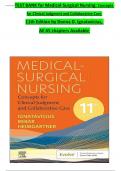
TEST BANK for Medical-Surgical Nursing: Concepts
for Clinical Judgment and Collaborative Care
11th Edition by Donna D. Ignatavicius,
All 65 chapters Available
,Contents
1. Overview of Professional Nursing Concepts for Medical-Surgical Nursing
vfr vfr vfr vfr vfr vfr vfr vfr
2. Clinical Judgment and Systems Thinking
vfr vfr vfr vfr vfr
3. Overview of Health Concepts for Medical-Surgical Nursing
vfr vfr vfr vfr vfr vfr vfr
4. Concepts of Care for Older Adults
vfr vfr vfr vfr vfr vfr
5. Concepts of Care for Transgender and Non-Binary Patients
vfr vfr vfr vfr vfr vfr vfr vfr
6. Assessment and Concepts of Care for Patients with Pain
vfr vfr vf r vfr vfr vf r vfr vfr vfr
7. Concepts of Rehabilitation for Chronic and Disabling Health Conditions
vfr vfr vfr vfr vfr vfr vfr vfr vfr
8. Concepts of Care for Patients at End-of-Life
vfr vfr vfr vfr vfr vfr vfr
9. Concepts of Care for Perioperative Patients
vfr vfr vfr vfr vfr vfr
10. Concepts of Emergency and Trauma Nursing
vfr vfr vfr vfr vfr vfr
11. Concepts of Care for Patients with Common Environmental Emergencies
vfr vfr vfr vfr vfr vfr vfr vfr vfr
12. Concepts of Disaster Preparedness
vfr vfr vfr vfr
13. Concepts of Fluid and Electrolyte Balance and Imbalance
vfr vfr vfr vfr vfr vfr vfr vfr
14. Concepts of Acid-Base Balance and Imbalance
vfr vfr vfr vfr vfr vfr
15. Concepts of Infusion Therapy
vfr vfr vfr vfr
16. Concepts of Inflammation and Immunity
vfr vfr vfr vfr vfr
17. Concepts of Care for Patients with Allergy and Immunity Conditions
vfr vfr vfr vfr vfr vfr vfr vf r vfr vf r
18. Concepts of Care for Patients with Cancer
vfr vfr vfr vfr vfr vfr vfr
19. Concepts of Care for Patients with Infection
vfr vfr vfr vfr vfr vfr vfr
20. Assessment of the Skin, Hair, and Nails
vfr vfr vfr vfr vfr vfr vf r
21. Concepts of Care for Patients with Conditions of the Skin, Hair, and Nails
vfr vfr vfr vfr vfr vfr vfr vfr vfr vfr vfr vfr vfr
22. Assessment of the Respiratory System
vfr vfr vfr vfr vfr
23. Concepts of Care for Patients with Noninfectious Upper Respiratory Conditions
vfr vfr vfr vfr vfr vfr vfr vfr vfr vfr
24. Concepts of Care for Patients with Noninfectious Lower Respiratory Conditions
vfr vfr vfr vfr vfr vfr vfr vfr vfr vfr
25. Concepts of Care for Patients with Infectious Respiratory Conditions
vfr vfr vfr vfr vfr vfr vfr vfr vfr
26. Critical Care of Patients with Respiratory Emergencies
vfr vfr vfr vfr vfr vfr vfr
27. Assessment of the Cardiovascular System
vfr vfr vfr vfr vfr
28. Concepts of Care for Patients with Dysrhythmias
vfr vfr vfr vfr vfr vfr vfr
29. Concepts of Care for Patients with Cardiac Conditions
vfr vfr vfr vfr vfr vfr vfr vfr
30. Concepts of Care for Patients with Vascular Conditions
vfr vfr vfr vfr vfr vfr vfr vfr
31. Critical Care of Patients with Shock
vfr vfr vfr vfr vfr vfr
32. Critical Care of Patients with Acute Coronary Syndromes
vfr vfr vfr vfr vfr vfr vfr vfr
33. Assessment of the Hematologic System
vfr vfr vfr vfr vfr
34. Concepts of Care for Patients with Hematologic Conditions
vfr vfr vfr vfr vfr vfr vfr vfr
35. Assessment of the Nervous System
vfr vfr vfr vfr vfr
36. Concepts of Care for Patients with Conditions of the Central Nervous System: The Brain
vfr vfr vfr vfr vfr vfr vfr vfr vfr vfr vf r vfr vfr vfr
37. Concepts of Care for Patients with Conditions of the Central Nervous System: The Spinal Cord
vfr vfr vfr vfr vfr vfr vfr vfr vfr vfr vf r vfr vfr vfr vfr
38. Critical Care of Patients with Neurologic Emergencies
vfr vfr vfr vfr vfr vfr vfr
39. Assessment and Concepts of Care for Patients with Eye and Vision Conditions
vfr vfr vf r vfr vfr vf r vfr vfr vfr vfr vfr vfr
40. Assessment and Concepts of Care for Patients with Ear and Hearing Conditions
vfr vfr vf r vfr vfr vf r vfr vfr vfr vfr vfr vfr
41. Assessment of the Musculoskeletal System
vfr vfr vfr vfr vfr
42. Concepts of Care for Patients with Musculoskeletal Conditions
vfr vfr vfr vfr vfr vfr vfr vfr
43. Concepts of Care for Patients with Arthritis and Total Joint Arthroplasty
vfr vfr vfr vfr vfr vfr vfr vfr vfr vfr vfr
44. Concepts of Care for Patients with Musculoskeletal Trauma
vfr vfr vfr vfr vfr vfr vfr vfr
,45. Assessment of the Gastrointestinal System
vfr vfr vfr vfr vfr
46. Concepts of Care for Patients with Oral Cavity and Esophageal Conditions
vfr vfr vfr vfr vfr vfr vfr vfr vfr vfr vfr
47. Concepts of Care for Patients with Stomach Conditions
vfr vfr vfr vfr vfr vfr vfr vfr
48. Concepts of Care for Patients with Noninflammatory Intestinal Conditions
vfr vfr vfr vfr vfr vfr vfr vfr vfr
49. Concepts of Care for Patients with Inflammatory Intestinal Conditions
vfr vfr vfr vfr vfr vfr vfr vfr vfr
50. Concepts of Care for Patients with Liver Conditions
vfr vfr vfr vfr vfr vfr vfr vfr
51. Concepts of Care for Patients with Conditions of the Biliary System and Pancreas
vfr vfr vfr vfr vfr vfr vfr vfr vfr vfr vfr vfr vf r
52. Concepts of Care for Patients with Malnutrition: Undernutrition and Obesity
vfr vfr vfr vfr vfr vfr vfr vfr vfr vfr
53. Assessment of the Endocrine System
vfr vfr vfr vfr vfr
54. Concepts of Care for Patients with Pituitary and Adrenal Gland Conditions
vfr vfr vfr vfr vfr vfr vfr vfr vf r vf r vfr
55. Concepts of Care for Patients with Conditions of the Thyroid and Parathyroid Glands
vfr vfr vfr vfr vfr vfr vfr vfr vfr vfr vfr vfr vfr
56. Concepts of Care for Patients with Diabetes Mellitus
vfr vfr vfr vfr vfr vfr vfr vfr
57. Assessment of the Renal/Urinary System
vfr vfr vfr vfr vfr
58. Concepts of Care for Patients with Urinary Conditions
vfr vfr vfr vfr vfr vfr vfr vfr
59. Concepts of Care for Patients with Kidney Conditions
vfr vfr vfr vfr vfr vfr vfr vfr
60. Concepts of Care for Patients with Acute Kidney Injury and Chronic Kidney Disease
vfr vfr vfr vfr vfr vfr vfr vfr vfr vfr vfr vfr vfr
61. Assessment of the Reproductive System
vfr vfr vfr vfr vfr
62. Concepts of Care for Patients with Breast Conditions
vfr vfr vfr vfr vfr vfr vfr vf r
63. Concepts of Care for Patients with Gynecologic Conditions
vfr vfr vfr vfr vfr vfr vfr vfr
64. Concepts of Care for Patients with Male Reproductive Conditions
vfr vfr vfr vfr vfr vfr vfr vfr vfr
65. Concepts of Care for Patients with Sexually Transmitted Infections
vfr vfr vfr vfr vfr vfr vfr vfr vfr
, Chapter 01: Overview of Professional Nursing Concepts for Medical-
vfr vfr vfr vfr vfr vfr vfr vfr
Surgical Nursing Ignatavicius: Medical-Surgical Nursing, 11th Edition
vfr vfr vfr vfr vfr v fr
MULTIPLECHOICE vfr
1. A new nurse is working with a preceptor on a medical-
vfr vfr vfr vfr vfr vfr vfr vfr vfr vfr
surgical unit. The preceptor advises the new nurse that which is the priority when working as a pro vfr vfr vfr vfr vfr vfr vfr vfr vfr vfr vfr vfr vfr vfr vfr vfr vfr
fessional nurse? vfr
a. Attendingto holistic client needs vfr vfr vfr vfr
b. Ensuringclient safety vfr vfr
c. Not makingmedication errors vfr vfr vfr
d. Providingclient-focused care vfr vfr
CORRECT ANSWER: B vfr v f r
All actions are appropriate forthe professional nurse. However, ensuring client safetyis the priority
vfr vfr vfr vfr vfr vfr vfr vfr vfr vfr vfr vfr vfr vfr
. Health care errors have been widelyreported for 25 years, manyof which result in client injury, de
vfr vfr vfr vfr vfr vfr vfr vfr vfr vfr vfr vfr vfr vfr vfr vfr vfr vfr
ath, and increased health care costs. There are several national and international organizations th
vfr vfr vfr vfr vfr vfr vfr vfr vfr vfr vfr vfr vfr
at have either recommended or mandated safety initiatives.
vfr vfr vfr vfr vfr vfr vfr
Every nurse has the responsibilityto guard the client’s safety. The other actions are important for
vfr vfr vfr vfr vfr vfr vfr vfr vfr vfr vfr vfr vfr vfr vfr vfr
qualitynursing, but theyare not as vital as providingsafety. Not makingmedication errors does pro
vfr vfr vfr vfr vfr vfr vfr vfr vfr vfr vfr vfr vfr vfr vfr vfr
vide safety, but is too narrow in scope to be the best answer.
vfr vfr vfr vfr vfr vfr vfr vfr vfr vfr vfr vfr
DIF: Understanding
TOP: IntegratedProcess:NursingProcess:Intervention KEY: Client safety
v f r vfr vfr vfr vfr vfr vfr vfr
MSC: ClientNeedsCategory:SafeandEffectiveCareEnvironment:SafetyandInfectionControl
v f r vfr vfr vfr vfr vfr vfr vfr vfr vfr vfr vfr
2. A nurse is orientinga new client and familyto the medical-
vfr vfr vfr vfr vfr vfr vfr vfr vfr vfr vfr
surgical unit. What information does the nurse provide to best help the client promote his or h vfr vfr vfr vfr vfr vfr vfr vfr vfr vfr vfr vfr vfr vfr vfr vfr
er own safety?
vfr vfr
a. Encouragethe client andfamilytobe active partners. vfr vfr vfr vfr vfr vfr vfr vfr
b. Havethe client monitor hand hygiene in caregivers. vfr vfr vfr vfr vfr vfr vfr
c. Offer the familythe opportunityto staywith the client. vfr vfr vfr vfr vfr vf r vfr vf r vfr
d. Tellthe client to always wear his orher armband. vfr vfr vfr vfr vfr vfr vfr vfr vfr
CORRECT ANSWER: A vfr v f r
for Clinical Judgment and Collaborative Care
11th Edition by Donna D. Ignatavicius,
All 65 chapters Available
,Contents
1. Overview of Professional Nursing Concepts for Medical-Surgical Nursing
vfr vfr vfr vfr vfr vfr vfr vfr
2. Clinical Judgment and Systems Thinking
vfr vfr vfr vfr vfr
3. Overview of Health Concepts for Medical-Surgical Nursing
vfr vfr vfr vfr vfr vfr vfr
4. Concepts of Care for Older Adults
vfr vfr vfr vfr vfr vfr
5. Concepts of Care for Transgender and Non-Binary Patients
vfr vfr vfr vfr vfr vfr vfr vfr
6. Assessment and Concepts of Care for Patients with Pain
vfr vfr vf r vfr vfr vf r vfr vfr vfr
7. Concepts of Rehabilitation for Chronic and Disabling Health Conditions
vfr vfr vfr vfr vfr vfr vfr vfr vfr
8. Concepts of Care for Patients at End-of-Life
vfr vfr vfr vfr vfr vfr vfr
9. Concepts of Care for Perioperative Patients
vfr vfr vfr vfr vfr vfr
10. Concepts of Emergency and Trauma Nursing
vfr vfr vfr vfr vfr vfr
11. Concepts of Care for Patients with Common Environmental Emergencies
vfr vfr vfr vfr vfr vfr vfr vfr vfr
12. Concepts of Disaster Preparedness
vfr vfr vfr vfr
13. Concepts of Fluid and Electrolyte Balance and Imbalance
vfr vfr vfr vfr vfr vfr vfr vfr
14. Concepts of Acid-Base Balance and Imbalance
vfr vfr vfr vfr vfr vfr
15. Concepts of Infusion Therapy
vfr vfr vfr vfr
16. Concepts of Inflammation and Immunity
vfr vfr vfr vfr vfr
17. Concepts of Care for Patients with Allergy and Immunity Conditions
vfr vfr vfr vfr vfr vfr vfr vf r vfr vf r
18. Concepts of Care for Patients with Cancer
vfr vfr vfr vfr vfr vfr vfr
19. Concepts of Care for Patients with Infection
vfr vfr vfr vfr vfr vfr vfr
20. Assessment of the Skin, Hair, and Nails
vfr vfr vfr vfr vfr vfr vf r
21. Concepts of Care for Patients with Conditions of the Skin, Hair, and Nails
vfr vfr vfr vfr vfr vfr vfr vfr vfr vfr vfr vfr vfr
22. Assessment of the Respiratory System
vfr vfr vfr vfr vfr
23. Concepts of Care for Patients with Noninfectious Upper Respiratory Conditions
vfr vfr vfr vfr vfr vfr vfr vfr vfr vfr
24. Concepts of Care for Patients with Noninfectious Lower Respiratory Conditions
vfr vfr vfr vfr vfr vfr vfr vfr vfr vfr
25. Concepts of Care for Patients with Infectious Respiratory Conditions
vfr vfr vfr vfr vfr vfr vfr vfr vfr
26. Critical Care of Patients with Respiratory Emergencies
vfr vfr vfr vfr vfr vfr vfr
27. Assessment of the Cardiovascular System
vfr vfr vfr vfr vfr
28. Concepts of Care for Patients with Dysrhythmias
vfr vfr vfr vfr vfr vfr vfr
29. Concepts of Care for Patients with Cardiac Conditions
vfr vfr vfr vfr vfr vfr vfr vfr
30. Concepts of Care for Patients with Vascular Conditions
vfr vfr vfr vfr vfr vfr vfr vfr
31. Critical Care of Patients with Shock
vfr vfr vfr vfr vfr vfr
32. Critical Care of Patients with Acute Coronary Syndromes
vfr vfr vfr vfr vfr vfr vfr vfr
33. Assessment of the Hematologic System
vfr vfr vfr vfr vfr
34. Concepts of Care for Patients with Hematologic Conditions
vfr vfr vfr vfr vfr vfr vfr vfr
35. Assessment of the Nervous System
vfr vfr vfr vfr vfr
36. Concepts of Care for Patients with Conditions of the Central Nervous System: The Brain
vfr vfr vfr vfr vfr vfr vfr vfr vfr vfr vf r vfr vfr vfr
37. Concepts of Care for Patients with Conditions of the Central Nervous System: The Spinal Cord
vfr vfr vfr vfr vfr vfr vfr vfr vfr vfr vf r vfr vfr vfr vfr
38. Critical Care of Patients with Neurologic Emergencies
vfr vfr vfr vfr vfr vfr vfr
39. Assessment and Concepts of Care for Patients with Eye and Vision Conditions
vfr vfr vf r vfr vfr vf r vfr vfr vfr vfr vfr vfr
40. Assessment and Concepts of Care for Patients with Ear and Hearing Conditions
vfr vfr vf r vfr vfr vf r vfr vfr vfr vfr vfr vfr
41. Assessment of the Musculoskeletal System
vfr vfr vfr vfr vfr
42. Concepts of Care for Patients with Musculoskeletal Conditions
vfr vfr vfr vfr vfr vfr vfr vfr
43. Concepts of Care for Patients with Arthritis and Total Joint Arthroplasty
vfr vfr vfr vfr vfr vfr vfr vfr vfr vfr vfr
44. Concepts of Care for Patients with Musculoskeletal Trauma
vfr vfr vfr vfr vfr vfr vfr vfr
,45. Assessment of the Gastrointestinal System
vfr vfr vfr vfr vfr
46. Concepts of Care for Patients with Oral Cavity and Esophageal Conditions
vfr vfr vfr vfr vfr vfr vfr vfr vfr vfr vfr
47. Concepts of Care for Patients with Stomach Conditions
vfr vfr vfr vfr vfr vfr vfr vfr
48. Concepts of Care for Patients with Noninflammatory Intestinal Conditions
vfr vfr vfr vfr vfr vfr vfr vfr vfr
49. Concepts of Care for Patients with Inflammatory Intestinal Conditions
vfr vfr vfr vfr vfr vfr vfr vfr vfr
50. Concepts of Care for Patients with Liver Conditions
vfr vfr vfr vfr vfr vfr vfr vfr
51. Concepts of Care for Patients with Conditions of the Biliary System and Pancreas
vfr vfr vfr vfr vfr vfr vfr vfr vfr vfr vfr vfr vf r
52. Concepts of Care for Patients with Malnutrition: Undernutrition and Obesity
vfr vfr vfr vfr vfr vfr vfr vfr vfr vfr
53. Assessment of the Endocrine System
vfr vfr vfr vfr vfr
54. Concepts of Care for Patients with Pituitary and Adrenal Gland Conditions
vfr vfr vfr vfr vfr vfr vfr vfr vf r vf r vfr
55. Concepts of Care for Patients with Conditions of the Thyroid and Parathyroid Glands
vfr vfr vfr vfr vfr vfr vfr vfr vfr vfr vfr vfr vfr
56. Concepts of Care for Patients with Diabetes Mellitus
vfr vfr vfr vfr vfr vfr vfr vfr
57. Assessment of the Renal/Urinary System
vfr vfr vfr vfr vfr
58. Concepts of Care for Patients with Urinary Conditions
vfr vfr vfr vfr vfr vfr vfr vfr
59. Concepts of Care for Patients with Kidney Conditions
vfr vfr vfr vfr vfr vfr vfr vfr
60. Concepts of Care for Patients with Acute Kidney Injury and Chronic Kidney Disease
vfr vfr vfr vfr vfr vfr vfr vfr vfr vfr vfr vfr vfr
61. Assessment of the Reproductive System
vfr vfr vfr vfr vfr
62. Concepts of Care for Patients with Breast Conditions
vfr vfr vfr vfr vfr vfr vfr vf r
63. Concepts of Care for Patients with Gynecologic Conditions
vfr vfr vfr vfr vfr vfr vfr vfr
64. Concepts of Care for Patients with Male Reproductive Conditions
vfr vfr vfr vfr vfr vfr vfr vfr vfr
65. Concepts of Care for Patients with Sexually Transmitted Infections
vfr vfr vfr vfr vfr vfr vfr vfr vfr
, Chapter 01: Overview of Professional Nursing Concepts for Medical-
vfr vfr vfr vfr vfr vfr vfr vfr
Surgical Nursing Ignatavicius: Medical-Surgical Nursing, 11th Edition
vfr vfr vfr vfr vfr v fr
MULTIPLECHOICE vfr
1. A new nurse is working with a preceptor on a medical-
vfr vfr vfr vfr vfr vfr vfr vfr vfr vfr
surgical unit. The preceptor advises the new nurse that which is the priority when working as a pro vfr vfr vfr vfr vfr vfr vfr vfr vfr vfr vfr vfr vfr vfr vfr vfr vfr
fessional nurse? vfr
a. Attendingto holistic client needs vfr vfr vfr vfr
b. Ensuringclient safety vfr vfr
c. Not makingmedication errors vfr vfr vfr
d. Providingclient-focused care vfr vfr
CORRECT ANSWER: B vfr v f r
All actions are appropriate forthe professional nurse. However, ensuring client safetyis the priority
vfr vfr vfr vfr vfr vfr vfr vfr vfr vfr vfr vfr vfr vfr
. Health care errors have been widelyreported for 25 years, manyof which result in client injury, de
vfr vfr vfr vfr vfr vfr vfr vfr vfr vfr vfr vfr vfr vfr vfr vfr vfr vfr
ath, and increased health care costs. There are several national and international organizations th
vfr vfr vfr vfr vfr vfr vfr vfr vfr vfr vfr vfr vfr
at have either recommended or mandated safety initiatives.
vfr vfr vfr vfr vfr vfr vfr
Every nurse has the responsibilityto guard the client’s safety. The other actions are important for
vfr vfr vfr vfr vfr vfr vfr vfr vfr vfr vfr vfr vfr vfr vfr vfr
qualitynursing, but theyare not as vital as providingsafety. Not makingmedication errors does pro
vfr vfr vfr vfr vfr vfr vfr vfr vfr vfr vfr vfr vfr vfr vfr vfr
vide safety, but is too narrow in scope to be the best answer.
vfr vfr vfr vfr vfr vfr vfr vfr vfr vfr vfr vfr
DIF: Understanding
TOP: IntegratedProcess:NursingProcess:Intervention KEY: Client safety
v f r vfr vfr vfr vfr vfr vfr vfr
MSC: ClientNeedsCategory:SafeandEffectiveCareEnvironment:SafetyandInfectionControl
v f r vfr vfr vfr vfr vfr vfr vfr vfr vfr vfr vfr
2. A nurse is orientinga new client and familyto the medical-
vfr vfr vfr vfr vfr vfr vfr vfr vfr vfr vfr
surgical unit. What information does the nurse provide to best help the client promote his or h vfr vfr vfr vfr vfr vfr vfr vfr vfr vfr vfr vfr vfr vfr vfr vfr
er own safety?
vfr vfr
a. Encouragethe client andfamilytobe active partners. vfr vfr vfr vfr vfr vfr vfr vfr
b. Havethe client monitor hand hygiene in caregivers. vfr vfr vfr vfr vfr vfr vfr
c. Offer the familythe opportunityto staywith the client. vfr vfr vfr vfr vfr vf r vfr vf r vfr
d. Tellthe client to always wear his orher armband. vfr vfr vfr vfr vfr vfr vfr vfr vfr
CORRECT ANSWER: A vfr v f r


