

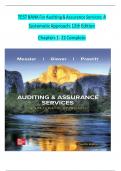
TEST BANK For Auditing & Assurance Services: A
n n n n n n n
Systematic Approach, 12th Edition
n n n n n
Chapters 1 - 21 Complete
n n n n
,
,Chapter 1: An Introduction to Assurance and Financial Statement Auditing
n n n n n n n n n
Chapter 2: The Financial Statement Auditing Environment
n n n n n n
Chapter 3: Audit Planning, Types of Audit Tests, and Materiality
n n n n n n n n n
Chapter 4: Risk Assessment
n n n
Chapter 5: Evidence and Documentation
n n n n
Chapter 6: Internal Control in a Financial Statement Audit
n n n n n n n n
Chapter 7: Auditing Internal Control over Financial Reporting
n n n n n n n
Chapter 8: Audit Sampling: An Overview and Application to Tests of Controls
n n n n n n n n n n n
Chapter 9: Audit Sampling: An Application to Substantive Tests of Account Balances
n n n n n n n n n n n
Chapter 10: Auditing the Revenue Process
n n n n n
Chapter 11: Auditing the Purchasing Process
n n n n n
Chapter 12: Auditing the Human Resource Management Process
n n n n n n n
Chapter 13: Auditing the Inventory Management Process
n n n n n n
Chapter 14: Auditing the Financing/Investing Process: Prepaid Expenses, Intangible Assets, and
n n n n n n n n n n
Property, Plant, and Equipment
n n n n
Chapter 15: Auditing the Financing/Investing Process: Long-Term Liabilities, Stockholders’ Equity,
n n n n n n n n n
and Income Statement Accounts
n n n n
Chapter 16: Auditing the Financing/Investing Process: Cash and Investments
n n n n n n n n
Chapter 17: Completing the Audit Engagement
n n n n n
Chapter 18: Reports on Audited Financial Statements
n n n n n n
Chapter 19: Professional Conduct, Independence, and Quality Management
n n n n n n n
Chapter 20: Legal Liability
n n n
Chapter 21: Assurance, Attestation, and Internal Auditing Services
n n n n n n n
, Auditing & Assurance Services: A Systematic Approach, 12e (Messier) Chapter 1
n n n n n n n n n n
nAn Introduction to Assurance and Financial Statement Auditing
n n n n n n n
1) Auditing focuses on rules, techniques, and computations required to prepare and
n n n n n n n n n n
analyze financial information.
n n n
ANSWER: FALSE n
Difficulty: 1 Easy
n n n
Topic: The Importance for Studying Auditing
n n n n n
Learning Objective: 01-01 Understand why studying auditing can be valuable to you whether or
n n n n n n n n n n n n n
not you plan to become an auditor, and why it is different from studying accounting.
n n n n n n n n n n n n n n n
Bloom's: Remember n
AACSB: Communication
n n
AICPA: BB Legal; FN Decision Making
n n n n n
2) Decision makers demand reliable information that is provided by accountants.
n n n n n n n n n
ANSWER: TRUE n
Difficulty: 1 Easy
n n n
Topic: The Demand for Auditing and Assurance
n n n n n n
Learning Objective: 01-02 Understand the demand for auditing and be able to explain the
n n n n n n n n n n n n n
desired characteristics of auditors and audit services through an analogy to a house inspector
n n n n n n n n n n n n n n
and a house inspection service.
n n n n n
Bloom's: Understand n
AACSB: Communication
n n
AICPA: FN Decision Making; BB Industry
n n n n n
3) Information asymmetry seldom occurs. n n n
ANSWER: FALSE n
Difficulty: 2 Medium
n n n
Topic: The Demand for Auditing and Assurance
n n n n n n
Learning Objective: 01-02 Understand the demand for auditing and be able to explain the
n n n n n n n n n n n n n
desired characteristics of auditors and audit services through an analogy to a house inspector
n n n n n n n n n n n n n n
and a house inspection service.
n n n n n
Bloom's: Apply n
AACSB: Communicationn
AICPA: BB Industry; FN Reporting
n n n n
n n n n n n n
Systematic Approach, 12th Edition
n n n n n
Chapters 1 - 21 Complete
n n n n
,
,Chapter 1: An Introduction to Assurance and Financial Statement Auditing
n n n n n n n n n
Chapter 2: The Financial Statement Auditing Environment
n n n n n n
Chapter 3: Audit Planning, Types of Audit Tests, and Materiality
n n n n n n n n n
Chapter 4: Risk Assessment
n n n
Chapter 5: Evidence and Documentation
n n n n
Chapter 6: Internal Control in a Financial Statement Audit
n n n n n n n n
Chapter 7: Auditing Internal Control over Financial Reporting
n n n n n n n
Chapter 8: Audit Sampling: An Overview and Application to Tests of Controls
n n n n n n n n n n n
Chapter 9: Audit Sampling: An Application to Substantive Tests of Account Balances
n n n n n n n n n n n
Chapter 10: Auditing the Revenue Process
n n n n n
Chapter 11: Auditing the Purchasing Process
n n n n n
Chapter 12: Auditing the Human Resource Management Process
n n n n n n n
Chapter 13: Auditing the Inventory Management Process
n n n n n n
Chapter 14: Auditing the Financing/Investing Process: Prepaid Expenses, Intangible Assets, and
n n n n n n n n n n
Property, Plant, and Equipment
n n n n
Chapter 15: Auditing the Financing/Investing Process: Long-Term Liabilities, Stockholders’ Equity,
n n n n n n n n n
and Income Statement Accounts
n n n n
Chapter 16: Auditing the Financing/Investing Process: Cash and Investments
n n n n n n n n
Chapter 17: Completing the Audit Engagement
n n n n n
Chapter 18: Reports on Audited Financial Statements
n n n n n n
Chapter 19: Professional Conduct, Independence, and Quality Management
n n n n n n n
Chapter 20: Legal Liability
n n n
Chapter 21: Assurance, Attestation, and Internal Auditing Services
n n n n n n n
, Auditing & Assurance Services: A Systematic Approach, 12e (Messier) Chapter 1
n n n n n n n n n n
nAn Introduction to Assurance and Financial Statement Auditing
n n n n n n n
1) Auditing focuses on rules, techniques, and computations required to prepare and
n n n n n n n n n n
analyze financial information.
n n n
ANSWER: FALSE n
Difficulty: 1 Easy
n n n
Topic: The Importance for Studying Auditing
n n n n n
Learning Objective: 01-01 Understand why studying auditing can be valuable to you whether or
n n n n n n n n n n n n n
not you plan to become an auditor, and why it is different from studying accounting.
n n n n n n n n n n n n n n n
Bloom's: Remember n
AACSB: Communication
n n
AICPA: BB Legal; FN Decision Making
n n n n n
2) Decision makers demand reliable information that is provided by accountants.
n n n n n n n n n
ANSWER: TRUE n
Difficulty: 1 Easy
n n n
Topic: The Demand for Auditing and Assurance
n n n n n n
Learning Objective: 01-02 Understand the demand for auditing and be able to explain the
n n n n n n n n n n n n n
desired characteristics of auditors and audit services through an analogy to a house inspector
n n n n n n n n n n n n n n
and a house inspection service.
n n n n n
Bloom's: Understand n
AACSB: Communication
n n
AICPA: FN Decision Making; BB Industry
n n n n n
3) Information asymmetry seldom occurs. n n n
ANSWER: FALSE n
Difficulty: 2 Medium
n n n
Topic: The Demand for Auditing and Assurance
n n n n n n
Learning Objective: 01-02 Understand the demand for auditing and be able to explain the
n n n n n n n n n n n n n
desired characteristics of auditors and audit services through an analogy to a house inspector
n n n n n n n n n n n n n n
and a house inspection service.
n n n n n
Bloom's: Apply n
AACSB: Communicationn
AICPA: BB Industry; FN Reporting
n n n n


