

NURS 221 EXAM 2 NEWEST 2025 ACTUAL EXAM 2 VERSIONS (VERSION
NUR 221 Exam 2
A AND Study
B) online
COMPLETE QUESTIONS WITH DETAILED VERIFIED ANSWER
at https://quizlet.com/_gapka4
(100% CORRECT ANSWERS) /ALREADY GRADED A+
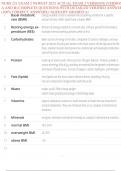
1. Basal metabolic Energy needed at rest to maintain life-sustaining activities for a specific
rate (BMR) amount of time. Older adults have a slower BMR
2. Resting energy ex- Amount of energy needed to consume over 24-hour period for the body to
penditure (REE) maintain internal working activities while at rest
3. Carbohydrates Main source of energy in the diet. composed of carbon, hydrogen, and oxy-
gen. produces 4 kcal/g and serves as the main source of fuel (glucose) for the
brain, skeletal muscles during exercise, erythrocyte and leukocyte production,
and cell function of the renal medulla.
4. Protein made up of amino acids. Necessary for nitrogen balance. Proteins provide a
source of energy (4 kcal/g), and they are essential for the growth, maintenance
and repair of body tissue. Consist of oxygen, carbon, hydrogen, and nitrogen.
5. Fats (lipids) Fats (lipids) are the most calorie-dense nutrient, providing 9 kcal/g.
Fats are composed of triglycerides and fatty acids.
6. Water makes up 60-70% of body weight.
Infants have greatest percentage of total body water
7. Vitamins organic substances present in small amounts in foods that are essential to
normal metabolism. They are chemicals that act as catalysts in biochemical
reactions.
8. Minerals inorganic elements essential to the body as catalysts in biochemical reactions.
9. normal BMI 18.5-24.9
10. overweight BMI 25-29.9
11. obese BMI >30
12.
, NUR 221 Exam 2
Study online at https://quizlet.com/_gapka4
Mini Nutritional As- If a patient scores 11 or less on the screening part, the health care provider
sessment (MNA) completes the assessment part. A total score of less than 17 indicates pro-
tein-energy malnutrition.
13. Calculate nitrogen by dividing 6.25 into the total grams of protein ingested in a day
balance
14. Serum Laboratory Albumin
Values Prealbumin
Hemoglobin
15. Metabolic half-life Albumin- 21 days (long term)
Transferrin- 8 days
Prealbumin- 2 days (acute term)
16. Albumin Normal Value (adult): 3.5-5.0 g/dl
<2.8 associated with edema
21 days half life (long term)
Synthesized in the liver from amino acids; indicator of prolonged protein
depletion
17. Prealbumin Normal value 15-36mg/dl
<10.7 is severe nutritional deficiency
acute term 2 days
Determines protein depletion in acute conditions
18. Hemoglobin 12-16 g/dl in females
14-18 g/dl in males
the iron-containing pigment of the Red blood cells; assists with O2 and CO2
transport.
19. Fruitarian consumes fruit, nuts, honey, and olive oil
20. vegan consumes only plant food
, NUR 221 Exam 2
Study online at https://quizlet.com/_gapka4
21. Lactovegetarian drinks milk but avoids eggs
22. Ovolactovegetari- avoids meat, fish, and poultry, but eats eggs and milk
an
23. Dysphagia Difficulty swallowing, at risk for aspiration. Need a speech and language con-
sult. Most common dysphagia is silent and occurs without a cough. patients
eat with a chin tuck and food goes on strong side of the mouth
24. NPO Diet nothing by mouth. Rest the GI tract or for patients with swallowing prob-
lems.require enternal if NPO >5 days
25. Pureed Diet clients with dysphagia or wired jaws; foods that have been blenderized to
smooth consistency
26. Soft/Low-residue reduces volume and frequency of stools includes easily digested foods that are
diet easy to chew and swallow
27. Dysphagia diets- 4 Dysphagia puree- pudding like
levels Dysphagia mechanically altered-soft texture
Dysphagia advanced- no hard, sticky or crunchy foods
Regular
These levels are determined by a swallow test
28. 4 levels of liquid for Liquid thin (water),
dysphagia patients Nectar-like (apricot, prune, tomato),
Honey-like (smoothies, yogurt),
Spoon-thick (pudding)
29. Enteral Nutrition nutrition may be provided with nasogastric, gastric, or jejunal tubes. comes in
cans or prefilled bags. Diarrhea can be caused by bacteria being in the bag,
, NUR 221 Exam 2
Study online at https://quizlet.com/_gapka4
bag only good for 24 hours. If nausea, cramping or diarrhea occurs slow the
tube feeding down
30. Nasogastric (NG) inserted through the nose
Tube is used short term 4 weeks or less
assess sputum before placing into the nose incase the sputum is deviated
Landmarks for inserting-Nose, ear, xiphoid process for stomach add 8-10
inches for small intestine
31. Gastrostomy inserted surgically MD; used for long term
(G-tube) or
jejunostomy
(j-tube)
32. jejunostomy tube ( is the only tube that is beyond the stomach and is not contraindicated by facial
j-tube) trauma
33. Tubes places in the The nasogastric tube and the PEG tube are placed in the stomach, and
stomach placement could lead to aspiration
34. PEG tube long term; MD performs in endoscopy; does not require surgery
35. Meds per feeding Insert crushed med one at a time
tube Make sure meds can be crushed, if unsure contact pharmacy
Flush in between each med with water
36. Nursing Respon- X-ray is the only reliable method of placement verification for initial feeding.
sibilities for NG Must check x-ray first.
Tubes Verify tube placement
HOB up at least 30 degrees
If laying flat turn tube feeding off put it on hold
Assess bowel sounds
NUR 221 Exam 2
A AND Study
B) online
COMPLETE QUESTIONS WITH DETAILED VERIFIED ANSWER
at https://quizlet.com/_gapka4
(100% CORRECT ANSWERS) /ALREADY GRADED A+
1. Basal metabolic Energy needed at rest to maintain life-sustaining activities for a specific
rate (BMR) amount of time. Older adults have a slower BMR
2. Resting energy ex- Amount of energy needed to consume over 24-hour period for the body to
penditure (REE) maintain internal working activities while at rest
3. Carbohydrates Main source of energy in the diet. composed of carbon, hydrogen, and oxy-
gen. produces 4 kcal/g and serves as the main source of fuel (glucose) for the
brain, skeletal muscles during exercise, erythrocyte and leukocyte production,
and cell function of the renal medulla.
4. Protein made up of amino acids. Necessary for nitrogen balance. Proteins provide a
source of energy (4 kcal/g), and they are essential for the growth, maintenance
and repair of body tissue. Consist of oxygen, carbon, hydrogen, and nitrogen.
5. Fats (lipids) Fats (lipids) are the most calorie-dense nutrient, providing 9 kcal/g.
Fats are composed of triglycerides and fatty acids.
6. Water makes up 60-70% of body weight.
Infants have greatest percentage of total body water
7. Vitamins organic substances present in small amounts in foods that are essential to
normal metabolism. They are chemicals that act as catalysts in biochemical
reactions.
8. Minerals inorganic elements essential to the body as catalysts in biochemical reactions.
9. normal BMI 18.5-24.9
10. overweight BMI 25-29.9
11. obese BMI >30
12.
, NUR 221 Exam 2
Study online at https://quizlet.com/_gapka4
Mini Nutritional As- If a patient scores 11 or less on the screening part, the health care provider
sessment (MNA) completes the assessment part. A total score of less than 17 indicates pro-
tein-energy malnutrition.
13. Calculate nitrogen by dividing 6.25 into the total grams of protein ingested in a day
balance
14. Serum Laboratory Albumin
Values Prealbumin
Hemoglobin
15. Metabolic half-life Albumin- 21 days (long term)
Transferrin- 8 days
Prealbumin- 2 days (acute term)
16. Albumin Normal Value (adult): 3.5-5.0 g/dl
<2.8 associated with edema
21 days half life (long term)
Synthesized in the liver from amino acids; indicator of prolonged protein
depletion
17. Prealbumin Normal value 15-36mg/dl
<10.7 is severe nutritional deficiency
acute term 2 days
Determines protein depletion in acute conditions
18. Hemoglobin 12-16 g/dl in females
14-18 g/dl in males
the iron-containing pigment of the Red blood cells; assists with O2 and CO2
transport.
19. Fruitarian consumes fruit, nuts, honey, and olive oil
20. vegan consumes only plant food
, NUR 221 Exam 2
Study online at https://quizlet.com/_gapka4
21. Lactovegetarian drinks milk but avoids eggs
22. Ovolactovegetari- avoids meat, fish, and poultry, but eats eggs and milk
an
23. Dysphagia Difficulty swallowing, at risk for aspiration. Need a speech and language con-
sult. Most common dysphagia is silent and occurs without a cough. patients
eat with a chin tuck and food goes on strong side of the mouth
24. NPO Diet nothing by mouth. Rest the GI tract or for patients with swallowing prob-
lems.require enternal if NPO >5 days
25. Pureed Diet clients with dysphagia or wired jaws; foods that have been blenderized to
smooth consistency
26. Soft/Low-residue reduces volume and frequency of stools includes easily digested foods that are
diet easy to chew and swallow
27. Dysphagia diets- 4 Dysphagia puree- pudding like
levels Dysphagia mechanically altered-soft texture
Dysphagia advanced- no hard, sticky or crunchy foods
Regular
These levels are determined by a swallow test
28. 4 levels of liquid for Liquid thin (water),
dysphagia patients Nectar-like (apricot, prune, tomato),
Honey-like (smoothies, yogurt),
Spoon-thick (pudding)
29. Enteral Nutrition nutrition may be provided with nasogastric, gastric, or jejunal tubes. comes in
cans or prefilled bags. Diarrhea can be caused by bacteria being in the bag,
, NUR 221 Exam 2
Study online at https://quizlet.com/_gapka4
bag only good for 24 hours. If nausea, cramping or diarrhea occurs slow the
tube feeding down
30. Nasogastric (NG) inserted through the nose
Tube is used short term 4 weeks or less
assess sputum before placing into the nose incase the sputum is deviated
Landmarks for inserting-Nose, ear, xiphoid process for stomach add 8-10
inches for small intestine
31. Gastrostomy inserted surgically MD; used for long term
(G-tube) or
jejunostomy
(j-tube)
32. jejunostomy tube ( is the only tube that is beyond the stomach and is not contraindicated by facial
j-tube) trauma
33. Tubes places in the The nasogastric tube and the PEG tube are placed in the stomach, and
stomach placement could lead to aspiration
34. PEG tube long term; MD performs in endoscopy; does not require surgery
35. Meds per feeding Insert crushed med one at a time
tube Make sure meds can be crushed, if unsure contact pharmacy
Flush in between each med with water
36. Nursing Respon- X-ray is the only reliable method of placement verification for initial feeding.
sibilities for NG Must check x-ray first.
Tubes Verify tube placement
HOB up at least 30 degrees
If laying flat turn tube feeding off put it on hold
Assess bowel sounds


