
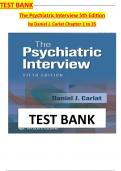
TEST BANK
The Psychiatric Interview 5th Edition
by Daniel J. Carlat Chapter 1 to 35
TEST BANK
,TABLE OF CONTENTS
Section I. General Principles of Effective Interviewing
1 The Initial Interview: A Preview
2 Logistic Preparations: What to Do Before the
Interview
3 The Therapeutic Alliance: What It Is, Why
It’s Important, and How to Establish It
4 Asking Questions I: How to Approach
Threatening Topics .
5 Asking Questions II: Tricks for Improving
Patient Recall .............................
6 Asking Questions III: How to Change Topics
With Style ...............................
7 Techniques for the Reluctant Patient ..........
8 Techniques for the Overly Talkative Patient .....
9 Techniques for the Malingering Patient ........
10 Techniques for the Agitated Patient ...........
11 Techniques for the Adolescent Patient .........
12 Interviewing Family Members and Other
Informants
13 Techniques for Other Challenging Situations ....
14 Practical Psychodynamics in the Diagnostic
Interview ................................
Section II. The Psychiatric History
15 Obtaining the History of Present Illness ........
16 Obtaining the Psychiatric History .............
17 Screening for General Medical Conditions ......
Contents18 Family Psychiatric History ..................
19 Obtaining the Social and Developmental History ...
,Section III. Interviewing for Diagnosis:
The Psychiatric Review of Symptoms
20 How to Memorize the DSM-5-TR Criteria .......
21 Interviewing for Diagnosis: The Art of
Hypothesis Testing .........................
22 Mental Status Examination ..................
23 Assessing Suicidal and Homicidal Ideation ......
24 Assessing Mood Disorders I: Depressive
Disorders ................................
25 Assessing Mood Disorders II: Bipolar Disorder ...
26 Assessing Anxiety , Obsessive, and Trauma
Disorders ................................
27 Assessing Substance Use Disorder .............
28 Assessing Psychotic Disorders ................
29 Assessing Neurocognitive Disorders
(Dementia and Delirium) ...................
30 Assessing Eating Disorders and Somatic
Symptom Disorder .........................
31 Assessing Attention Deficit Hyperactivity
Disorder .................................
32 Assessing Personality Disorders ..............
Section IV. Interviewing for Treatment
33 How to Educate Your Patient ................
34 Negotiating a Treatment Plan ................
35 Writing Up the Results of the Interview
, The Psychiatric Interview 4th Edition Carlat Test Bank
(Chapter 1-Chapter 3)
Chapter 1: The Initial Interview: A Preview
Chapter 2: Logistic Preparations: What toDo Before the Interview
Chapter 3: The Therapeutic Alliance: What It Is, Why It's Important, and How to Establish It
MULTIPLE CHOICE
1. Which outcome, focused on recovery, would be expected in the plan of care for a patient
living in the community and diagnosed with serious and persistent mental illness? Within 3
months, the patient will:
a. deny suicidal ideation.
b. report a sense of well-being.
c. take medications as prescribed.
d. attend clinic appointments on time.
ANS: B
Recovery emphasizes managing symptoms, reducing psychosocial disability, and improving role
performance. The goal of recovery is to empower the individual with mental illness to achieve a
sense of meaning and satisfaction in life and to function at the highest possible level of wellness.
The incorrect options focus on the classic medical model rather than recovery.
2. A patient is hospitalized for depression and suicidal ideation after their spouse asks for a
divorce. Select the nurses most caring comment.
a. Lets discuss some means of coping other than suicide when you have these feelings.
b. I understand why youre so depressed. When I got divorced, I was devastated too.
c. You should forget about your marriage and move on with your life.
d. How did you get so depressed that hospitalization was necessary?
ANS: A
The nurses communication should evidence caring and a commitment to work with the patient.
This commitment lets the patient know the nurse will help. Probing and advice are not helpful or
therapeutic interventions.
3. In the shift-change report, an off-going nurse criticizes a patient who wears heavy makeup.
Which comment by the nurse who receives the report best demonstrates advocacy?
a. This is a psychiatric hospital. Craziness is what we are all about.
b. Lets all show acceptance of this patient by wearing lots of makeup too.
The Psychiatric Interview 5th Edition
by Daniel J. Carlat Chapter 1 to 35
TEST BANK
,TABLE OF CONTENTS
Section I. General Principles of Effective Interviewing
1 The Initial Interview: A Preview
2 Logistic Preparations: What to Do Before the
Interview
3 The Therapeutic Alliance: What It Is, Why
It’s Important, and How to Establish It
4 Asking Questions I: How to Approach
Threatening Topics .
5 Asking Questions II: Tricks for Improving
Patient Recall .............................
6 Asking Questions III: How to Change Topics
With Style ...............................
7 Techniques for the Reluctant Patient ..........
8 Techniques for the Overly Talkative Patient .....
9 Techniques for the Malingering Patient ........
10 Techniques for the Agitated Patient ...........
11 Techniques for the Adolescent Patient .........
12 Interviewing Family Members and Other
Informants
13 Techniques for Other Challenging Situations ....
14 Practical Psychodynamics in the Diagnostic
Interview ................................
Section II. The Psychiatric History
15 Obtaining the History of Present Illness ........
16 Obtaining the Psychiatric History .............
17 Screening for General Medical Conditions ......
Contents18 Family Psychiatric History ..................
19 Obtaining the Social and Developmental History ...
,Section III. Interviewing for Diagnosis:
The Psychiatric Review of Symptoms
20 How to Memorize the DSM-5-TR Criteria .......
21 Interviewing for Diagnosis: The Art of
Hypothesis Testing .........................
22 Mental Status Examination ..................
23 Assessing Suicidal and Homicidal Ideation ......
24 Assessing Mood Disorders I: Depressive
Disorders ................................
25 Assessing Mood Disorders II: Bipolar Disorder ...
26 Assessing Anxiety , Obsessive, and Trauma
Disorders ................................
27 Assessing Substance Use Disorder .............
28 Assessing Psychotic Disorders ................
29 Assessing Neurocognitive Disorders
(Dementia and Delirium) ...................
30 Assessing Eating Disorders and Somatic
Symptom Disorder .........................
31 Assessing Attention Deficit Hyperactivity
Disorder .................................
32 Assessing Personality Disorders ..............
Section IV. Interviewing for Treatment
33 How to Educate Your Patient ................
34 Negotiating a Treatment Plan ................
35 Writing Up the Results of the Interview
, The Psychiatric Interview 4th Edition Carlat Test Bank
(Chapter 1-Chapter 3)
Chapter 1: The Initial Interview: A Preview
Chapter 2: Logistic Preparations: What toDo Before the Interview
Chapter 3: The Therapeutic Alliance: What It Is, Why It's Important, and How to Establish It
MULTIPLE CHOICE
1. Which outcome, focused on recovery, would be expected in the plan of care for a patient
living in the community and diagnosed with serious and persistent mental illness? Within 3
months, the patient will:
a. deny suicidal ideation.
b. report a sense of well-being.
c. take medications as prescribed.
d. attend clinic appointments on time.
ANS: B
Recovery emphasizes managing symptoms, reducing psychosocial disability, and improving role
performance. The goal of recovery is to empower the individual with mental illness to achieve a
sense of meaning and satisfaction in life and to function at the highest possible level of wellness.
The incorrect options focus on the classic medical model rather than recovery.
2. A patient is hospitalized for depression and suicidal ideation after their spouse asks for a
divorce. Select the nurses most caring comment.
a. Lets discuss some means of coping other than suicide when you have these feelings.
b. I understand why youre so depressed. When I got divorced, I was devastated too.
c. You should forget about your marriage and move on with your life.
d. How did you get so depressed that hospitalization was necessary?
ANS: A
The nurses communication should evidence caring and a commitment to work with the patient.
This commitment lets the patient know the nurse will help. Probing and advice are not helpful or
therapeutic interventions.
3. In the shift-change report, an off-going nurse criticizes a patient who wears heavy makeup.
Which comment by the nurse who receives the report best demonstrates advocacy?
a. This is a psychiatric hospital. Craziness is what we are all about.
b. Lets all show acceptance of this patient by wearing lots of makeup too.


