

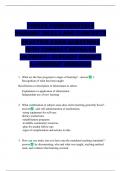
TIMBYS FUNDAMENTALS
NURSING SKILLS AND CONCEPTS
PRACTICE EXAM QUESTIONS
WITH CORRECT DETAILED
ANSWERS | ALREADY GRADED
A+<RECENT VERSION>
1. What are the four progressive stages of learning? - answer 1.
Recognition of what has been taught
Recollection or description of information to others
Explanation or application of information
Independent use of new learning
2. What combination of subject areas does client teaching generally focus? -
answer -safe self administration of medications
-using equipment for self-care
dietary instructions
-rehabilitation programs
-available community resources
-plan for medial follow-ups
-signs of complications and actions to take
3. How can you make sure you have met the mandated teaching standards? -
answer by documenting, who and what was taught, teaching method
used, and evidence that learning occured
,4. To implement effecting teaching the nurse must do the following: -
answer determine the client's:
-preferred learning style
-age and developmental level
-capacity to learn
-motivation
-learning readiness
-learning needs
5. When does the stages of learning begin? - answer always begins on
admission to the hospital when client is ready
6. What are the four stages of learning? - answer 1. Recognition of
material
2. Recall or description
3. Explanation
4. Independent use
7. What are the three general domain of learning styles? - answer 1.
Cognitive domain
2. Affective domain
3. Psychomotor domain
8. Cognitive domain - answer a style of processing information by
listening or reading facts and descriptions
9. Affective domain - answer a style of processing information that
appeals to a person's feelings, beliefs, or values
10.Psychomotor domain - answer a style of processing information that
focuses on learning by doing
,11.What are the three age and development learning levels? - answer
pedagogy, androgogy, and gerogogy
12.Pedagogy - answer the science of teaching children or those with
cognitive ability comparable to children
13.Androgogy - answer the principles of teaching adult learners
14.Gerogogy - answer the unique techniques that enhance learning
among older adults
15.Pedagogic learners typically: - answer lack experience, need direction
and supervision, motivated to learn by potential rewards or punishment,
short attention span, respond to competition
16.Androgogic learners typically: - answer active, longer attention span,
long-term retention, goal oriented, think abstractly
17.Gerogoic learners typically: - answer vast experience, motivated by
personal need or goal, attention affected by low energy level, fatigue, and
anxiety, respond to frequent feedback, respond to family encouragement,
practical learners
18.What are the generation categories? - answer baby boomers: 1946 to
1964
Generation x: 1965 to 1981
Generation y: 1982 to 1999
19.Net generation: 2000-current (born at the beginning of the 21st century)
also called "cyber kids"
, 20.Generation x and y share what learning characteristics? - answer -
technologically literate
-crave stimulation and quick responses
-expect immediate answers and feedback
-bored with memorizing information or repetitive tasks
-like a variety of instructional methods
-prefer information to be relevant
-prefer participatory learning
21.Illiterate - answer cannot read or write
22.Functionally illiterate - answer posses minimal literacy skills
23.What can a nurse do to teach a client that is illiterate? - answer
provide audio/visual modes for instruction
24.What can a nurse ask if she suspects a client to be illiterate? - answer
ask, how do you learn best?
25.If a client can sign their name, do simple math, and reads at or below a
5th grade level what is this called? - answer functionally illiterate
26.What relating to cultural differences does not justify health teaching? -
answer language barriers
27.When relating to attention and concentration when teaching a client what
approaches are relevant? - answer -keep the teaching sessions short
-use the client's name frequently
NURSING SKILLS AND CONCEPTS
PRACTICE EXAM QUESTIONS
WITH CORRECT DETAILED
ANSWERS | ALREADY GRADED
A+<RECENT VERSION>
1. What are the four progressive stages of learning? - answer 1.
Recognition of what has been taught
Recollection or description of information to others
Explanation or application of information
Independent use of new learning
2. What combination of subject areas does client teaching generally focus? -
answer -safe self administration of medications
-using equipment for self-care
dietary instructions
-rehabilitation programs
-available community resources
-plan for medial follow-ups
-signs of complications and actions to take
3. How can you make sure you have met the mandated teaching standards? -
answer by documenting, who and what was taught, teaching method
used, and evidence that learning occured
,4. To implement effecting teaching the nurse must do the following: -
answer determine the client's:
-preferred learning style
-age and developmental level
-capacity to learn
-motivation
-learning readiness
-learning needs
5. When does the stages of learning begin? - answer always begins on
admission to the hospital when client is ready
6. What are the four stages of learning? - answer 1. Recognition of
material
2. Recall or description
3. Explanation
4. Independent use
7. What are the three general domain of learning styles? - answer 1.
Cognitive domain
2. Affective domain
3. Psychomotor domain
8. Cognitive domain - answer a style of processing information by
listening or reading facts and descriptions
9. Affective domain - answer a style of processing information that
appeals to a person's feelings, beliefs, or values
10.Psychomotor domain - answer a style of processing information that
focuses on learning by doing
,11.What are the three age and development learning levels? - answer
pedagogy, androgogy, and gerogogy
12.Pedagogy - answer the science of teaching children or those with
cognitive ability comparable to children
13.Androgogy - answer the principles of teaching adult learners
14.Gerogogy - answer the unique techniques that enhance learning
among older adults
15.Pedagogic learners typically: - answer lack experience, need direction
and supervision, motivated to learn by potential rewards or punishment,
short attention span, respond to competition
16.Androgogic learners typically: - answer active, longer attention span,
long-term retention, goal oriented, think abstractly
17.Gerogoic learners typically: - answer vast experience, motivated by
personal need or goal, attention affected by low energy level, fatigue, and
anxiety, respond to frequent feedback, respond to family encouragement,
practical learners
18.What are the generation categories? - answer baby boomers: 1946 to
1964
Generation x: 1965 to 1981
Generation y: 1982 to 1999
19.Net generation: 2000-current (born at the beginning of the 21st century)
also called "cyber kids"
, 20.Generation x and y share what learning characteristics? - answer -
technologically literate
-crave stimulation and quick responses
-expect immediate answers and feedback
-bored with memorizing information or repetitive tasks
-like a variety of instructional methods
-prefer information to be relevant
-prefer participatory learning
21.Illiterate - answer cannot read or write
22.Functionally illiterate - answer posses minimal literacy skills
23.What can a nurse do to teach a client that is illiterate? - answer
provide audio/visual modes for instruction
24.What can a nurse ask if she suspects a client to be illiterate? - answer
ask, how do you learn best?
25.If a client can sign their name, do simple math, and reads at or below a
5th grade level what is this called? - answer functionally illiterate
26.What relating to cultural differences does not justify health teaching? -
answer language barriers
27.When relating to attention and concentration when teaching a client what
approaches are relevant? - answer -keep the teaching sessions short
-use the client's name frequently


