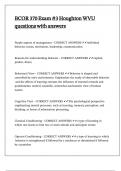
BCOR 370 Exam #3 Houghton WVU || || || || || ||
questions with answers || ||
People aspects of management - CORRECT ANSWERS ✔✔individual
|| || || || || || || ||
behavior, teams, motivation, leadership, communication
|| || || ||
Reasons for understanding behavior - CORRECT ANSWERS ✔✔explain,
|| || || || || || || ||
predict, direct, ||
Behavioral View - CORRECT ANSWERS ✔✔Behavior is shaped and
|| || || || || || || || ||
controlled by one's environment. Emphasizes the study of observable behavior
|| || || || || || || || ||
and the effects of learning; stresses the influence of external rewards and
|| || || || || || || || || || || || ||
punishments; neutral, scientific, somewhat mechanistic view of human || || || || || || || ||
nature.
Cognitive View - CORRECT ANSWERS ✔✔The psychological perspective
|| || || || || || || ||
emphasizing mental processes, such as learning, memory, perception, and
|| || || || || || || || ||
thinking, as forms of information processing.
|| || || || ||
Classical Conditioning - CORRECT ANSWERS ✔✔a type of learning in
|| || || || || || || || || ||
which one learns to link two or more stimuli and anticipate events
|| || || || || || || || || || ||
Operant Conditioning - CORRECT ANSWERS ✔✔a type of learning in which
|| || || || || || || || || ||
behavior is strengthened if followed by a reinforcer or diminished if followed
|| || || || || || || || || || || || ||
by a punisher
|| ||
, Reinforcement Theory - CORRECT ANSWERS ✔✔attempts to explain || || || || || || || ||
behavior change by suggesting that behavior with positive consequences tends
|| || || || || || || || ||
to be repeated, whereas behavior with negative consequences tends not to be
|| || || || || || || || || || || || ||
repeated
Social Cognitive Theory - CORRECT ANSWERS ✔✔emphasize behavior,
|| || || || || || || ||
environment, and cognition as the key factors in development
|| || || || || || || ||
Perception - CORRECT ANSWERS ✔✔the process of interpreting one's
|| || || || || || || || ||
environment
Personality - CORRECT ANSWERS ✔✔stable and unique patterns of traits,
|| || || || || || || || || ||
characteristics, and resulting behaviors that gives an individual their identity
|| || || || || || || || ||
Myers-Briggs Type Indicator - CORRECT ANSWERS ✔✔a personality test
|| || || || || || || || ||
that taps four characteristics and classifies people into 1 of 16 personality
|| || || || || || || || || || || ||
types
Personality Types - CORRECT ANSWERS ✔✔(A) Extroversion/ Introversion
|| || || || || || ||
(B) Sensation/ Intuition
|| ||
(C) Thinking/ Feeling
|| ||
(D) Judging/ Perceiving
|| ||
questions with answers || ||
People aspects of management - CORRECT ANSWERS ✔✔individual
|| || || || || || || ||
behavior, teams, motivation, leadership, communication
|| || || ||
Reasons for understanding behavior - CORRECT ANSWERS ✔✔explain,
|| || || || || || || ||
predict, direct, ||
Behavioral View - CORRECT ANSWERS ✔✔Behavior is shaped and
|| || || || || || || || ||
controlled by one's environment. Emphasizes the study of observable behavior
|| || || || || || || || ||
and the effects of learning; stresses the influence of external rewards and
|| || || || || || || || || || || || ||
punishments; neutral, scientific, somewhat mechanistic view of human || || || || || || || ||
nature.
Cognitive View - CORRECT ANSWERS ✔✔The psychological perspective
|| || || || || || || ||
emphasizing mental processes, such as learning, memory, perception, and
|| || || || || || || || ||
thinking, as forms of information processing.
|| || || || ||
Classical Conditioning - CORRECT ANSWERS ✔✔a type of learning in
|| || || || || || || || || ||
which one learns to link two or more stimuli and anticipate events
|| || || || || || || || || || ||
Operant Conditioning - CORRECT ANSWERS ✔✔a type of learning in which
|| || || || || || || || || ||
behavior is strengthened if followed by a reinforcer or diminished if followed
|| || || || || || || || || || || || ||
by a punisher
|| ||
, Reinforcement Theory - CORRECT ANSWERS ✔✔attempts to explain || || || || || || || ||
behavior change by suggesting that behavior with positive consequences tends
|| || || || || || || || ||
to be repeated, whereas behavior with negative consequences tends not to be
|| || || || || || || || || || || || ||
repeated
Social Cognitive Theory - CORRECT ANSWERS ✔✔emphasize behavior,
|| || || || || || || ||
environment, and cognition as the key factors in development
|| || || || || || || ||
Perception - CORRECT ANSWERS ✔✔the process of interpreting one's
|| || || || || || || || ||
environment
Personality - CORRECT ANSWERS ✔✔stable and unique patterns of traits,
|| || || || || || || || || ||
characteristics, and resulting behaviors that gives an individual their identity
|| || || || || || || || ||
Myers-Briggs Type Indicator - CORRECT ANSWERS ✔✔a personality test
|| || || || || || || || ||
that taps four characteristics and classifies people into 1 of 16 personality
|| || || || || || || || || || || ||
types
Personality Types - CORRECT ANSWERS ✔✔(A) Extroversion/ Introversion
|| || || || || || ||
(B) Sensation/ Intuition
|| ||
(C) Thinking/ Feeling
|| ||
(D) Judging/ Perceiving
|| ||