
1
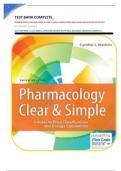
TEST BANK COMPLETE_
PHARMACOLOGY CLEAR AND SIMPLE: A GUIDE TO DRUG CLASSIFICATIONS AND DOSAGE CALCULATIONS 3RD EDITION,
BY CYNTHIA J. WATKINS
ALL CHAPTERS 1-21| 4 UNITS| UPDATED EDITION WITH WELL DETAILED ANSWERS| GRADE A+
part i. Introduction to pharmacology -------------------------------------------------------------------------- 3
,2
chapter 1. History of pharmacology ------------------------------------------------------------------------------------- 3
chapter 2. Basics of pharmacology ------------------------------------------------------------------------------------- 10
chapter 3. Patient safety in medication administration ---------------------------------------------------------- 18
chapter 4. Regulations ----------------------------------------------------------------------------------------------------- 33
chapter 5. Prescriptions and labels ------------------------------------------------------------------------------------- 39
part ii. Calculations ----------------------------------------------------------------------------------------------- 45
chapter 6. Basic review of mathematics ------------------------------------------------------------------------------ 45
chapter 7. Measurement systems -------------------------------------------------------------------------------------- 49
chapter 8. Dosage calculations------------------------------------------------------------------------------------------- 53
part iii. Administration of medications ---------------------------------------------------------------------- 68
chapter 9. Enteral medications and administration---------------------------------------------------------------- 68
chapter 10. Parental medications and administration ------------------------------------------------------------ 74
part iv. Classifications of drugs -------------------------------------------------------------------------------- 87
chapter 11. Integumentary system medications -------------------------------------------------------------------- 87
chapter 12. Musculoskeletal system medications ---------------------------------------------------------------- 102
chapter 13. Nervous system medications --------------------------------------------------------------------------- 121
chapter 14. Eye and ear medications -------------------------------------------------------------------------------- 137
chapter 15. Endocrine system medications ------------------------------------------------------------------------ 154
chapter 16. Cardiovascular system medications ------------------------------------------------------------------ 175
chapter 17. Immunologic system medications -------------------------------------------------------------------- 203
chapter 18. Pulmonary system medications ----------------------------------------------------------------------- 230
chapter 19. Gastrointestinal system medications ---------------------------------------------------------------- 246
chapter 20. Reproductive and urinary system medications --------------------------------------------------- 263
chapter 21. Herbs, vitamins, and minerals ------------------------------------------------------------------------- 276
,3
Part i. Introduction to pharmacology
Chapter 1. History of pharmacology
cynthia j. Watkins: pharmacology clear and simple: a guide to drug classifications and dosage calculations 3rd edition
Multiple choice
Identify the choice that best completes the statement or answers the question.
1. While caring for a client who is taking furosemide (lasix), the nurse recognizes dietary
teaching has been effective if the patient includes which of the following foods in his
daily menus?
A. Broccoli and kiwi
B. Oranges and sweet potatoes
C. Kale and cucumbers
D. Bananas and melon
Ans: b
Furosemide (lasix) is a loop diuretic that causes loss of potassium through the urine. To
prevent hypokalemia, patients are encouraged to eat potassium-rich foods. Oranges and
sweet potatoes are excellent sources of potassium. While bananas (d) also contain
potassium, oranges and sweet potatoes are often emphasized due to their high content and
variety of other nutrients.
Not: see minerals (p. 7): diuretic drugs such as furosemide (lasix) cause the body to lose
excess water through the kidneys, and potassium, a vital mineral is also excreted with the
water. Potassium is contained in sweet potatoes, bananas, and oranges.
Pts: 1 dif: moderate top: therapeutic classification: diuretic key: application
msc: nclex category: basic care and comfort
2. A client newly diagnosed with diabetes tells the nurse, ―i can’t take any insulin made
from pigs or cows. Which of the following responses by the nurse is best?
, 4
A. ―most insulin comes from animal sources, but i’m sure alternative options are
available.
B. ―medications that are derived from animals are typically less expensive than
synthetic medications, but synthetic insulin is commonly available.
C. ―most insulin is synthetic now to help reduce the risk of disease transmission.
D. ―the animals aren’t hurt in the production of medications, so you don’t need to
worry.
Ans: c
Most insulin today is produced using recombinant dna technology, making it synthetic
(also called “human insulin”). This addresses concerns about animal-derived products
and disease transmission, and aligns with religious or personal beliefs.
Not: see synthetic medications (p. 8): insulin can be obtained from pigs or cows, but a
synthetic source is most commonly used. This change occurred because of concern over
the possible transmission of diseases from animals to humans. Synthetic medications are
usually more inexpensive because they are mass produced.
Pts: 1 dif: moderate top: therapeutic classification: anti-diabetic medication key:
analysis msc: nclex category: pharmacological therapies
3. While providing medications to clients on the cardiac unit, the nurse anticipates that
hydralazine hydrochloride and isosorbide dinitrate (bidil) would most likely be prescribed
for which of the following clients?
A. A 48-year-old caucasian male diagnosed with atrial fibrillation
B. A 55-year-old african american female diagnosed with hypertension
C. A 63-year-old caucasian female diagnosed with sick sinus syndrome
D. A 64-year-old african american male diagnosed with heart failure
Ans: d
Bidil is specifically approved for use in african american patients with heart failure.
Studies have shown this combination is particularly effective in this population,
improving survival and decreasing hospitalizations.
TEST BANK COMPLETE_
PHARMACOLOGY CLEAR AND SIMPLE: A GUIDE TO DRUG CLASSIFICATIONS AND DOSAGE CALCULATIONS 3RD EDITION,
BY CYNTHIA J. WATKINS
ALL CHAPTERS 1-21| 4 UNITS| UPDATED EDITION WITH WELL DETAILED ANSWERS| GRADE A+
part i. Introduction to pharmacology -------------------------------------------------------------------------- 3
,2
chapter 1. History of pharmacology ------------------------------------------------------------------------------------- 3
chapter 2. Basics of pharmacology ------------------------------------------------------------------------------------- 10
chapter 3. Patient safety in medication administration ---------------------------------------------------------- 18
chapter 4. Regulations ----------------------------------------------------------------------------------------------------- 33
chapter 5. Prescriptions and labels ------------------------------------------------------------------------------------- 39
part ii. Calculations ----------------------------------------------------------------------------------------------- 45
chapter 6. Basic review of mathematics ------------------------------------------------------------------------------ 45
chapter 7. Measurement systems -------------------------------------------------------------------------------------- 49
chapter 8. Dosage calculations------------------------------------------------------------------------------------------- 53
part iii. Administration of medications ---------------------------------------------------------------------- 68
chapter 9. Enteral medications and administration---------------------------------------------------------------- 68
chapter 10. Parental medications and administration ------------------------------------------------------------ 74
part iv. Classifications of drugs -------------------------------------------------------------------------------- 87
chapter 11. Integumentary system medications -------------------------------------------------------------------- 87
chapter 12. Musculoskeletal system medications ---------------------------------------------------------------- 102
chapter 13. Nervous system medications --------------------------------------------------------------------------- 121
chapter 14. Eye and ear medications -------------------------------------------------------------------------------- 137
chapter 15. Endocrine system medications ------------------------------------------------------------------------ 154
chapter 16. Cardiovascular system medications ------------------------------------------------------------------ 175
chapter 17. Immunologic system medications -------------------------------------------------------------------- 203
chapter 18. Pulmonary system medications ----------------------------------------------------------------------- 230
chapter 19. Gastrointestinal system medications ---------------------------------------------------------------- 246
chapter 20. Reproductive and urinary system medications --------------------------------------------------- 263
chapter 21. Herbs, vitamins, and minerals ------------------------------------------------------------------------- 276
,3
Part i. Introduction to pharmacology
Chapter 1. History of pharmacology
cynthia j. Watkins: pharmacology clear and simple: a guide to drug classifications and dosage calculations 3rd edition
Multiple choice
Identify the choice that best completes the statement or answers the question.
1. While caring for a client who is taking furosemide (lasix), the nurse recognizes dietary
teaching has been effective if the patient includes which of the following foods in his
daily menus?
A. Broccoli and kiwi
B. Oranges and sweet potatoes
C. Kale and cucumbers
D. Bananas and melon
Ans: b
Furosemide (lasix) is a loop diuretic that causes loss of potassium through the urine. To
prevent hypokalemia, patients are encouraged to eat potassium-rich foods. Oranges and
sweet potatoes are excellent sources of potassium. While bananas (d) also contain
potassium, oranges and sweet potatoes are often emphasized due to their high content and
variety of other nutrients.
Not: see minerals (p. 7): diuretic drugs such as furosemide (lasix) cause the body to lose
excess water through the kidneys, and potassium, a vital mineral is also excreted with the
water. Potassium is contained in sweet potatoes, bananas, and oranges.
Pts: 1 dif: moderate top: therapeutic classification: diuretic key: application
msc: nclex category: basic care and comfort
2. A client newly diagnosed with diabetes tells the nurse, ―i can’t take any insulin made
from pigs or cows. Which of the following responses by the nurse is best?
, 4
A. ―most insulin comes from animal sources, but i’m sure alternative options are
available.
B. ―medications that are derived from animals are typically less expensive than
synthetic medications, but synthetic insulin is commonly available.
C. ―most insulin is synthetic now to help reduce the risk of disease transmission.
D. ―the animals aren’t hurt in the production of medications, so you don’t need to
worry.
Ans: c
Most insulin today is produced using recombinant dna technology, making it synthetic
(also called “human insulin”). This addresses concerns about animal-derived products
and disease transmission, and aligns with religious or personal beliefs.
Not: see synthetic medications (p. 8): insulin can be obtained from pigs or cows, but a
synthetic source is most commonly used. This change occurred because of concern over
the possible transmission of diseases from animals to humans. Synthetic medications are
usually more inexpensive because they are mass produced.
Pts: 1 dif: moderate top: therapeutic classification: anti-diabetic medication key:
analysis msc: nclex category: pharmacological therapies
3. While providing medications to clients on the cardiac unit, the nurse anticipates that
hydralazine hydrochloride and isosorbide dinitrate (bidil) would most likely be prescribed
for which of the following clients?
A. A 48-year-old caucasian male diagnosed with atrial fibrillation
B. A 55-year-old african american female diagnosed with hypertension
C. A 63-year-old caucasian female diagnosed with sick sinus syndrome
D. A 64-year-old african american male diagnosed with heart failure
Ans: d
Bidil is specifically approved for use in african american patients with heart failure.
Studies have shown this combination is particularly effective in this population,
improving survival and decreasing hospitalizations.


