

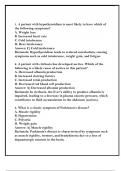
1. A patient with hypothyroidism is most likely to have which of
the following symptoms?
A. Weight loss
B. Increased heart rate
C. Cold intolerance
D. Heat intolerance
Answer: C) Cold intolerance
Rationale: Hypothyroidism leads to reduced metabolism, causing
symptoms such as cold intolerance, weight gain, and fatigue.
2. A patient with cirrhosis has developed ascites. Which of the
following is a likely cause of ascites in this patient?
A. Decreased albumin production
B. Increased clotting factors
C. Increased renin production
D. Decreased red blood cell production
Answer: A) Decreased albumin production
Rationale: In cirrhosis, the liver's ability to produce albumin is
impaired, leading to a decrease in plasma oncotic pressure, which
contributes to fluid accumulation in the abdomen (ascites).
3. What is a classic symptom of Parkinson’s disease?
A. Muscle rigidity
B. Hypotension
C. Polyuria
D. Weight gain
Answer: A) Muscle rigidity
Rationale: Parkinson’s disease is characterized by symptoms such
as muscle rigidity, tremors, and bradykinesia due to a loss of
dopaminergic neurons in the brain.
,4. A patient with chronic kidney disease (CKD) is most at risk for
which of the following electrolyte imbalances?
A. Hyperkalemia
B. Hypokalemia
C. Hypercalcemia
D. Hypocalcemia
Answer: A) Hyperkalemia
Rationale: In CKD, the kidneys are unable to excrete potassium
effectively, leading to the accumulation of potassium in the blood,
resulting in hyperkalemia.
5. A patient with a history of chronic pancreatitis is at increased
risk for which of the following complications?
A. Diabetes mellitus
B. Hypoglycemia
C. Hyperkalemia
D. Asthma
Answer: A) Diabetes mellitus
Rationale: Chronic pancreatitis can damage the pancreas' ability
to secrete insulin, leading to insulin resistance and an increased
risk of diabetes mellitus.
6. A patient with a diagnosis of schizophrenia may experience
which of the following symptoms?
A. Auditory hallucinations
B. Extreme fatigue
C. Increased blood pressure
D. Chronic cough
Answer: A) Auditory hallucinations
Rationale: Schizophrenia is often associated with psychotic
symptoms, including auditory hallucinations, delusions, and
disorganized thinking.
, 7. A nurse is caring for a patient with rheumatoid arthritis. Which
of the following is a common manifestation of this condition?
A. Symmetrical joint pain and swelling
B. Morning dizziness and fatigue
C. Unilateral leg swelling
D. Chest pain
Answer: A) Symmetrical joint pain and swelling
Rationale: Rheumatoid arthritis typically causes symmetrical joint
pain, stiffness, and swelling, particularly in the hands and feet.
8. What is the most common cause of secondary osteoporosis?
A. Calcium deficiency
B. Hyperparathyroidism
C. Long-term use of corticosteroids
D. Vitamin D deficiency
Answer: C) Long-term use of corticosteroids
Rationale: Long-term corticosteroid use is a major cause of
secondary osteoporosis due to its effect on bone metabolism,
leading to decreased bone density and increased fracture risk.
9. A patient with acute blood loss from a traumatic injury may
experience which of the following?
A. Decreased heart rate
B. Decreased respiratory rate
C. Increased blood pressure
D. Increased heart rate
Answer: D) Increased heart rate
Rationale: Acute blood loss leads to a decrease in circulating
blood volume, which triggers compensatory tachycardia
(increased heart rate) to maintain cardiac output.
10. A patient with acute bacterial meningitis is likely to
experience which of the following?
the following symptoms?
A. Weight loss
B. Increased heart rate
C. Cold intolerance
D. Heat intolerance
Answer: C) Cold intolerance
Rationale: Hypothyroidism leads to reduced metabolism, causing
symptoms such as cold intolerance, weight gain, and fatigue.
2. A patient with cirrhosis has developed ascites. Which of the
following is a likely cause of ascites in this patient?
A. Decreased albumin production
B. Increased clotting factors
C. Increased renin production
D. Decreased red blood cell production
Answer: A) Decreased albumin production
Rationale: In cirrhosis, the liver's ability to produce albumin is
impaired, leading to a decrease in plasma oncotic pressure, which
contributes to fluid accumulation in the abdomen (ascites).
3. What is a classic symptom of Parkinson’s disease?
A. Muscle rigidity
B. Hypotension
C. Polyuria
D. Weight gain
Answer: A) Muscle rigidity
Rationale: Parkinson’s disease is characterized by symptoms such
as muscle rigidity, tremors, and bradykinesia due to a loss of
dopaminergic neurons in the brain.
,4. A patient with chronic kidney disease (CKD) is most at risk for
which of the following electrolyte imbalances?
A. Hyperkalemia
B. Hypokalemia
C. Hypercalcemia
D. Hypocalcemia
Answer: A) Hyperkalemia
Rationale: In CKD, the kidneys are unable to excrete potassium
effectively, leading to the accumulation of potassium in the blood,
resulting in hyperkalemia.
5. A patient with a history of chronic pancreatitis is at increased
risk for which of the following complications?
A. Diabetes mellitus
B. Hypoglycemia
C. Hyperkalemia
D. Asthma
Answer: A) Diabetes mellitus
Rationale: Chronic pancreatitis can damage the pancreas' ability
to secrete insulin, leading to insulin resistance and an increased
risk of diabetes mellitus.
6. A patient with a diagnosis of schizophrenia may experience
which of the following symptoms?
A. Auditory hallucinations
B. Extreme fatigue
C. Increased blood pressure
D. Chronic cough
Answer: A) Auditory hallucinations
Rationale: Schizophrenia is often associated with psychotic
symptoms, including auditory hallucinations, delusions, and
disorganized thinking.
, 7. A nurse is caring for a patient with rheumatoid arthritis. Which
of the following is a common manifestation of this condition?
A. Symmetrical joint pain and swelling
B. Morning dizziness and fatigue
C. Unilateral leg swelling
D. Chest pain
Answer: A) Symmetrical joint pain and swelling
Rationale: Rheumatoid arthritis typically causes symmetrical joint
pain, stiffness, and swelling, particularly in the hands and feet.
8. What is the most common cause of secondary osteoporosis?
A. Calcium deficiency
B. Hyperparathyroidism
C. Long-term use of corticosteroids
D. Vitamin D deficiency
Answer: C) Long-term use of corticosteroids
Rationale: Long-term corticosteroid use is a major cause of
secondary osteoporosis due to its effect on bone metabolism,
leading to decreased bone density and increased fracture risk.
9. A patient with acute blood loss from a traumatic injury may
experience which of the following?
A. Decreased heart rate
B. Decreased respiratory rate
C. Increased blood pressure
D. Increased heart rate
Answer: D) Increased heart rate
Rationale: Acute blood loss leads to a decrease in circulating
blood volume, which triggers compensatory tachycardia
(increased heart rate) to maintain cardiac output.
10. A patient with acute bacterial meningitis is likely to
experience which of the following?


